
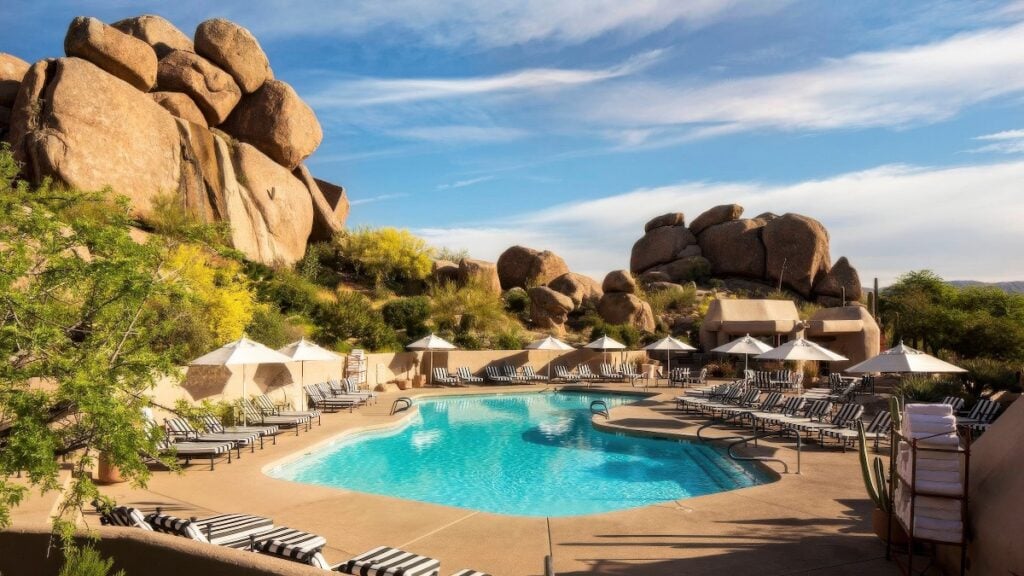
Boulders Resort & Spa Scottsdale
Best Time to Visit Scottsdale Spa Hotels: A Season-by-Season Guide

Founder & Editor, Spa Hotel Finder
Experience
20+ years in media and travel publishing
The Telegraph · Condé Nast International · Time Out Group
Education
Executive MBA · ESCP Business School
Expertise
Spa Hotels · Spa Pricing and Resort Fees · Wellness Travel · Hot Springs and Bathing Traditions
Published · Updated · 10 min read
October is Scottsdale’s strongest shoulder month, pairing mid-80s afternoons and full outdoor access with rates 20 to 30% below peak. July and August deliver the same indoor treatments at roughly half the cost, while January through April buy perfect conditions at premium prices.
In 30 Seconds
- For peak-season stays, reserve three to four months out; February and March fill before anything else.
- Summer shrinks outdoor spa access to dawn and dusk, and monsoon storms can interrupt late-afternoon bookings.
- Suits guests who care more about treatments than lounging; skip it if you want long pool afternoons.
Scottsdale on SpaRator: what our scored hotels show
scored hotels in Scottsdale
Where they sit on the field
- In this market
- Other scored hotels
The scores printed in this guide were current when it was published. Today's scores are in the hotel cards below and on each hotel's analysis page.
Scottsdale’s best spa weather and its best spa pricing never overlap. Peak season (January through April) delivers 75°F afternoons, outdoor treatment rooms at full capacity, and rates north of $500 a night at the top resorts. Summer drops those rates by 40 to 60% but pushes daytime highs past 110°F. So the question isn’t when the weather is best. It’s when price, access, and experience line up with what you actually want from a spa trip.
Here’s how each season performs — and which Scottsdale spa properties reward each window.
Scottsdale Spa Hotels — Month by Month
| Month | Avg High | Avg Low | Avg Nightly Rate | Crowd Level | Outdoor Spa Access |
|---|---|---|---|---|---|
| January Peak | 68°F | 47°F | $420 | High | Full day |
| February Peak | 71°F | 49°F | $520 | Very High | Full day |
| March Peak | 77°F | 54°F | $560 | Very High | Full day |
| April Peak | 85°F | 61°F | $440 | High | Full day |
| May Shoulder | 95°F | 70°F | $310 | Moderate | Morning / evening |
| June Value | 104°F | 79°F | $240 | Low | Dawn / dusk only |
| July Value | 106°F | 84°F | $225 | Low | Dawn / dusk only |
| August Value | 104°F | 83°F | $220 | Low | Dawn / dusk only |
| September Value | 100°F | 77°F | $245 | Low | Dawn / dusk only |
| October Shoulder | 90°F | 66°F | $350 | Moderate | Full day |
| November Shoulder | 77°F | 54°F | $370 | Moderate | Full day |
| December Holiday | 63°F | 45°F | $390 | High | Midday warmest hours |
- Peak (Jan–Apr)
- Shoulder (May, Oct–Nov)
- Value (Jun–Sep)
- Holiday (Dec)
Peak Season: January Through April

This is the stretch that fills Scottsdale’s spa resorts three months in advance. Daytime highs range from 65°F in January to 85°F by late April. Humidity stays below 25%. Rain is negligible.
For spa guests, these months open up the full menu. Outdoor treatment rooms operate all day. Desert hiking before or after a treatment sits in a comfortable temperature range. Pool decks stay usable from morning through sunset. Properties like Sanctuary on Camelback Mountain, where twelve indoor and outdoor treatment rooms open onto a Zen meditation garden, deliver their strongest experience in this window. The outdoor component is the point.
Event calendars add weight. Barrett-Jackson’s collector car auction draws crowds in January. The WM Phoenix Open packs the city in February. Cactus League Spring Training runs from late February through late March, with Scottsdale Stadium and Salt River Fields at Talking Stick pulling fans from across the country. Scottsdale Arts Festival follows in March. These events push occupancy, and rates, higher.
What that costs: The Canyon Suites at The Phoenician (SpaRator 8.8) opens near $957 a night in peak, Sanctuary (8.4) at $750, and The Phoenician (8.5) at $500. February 2027 spot-checks on the hotels’ own engines already quote $897 at Sanctuary, roughly $975 to $1,175 all-in at The Phoenician, and a flat $2,500 at Canyon Suites. Midweek stays can shave 10 to 15%, but this is still premium pricing with limited flexibility.
This window is for: guests who want the complete indoor-outdoor spa experience at Scottsdale’s best properties, and who accept peak pricing as the cost of perfect conditions.
Shoulder Season: May, October, and November

October is the editorial pick. Highs sit around 85 to 90°F: warm enough for outdoor treatments, cool enough that a poolside afternoon doesn’t require constant shade rotation. Crowds thin. Rates drop 20 to 30% below peak. Availability opens up at properties that are fully committed in February.
May is the inverse shoulder. Highs push toward 100°F by month’s end, and the city starts its slow pivot toward summer mode. Some outdoor treatment slots shift to morning-only scheduling. But rates begin their descent, and the resort experience still functions across all hours.
November splits the difference: cooler evenings in the low 50s, comfortable days in the upper 70s, and a pricing dip that sharpens in the first two weeks before Thanksgiving travel begins.
Spa calculus here is straightforward. Outdoor treatments still work. Pools feel comfortable without the January chill or the July scorch. Properties like Andaz Scottsdale (SpaRator 7.9) feel right in shoulder season: a 23-acre bungalow campus with an adults-only spa pool as its quietest corner, poolside treatment cabanas, and a massage bench guests rebook by name. Warm enough to enjoy, uncrowded enough to feel private.
This window is for: value-conscious spa guests who want outdoor access, shorter booking lead times, and 20 to 30% savings without sacrificing the core experience.
Value Season: June Through September

This is when Scottsdale’s spa proposition inverts. Outdoor treatment rooms go quiet by mid-morning. Daytime highs hit 105 to 112°F. Pool time compresses to dawn and dusk. The monsoon season (mid-July through mid-September) brings dramatic afternoon thunderstorms that spike humidity from 16% to around 40% and cool evenings by a few degrees, but temperatures remain extreme.
And yet. This is arguably the smartest window for a specific type of spa guest.
Rates drop 40 to 60% below peak. The Grand Hyatt’s booking engine lists summer rooms from $212 against $645-plus in February. The Boulders runs a flat $163 non-refundable summer rate against a $460 peak floor. Arizona resident discounts stack on top at several properties, and summer spa packages bundle treatments, pool access, and dining credits at prices that would cover a single massage in March.
The properties that reward summer visits are those with serious interior spa hardware. Joya Spa at the Omni Montelucia (SpaRator 8.5) is the clearest example: 31,000 square feet of Moorish arches, Hammam-inspired ritual rooms in each locker wing, a backlit Himalayan salt sauna, and treatment rooms that never notice the weather. The 80-minute Hammam Experience costs the same $580 to $605 (plus a 20% service charge) in August as it does in February. What drops is the room around it: February runs $760 to $1,000-plus, while summer is quiet and heavily discounted, and Joya is an indoor experience anyway.
Spa Avania at the Grand Hyatt Scottsdale (SpaRator 8.2) follows the same logic. Guests name its 86-degree French Celtic mineral pool more than any treatment, and the stack behind it (a dedicated Himalayan salt room, chromotherapy steam, hot and cold plunge pools) runs identically in July. Two booking notes: the spa closes on Wednesdays, and day access without a treatment costs $40 a person.
The monsoon storms deserve a practical note. They arrive most afternoons between 3 and 6 pm, last 30 to 90 minutes, and clear by evening. They add atmosphere (lightning over Camelback Mountain is a genuine spectacle) but they will interrupt a late-afternoon outdoor booking. Schedule accordingly.
This window is for: spa-focused guests who prioritize treatment quality and value over outdoor lounging. Ideal for thermal-circuit seekers, couples who want top-tier properties at mid-tier pricing, and anyone whose spa day centers on the treatment room rather than the pool deck.
Holiday Season: Late November Through December

Scottsdale’s version of winter is mild by any national measure. December highs sit around 63°F. Evenings dip into the low 40s. Pools stay heated and operational. The cooler air makes heated spa facilities (saunas, steam rooms, warm stone treatments) feel more purposeful than they do in a 90°F shoulder month.
Pricing here has a useful wrinkle. Early December, the first two weeks after Thanksgiving, offers a genuine rate dip before holiday travel pushes prices back toward peak. Late December (Christmas through New Year) spikes to near-peak or above. That early-December window is one of Scottsdale’s least crowded and most underrated booking opportunities.
Properties with strong thermal and indoor programming suit this season. The Phoenician (SpaRator 8.5) runs 37,000 square feet over three stories, and one qualifying treatment buys the entire day inside it: thermal circuit, Meditation Atrium, 67-foot rooftop adults-only pool, no clock. Cooler air is exactly when that circuit earns its keep.
This window is for: guests who want cooler desert air, quiet resorts, and an early-December rate advantage, particularly at properties where indoor spa facilities carry the experience.
Booking Strategy: When to Book Each Season
Timing the booking matters almost as much as timing the visit.
Peak (January–April): Book three to four months ahead. February and March sell out first at top-tier properties. Midweek arrivals (Tuesday or Wednesday check-in) pull the best available rates — Friday and Saturday carry the highest premiums.
Shoulder (May, October–November): Six to eight weeks provides a comfortable lead time. October weekends fill before weekdays. May offers the most flexibility.
Value (June–September): Two to four weeks is often sufficient — summer availability is generous across the market. Watch for flash spa packages released in late May as properties gear up for summer promotions.
Holiday (Late November–December): The early-December sweet spot requires roughly six weeks of lead time. New Year’s Eve rates lock in early — book by mid-October for the best selection.
Which Properties Shine in Each Season
Not every Scottsdale spa hotel peaks at the same time. The distinction comes down to how much of the experience lives indoors versus outdoors.
Year-round strength: Omni Montelucia (8.5) and Grand Hyatt / Spa Avania (8.2). Both operate large, architecturally serious interior facilities where the core experience holds in any season. Joya’s Moorish interiors and Avania’s salt room, steam, and plunge pools are climate-independent.
Peak and shoulder strength: Sanctuary (8.4) and Andaz Scottsdale (7.9). Both tie their spa identity to outdoor spaces: Sanctuary’s garden treatment rooms and reflection pond, Andaz’s spa pool and treatment cabanas. These elements lose function in extreme summer heat.
Peak-season focus: The Phoenician (8.5). The three-story spa is complete in any season, but the rooftop pool, resort grounds, and full outdoor programming deliver their best between November and April.
Budget entry point: Hotel Valley Ho (SpaRator 7.3). A reliable boutique option that performs best in peak and shoulder seasons, when its spa deck overlooking two 82°F pools and its chromotherapy saunas justify the rate. Its own engine prices the same entry king at $506 in late January and $199 in late July, a drop of roughly 60%. Tempting. But the compact eight-room spa doesn’t reward the value-season calculus the way the big interior facilities do.
The Verdict
October is the best all-round month. Comfortable outdoor temperatures, meaningful rate savings, thin crowds, and full spa access across every property type.
February and March are the premium months: the full desert spa experience under ideal conditions, priced accordingly.
July and August are the value plays, and smarter ones than most guides acknowledge. If your spa day centers on a thermal circuit, a salt room, or the treatment table rather than a pool lounger, summer delivers the same experience at roughly half the cost.
Scottsdale rewards guests who match their visit to what they actually want from a spa trip. Start with the properties that fit your priorities (the full Scottsdale spa hotel reviews are on SHF), then work backward to the season that best fits.
Frequently Asked Questions:
What is the cheapest month for Scottsdale spa hotels? August typically offers the lowest rates across the market. Expect 40 to 60% discounts from peak-season pricing at most major spa resorts; the Grand Hyatt lists summer rooms from $212 and the Boulders runs a flat $163 non-refundable summer rate. July runs close behind. Properties also bundle spa treatments, pool access, and dining credits into summer promotions that compress the per-treatment cost further.
Is Scottsdale too hot for a spa trip in summer? For outdoor pool time and desert hiking, yes: daytime highs exceed 110°F. For spa treatments, no. Properties with large interior facilities (Joya Spa at the Omni Montelucia, Spa Avania at the Grand Hyatt) deliver an identical treatment experience year-round. The question is whether you build your spa day around the treatment room or the pool deck.
When is shoulder season in Scottsdale? May and October through mid-November. October is the strongest shoulder month: temperatures in the mid-80s, 20 to 30% rate savings, and full outdoor access. May works for heat-tolerant guests who want early-summer pricing without peak-summer extremes.
Do Scottsdale spas offer summer discounts on treatments? Yes. Most resort spas run summer-specific treatment packages from late May through early September. These often include bundled treatments, day-use pool access, and drink credits at prices significantly below à la carte peak-season rates. Arizona resident discounts are widely available. The Phoenician, for one, gives residents a $100 nightly resort credit through September 30.
What happens during Scottsdale’s monsoon season? Monsoon season runs mid-July through mid-September. Afternoon thunderstorms, typically between 3 and 6 pm, bring brief, intense rain and occasional dust storms. Mornings and evenings remain clear. The storms add atmosphere but can disrupt outdoor spa bookings in the late-afternoon window. Indoor treatments and facilities are unaffected.
When should I book a Scottsdale spa hotel for the best rates? For summer value rates, two to four weeks of lead time is usually sufficient. For peak-season visits (January through April), book three to four months ahead; February and March at top properties sell out first. October shoulder-season weekends fill six to eight weeks out.
Last updated: August 11, 2026. Scores and rates verified against the current SpaRator library.
17 Scored Hotels, Ranked by Score
We may earn a commission when you book through these links. It never affects a SpaRator score, and no hotel hosted or paid for this analysis. How we earn
- SpaRator 8.1: Outstanding
CIVANA Wellness Resort and Spa
Scottsdale
- SpaRator 7.8: Strong
- SpaRator 7.5: Strong
Grand Hyatt Scottsdale Resort
Scottsdale
- SpaRator 7.5: Strong
The Canyon Suites at The Phoenician
Scottsdale
- SpaRator 7.4: Solid
Four Seasons Resort Scottsdale
Scottsdale
- SpaRator 7.3: Solid
Show all 17 hotelsShow fewer hotels
- SpaRator 7.2: Solid
Andaz Scottsdale Resort & Bungalows
Scottsdale
- SpaRator 7.2: Solid
Hotel Valley Ho
Scottsdale
- SpaRator 7.1: Solid
The Scottsdale Resort and Spa
Scottsdale
- SpaRator 7.0: Solid
- SpaRator 7.0: Solid
- SpaRator 6.8: Modest
- SpaRator 6.7: Modest
The Scott Resort & Spa, Scottsdale
Scottsdale
- SpaRator 6.4: Modest
Kimpton Miralina Resort and Villas
Scottsdale
- SpaRator 6.4: Modest
Scottsdale Camelback Resort
Scottsdale
- SpaRator 6.4: Modest
W Scottsdale
Scottsdale
- SpaRator 5.6: Limited
Mountain House Lodge at Sereno Canyon
Scottsdale
Every Hotel We Score
Every dot is one of the 128 hotels with a SpaRator score, left to right from low to high. Lit dots mark the hotels in this city. Select any dot to see the hotel's name and score.
Market
Showing 128 of 128
- In this market
- Spa details on file, not listed
- No spa details on file yet
Hover or tap a dot to see the hotel.
No hotel here is lit yet.