Castle Hot Springs, Morristown
Hot Springs in the US: The Complete Guide to 12 Soaks Worth the Trip
Hot springs in the US worth the trip split into two kinds: developed resorts with managed temperatures and entrance fees, or free wild springs you hike or drive to, where water can scald or run dry. The 12 profiles settle which kind, and which one, fits your trip.
In 30 Seconds
- Famous springs increasingly demand reservations or permits, so check booking rules before planning a drive.
- Free unmanaged springs have no thermostat; test the water in several spots before getting in.
- Suits hikers and road-trippers willing to plan around permits and seasons; skip if you expect walk-up access everywhere.
One of the 12 soaks in this guide fizzes. Another sits under the aurora at 40 below. A third has to be won in a February permit lottery, then earned on a 17-mile hike. Hot springs in the US run stranger and further than you might think: the federal thermal springs inventory counts 1,000-plus documented thermal springs, more than half stacked along the fault lines of three Western states.
That geography forces the choice that decides your trip. A developed resort means filtered pools, a gate fee, and a managed temperature, from $38 walk-in days at Glenwood to $95 weekends at Ojo Caliente. A wild spring is a hole in the ground you drive or hike to: free, unmanaged, sometimes scalding, sometimes dry. This guide covers both tracks, ordered by trip type rather than preference, with 2026 prices, permit rules, and the springs east of the Rockies most lists skip. How we grade spa properties is documented separately.
The health case is real and narrower than the marketing. Rocky Mountain PBS’s Sacred Hot Springs splits the effect into heat, buoyancy, and mineral content (our guide to mineral springs and geothermal waters covers what the research actually supports on each), and in comparative studies sulfur-rich water beat plain hot water at matched temperature for pain and circulation. The balneotherapy evidence is strongest for musculoskeletal pain and sleep: a 2017 randomized trial of 362 participants found significant effects on stress, sleep, and joint pain over five months.
Three things ruin these trips. Permits and timed reservations are now the norm at famous springs, winter is peak season and also when access roads close, and unmanaged water gets hot enough to burn. Start with the one you can still walk into unannounced.
1. Glenwood Hot Springs, Colorado: The Biggest Pool, and No Reservation Required
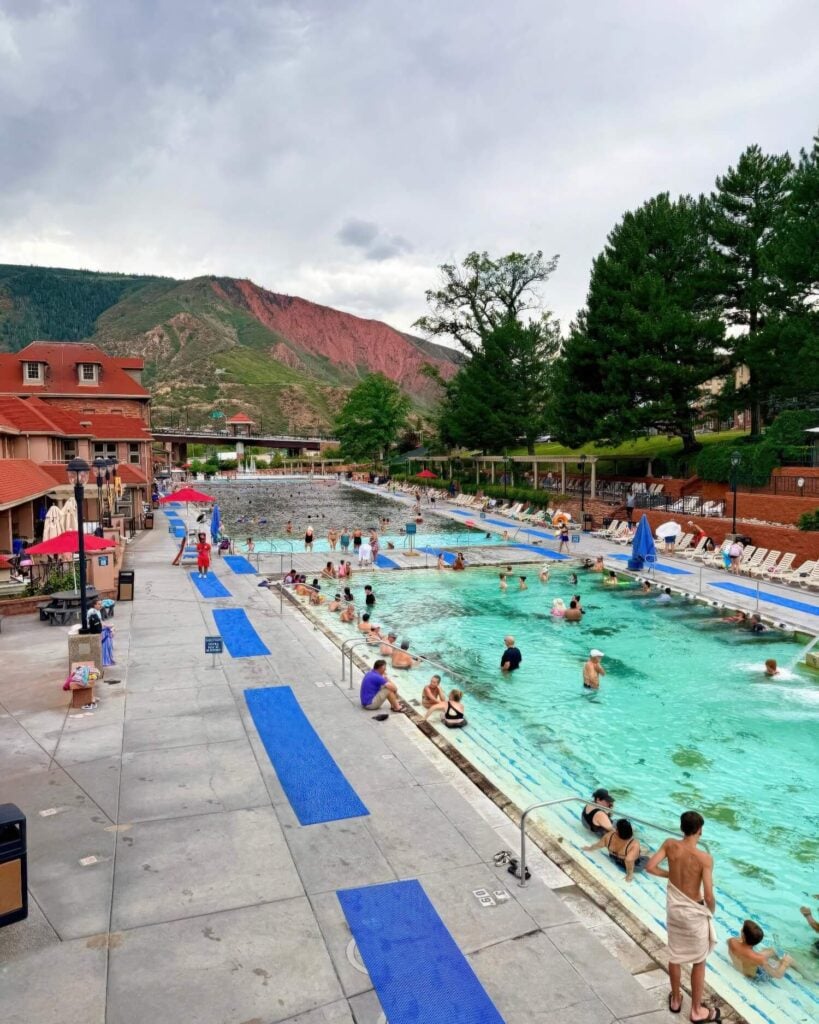
You can show up at Glenwood without booking anything. No timed slot, no confirmation email, no two-hour window. The resort’s published rates cover all-day access with unlimited re-entry on a hand stamp and no posted time limit, unusual against the two- and three-hour windows most developed properties enforce.
The Grand Pool holds 1,078,000 gallons. The resort markets it as the world’s largest outdoor mineral hot springs pool, a promotional line repeated widely but not independently verified. The sandstone bathhouse opened in 1888, the same year the Denver & Rio Grande Railroad reached town and started the tourism boom that built modern Colorado soaking.
The geology underneath is the part nobody writes about. Glenwood Springs is not one spring but 12 to 15, fed through highly porous Leadville Limestone. The Yampa Spring is the largest single spring in Colorado at over 2,000 gallons per minute, producing more than 3 million gallons a day. Nobody knows how deep it is: cameras sent down have never reached the bottom.
Expect a day pass around $38 standard, with one source citing roughly $42, climbing as high as $55 on holidays. Check your specific date before you budget. The profile that gets you no-reservation access also gets you crowds, and this is the busiest water on the list.
Best for: travelers slotting a soak into a drive day without planning, and families who need the no-time-limit structure.
Skip if: you came for mineral intensity or quiet. Items 4, 5, and 12 do both better.
2. Chena Hot Springs, Alaska: Soaking Under the Aurora at 40 Below
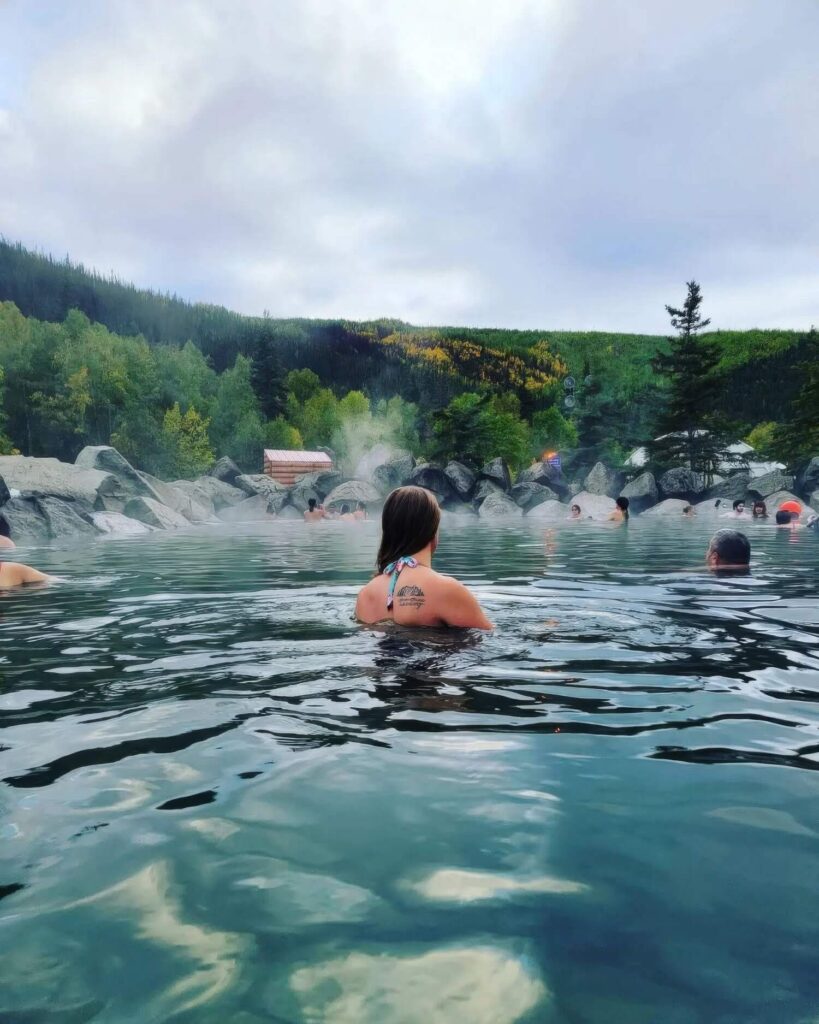
Ambient winter temperatures around Chena reach -60°F to -70°F with wind chill, and that is precisely the condition people fly in for. This is the only entry on the list where the worst weather is the product.
Chena is the standout answer for combining outdoor soaking with aurora viewing, usually built into a “fire and ice” itinerary paired with the on-site Aurora Ice Museum. The resort generates its own geothermal electricity from the lowest-temperature geothermal resource used for commercial power anywhere, covering 85% of its needs: the same water you sit in powers the lights. Search interest in US hot springs peaks in December, and this is the spring that earns it.
The resort sits roughly 60 miles outside Fairbanks, a 1.5 to 2-hour drive. There is no cell service on site, wifi only, a genuine planning problem if you are coordinating flights or working remotely. The activity center keeps a world map where guests pin their home country, and it is crowded with international pins.
Then there is acclimation. One couple filmed on site went from 40°F, their previous coldest experience, to -30°F inside a day. The soak is warm. The walk to and from it is not, and wet hair at -30°F is the detail nobody warns you about.
The verdict: Chena is the one spring here where December is the right month and July is the compromise. Right for travelers building a whole Fairbanks trip around a single soak. Wrong for anyone treating hot springs as one stop among several, because the drive time and cold-weather logistics do not amortize across a casual itinerary.
3. The Springs Resort, Pagosa Springs, Colorado: 50 Pools Fed by One Spring
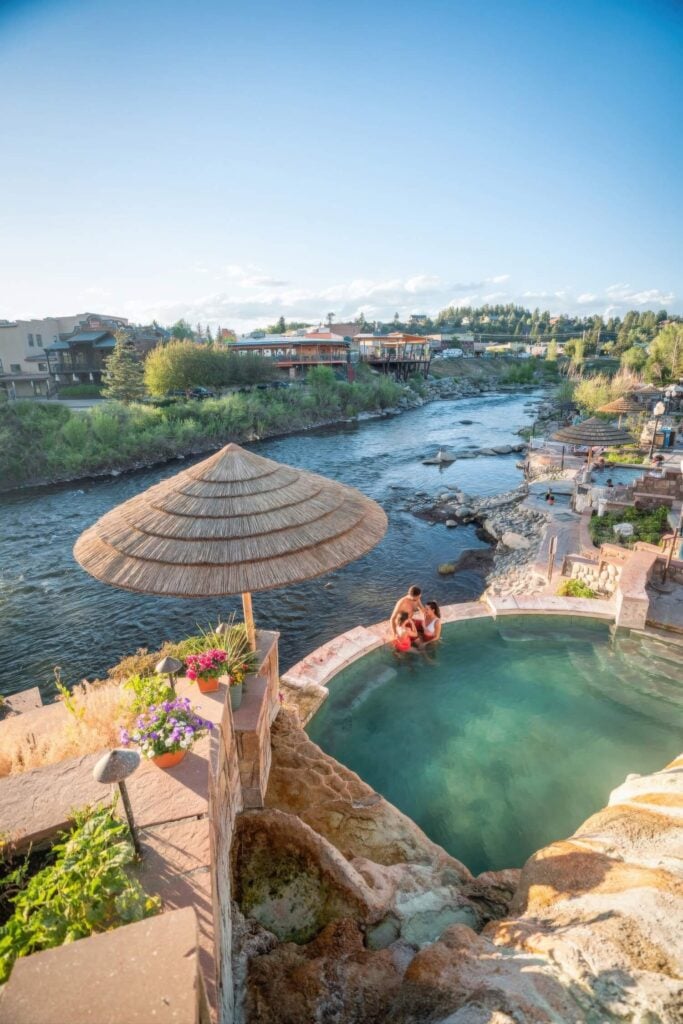
Before the Mother Spring fills a single resort pool, it heats the town.
Pagosa Springs runs one of only 19 municipal geothermal heating districts in the country, with raw geothermal water entering the system at roughly 145°F under natural artesian pressure, no pumping required. It exits the heat exchanger at 120 to 124°F and heats homes, businesses, and sidewalks. It serves 33 customers, with headroom to about 40 before flow and temperature limits bite.
That same spring feeds 50-plus temperature-controlled pools at the resort, alongside cold river plunges running parallel to the property, a contrast waterfall, a panoramic sauna, and a steamy grotto. A recent expansion took the property from 25 soaking pools to more than 50, roughly doubling pool and suite capacity. The town draws about 175,000 hot springs visitors a year, which is the crowding number to plan around.
The “world’s deepest hot spring, 1,000-plus feet” line attached to the Mother Spring is a promotional claim repeated across sources rather than an independently verified measurement. That matters because the highest-profile “best hot springs resorts in the US” ranking on the search results page is published by this property, which ranks itself first.
No day-pass pricing surfaced in the sources we reviewed. This is the one marquee property here where you should price-check directly before committing.
Quick comparison: Glenwood is one enormous pool and no reservation. The Springs is 50 small pools and a temperature for every mood. Ojo Caliente, next, is four distinct mineral waters. Pick by whether you want scale, variety, or chemistry.
4. Ojo Caliente, New Mexico: Four Different Mineral Waters on One Property
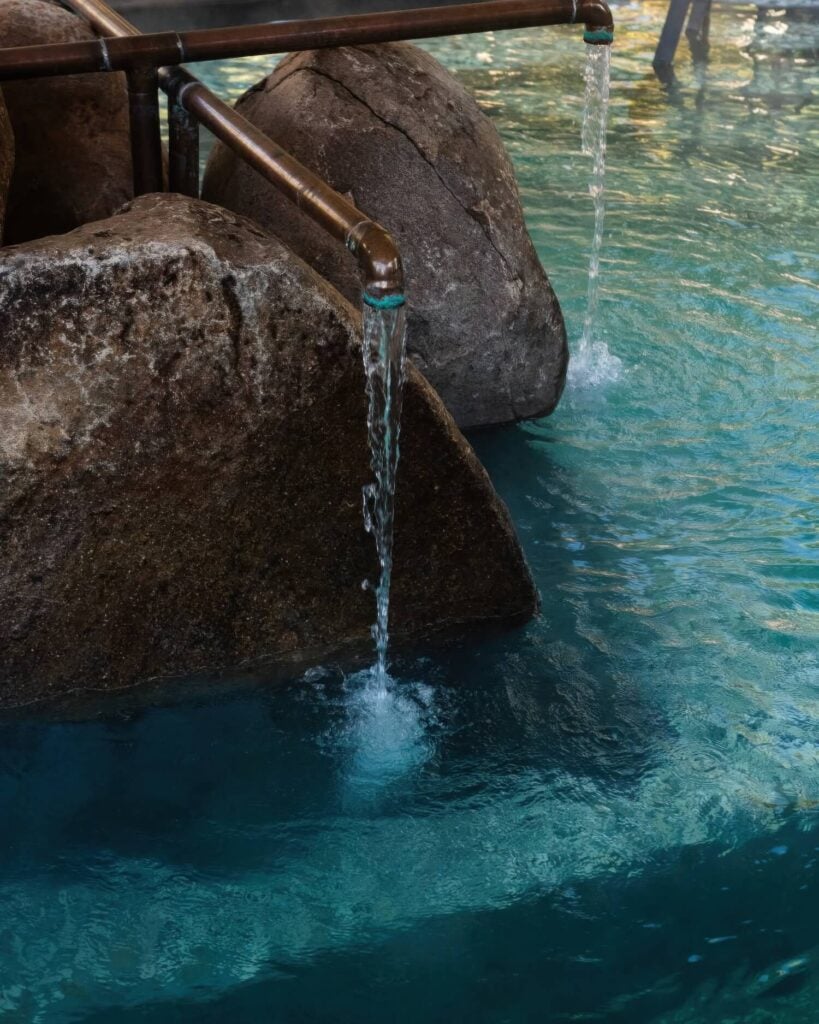
There is an arsenic spring here, and you are meant to get in it. That is a historic mineral designation rather than a warning label, and it marks the structural difference: most resorts pipe one spring into many pools, while Ojo Caliente draws on four geologically distinct mineral waters on a single site. Iron, soda, arsenic, and lithia.
Mineral content is one of the three mechanisms from the intro, and it varies spring to spring. Four waters on one property is the closest thing in American soaking to testing that yourself. No health promises attached, but chemistry is what puts this in the luxury hot springs resorts tier, not the price tag.
Day passes run $75 Monday through Thursday and $95 Friday through Sunday. The sharpest weekday split on the list: a Tuesday visit saves $20 a head. It is also roughly double Glenwood’s $38. Eleven pools run 80 to 109°F, and BLM-partnered trails climb from the property to the Posi-Ouinge pueblo ruins and the historic mica mines. The hike is what separates this from a pool deck.
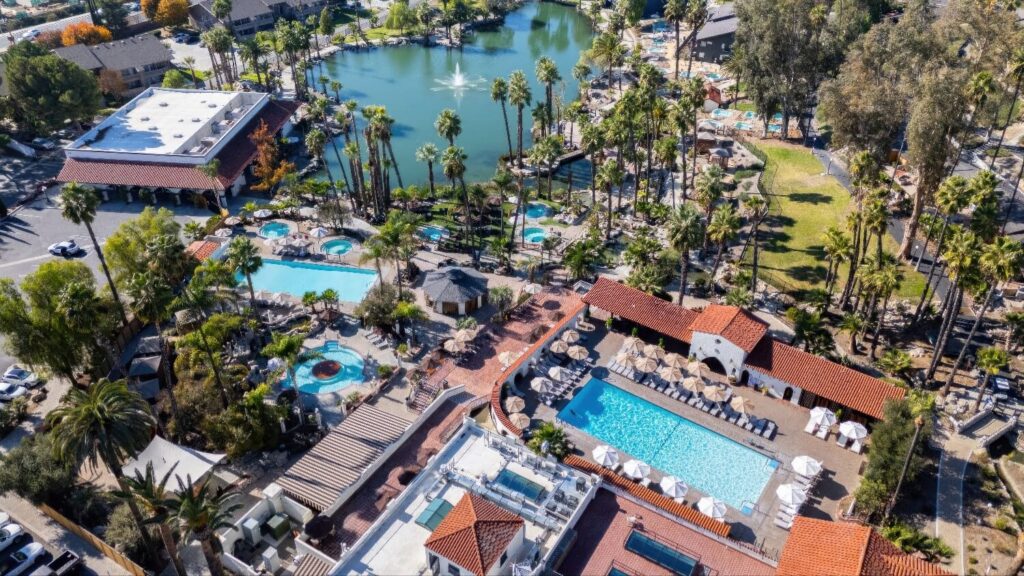
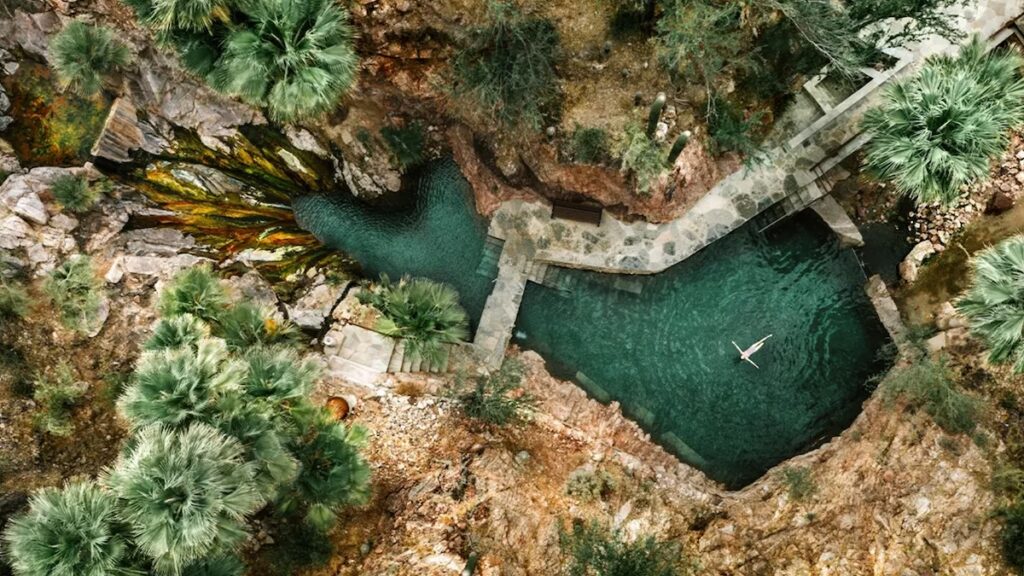
Direct recommendation: go on a weekday, budget the $75, and hike the Posi trail first so the soak finishes the day rather than interrupts it. If the price is the objection, item 12 buys you a private mineral bath for $55. If you want this tier of property without the New Mexico drive, Castle Hot Springs in Arizona is the closest equivalent.
5. Strawberry Park Hot Springs, Colorado: Rustic Soaking With the Strictest Rules
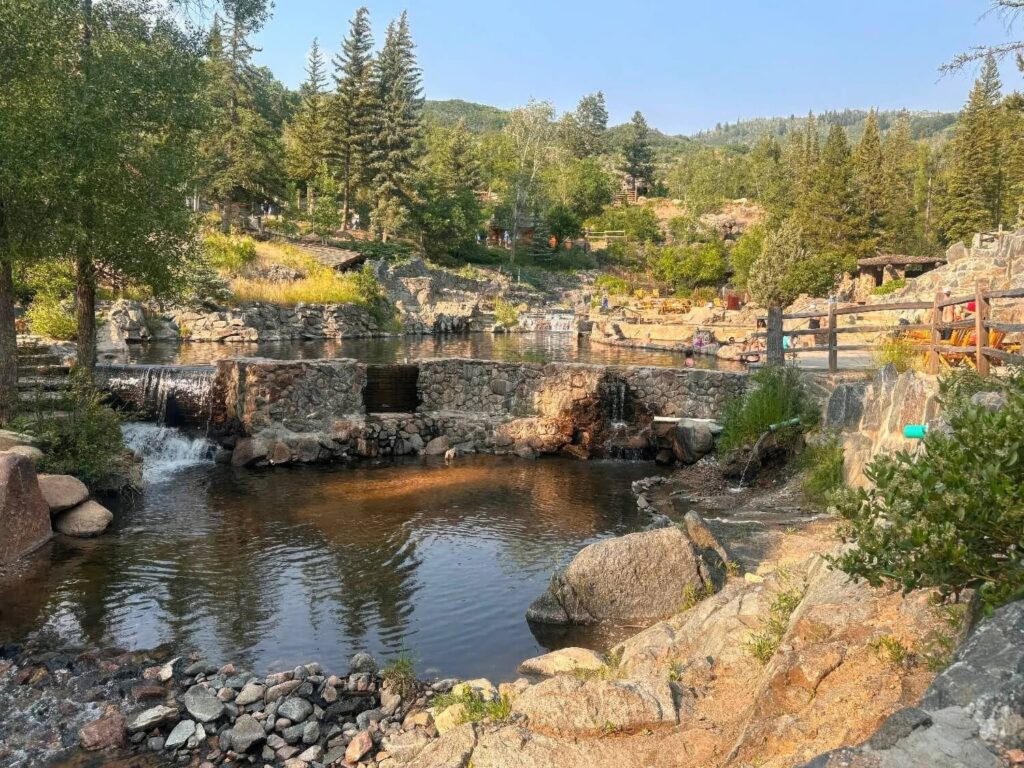
There are four ways to be turned away from Strawberry Park before you get wet. In winter you need 4WD plus snow tires or chains. No rideshare is permitted on the access road, shuttles only. It is cash only with no ATM on site. And reservations run in mandatory two-hour windows.
None of it is arbitrary, and none of it is a one-off. Treat this as the winter-access checklist for any rustic reservation-based spring: confirm vehicle requirements, arrange the shuttle, bring cash, book the slot.
The temperature chain here shows what “managed” actually means. Source water emerges at 148°F at 35 gallons per minute and cools to 118 to 120°F by the time it reaches the soaking pools. Staff then manage it down to 102 to 106°F in the pools you sit in. That 46-degree drop between the ground and your shoulders is the entire difference between a developed spring and the primitive ones in item 7.
Lodging on site runs to cabins, tent sites, and covered wagons. The site also goes clothing-optional after dark, which is exactly why no children are permitted past sundown. Daytime carries no such policy. A logistics fact for families, not a scandal, and worth knowing before you drive up with kids expecting an evening soak.
Best for: couples who want rustic over resort, and anyone who reads a rules page before driving.
Skip if: you are traveling with children and want an evening session, arriving without 4WD in winter, or carrying cards only.
Where to try it
Hotels in This Guide
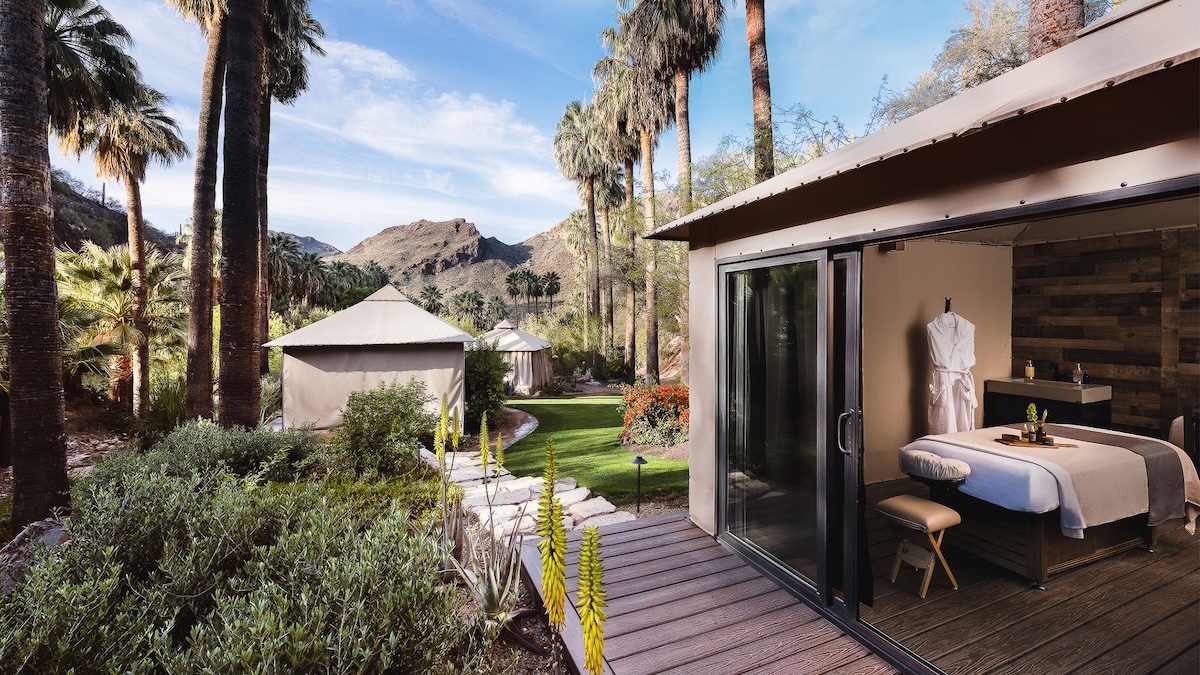 SpaRator 8.5: Outstanding
Phoenix
Castle Hot Springs
See the analysis: Castle Hot SpringsBook direct with the hotel: Castle Hot Springs
6. Conundrum Hot Springs, Colorado: A 17 Mile Round Trip and a Permit Lottery
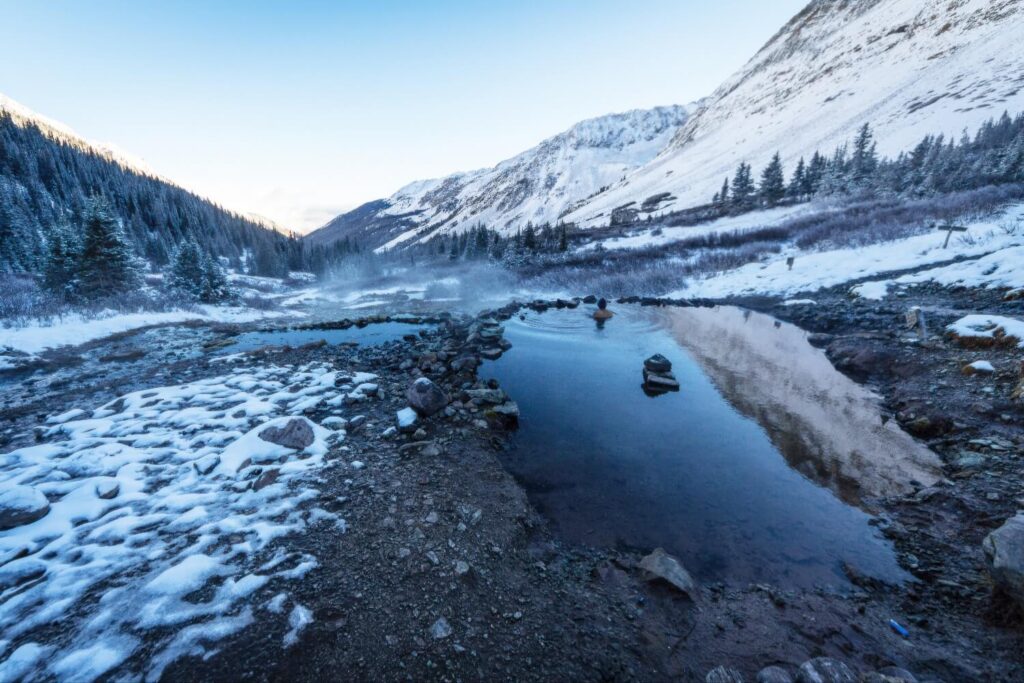
The soak is free. Everything around it is not. Conundrum is a 17.1-mile round trip with roughly 2,800 feet of elevation gain, and you compete for a mandatory permit released six months in advance.
Overnight camping permits cost $6 through Recreation.gov, with 20 campsites per night and group sizes of 2 to 6 depending on site. Release windows open at 8:00am Mountain Time: February 15 covers April through July dates, June 15 covers August through November, and a second smaller release lands four days before each trip date to catch cancellations. Bear canisters are required.
What you get is genuine alpine wilderness, wildflower meadows, and water around 95°F. That is cool by hot springs standards, closer to a warm bath than a resort’s 104°F.
The permit system exists because the place was being loved to death. WAG bags are now recommended so visitors pack out human waste, and one backpacking blogger called the 18-mile day-hike option “incredibly long.” The same overuse logic drives wild-spring etiquette: no soap or sunscreen in the water, including the biodegradable kind, no glass, and stay on trails, because off-trail damage has closed sites.
The verdict: right for experienced backpackers who treat the spring as the reward at the end of a real trip. Wrong for anyone whose plan starts with “we’ll drive up and see.” If the wild soak appeals but the mileage does not, item 7 is the free-and-primitive answer you can reach by car.
7. Mammoth Lakes, California: Five Free Hot Springs You Can Reach in One Day
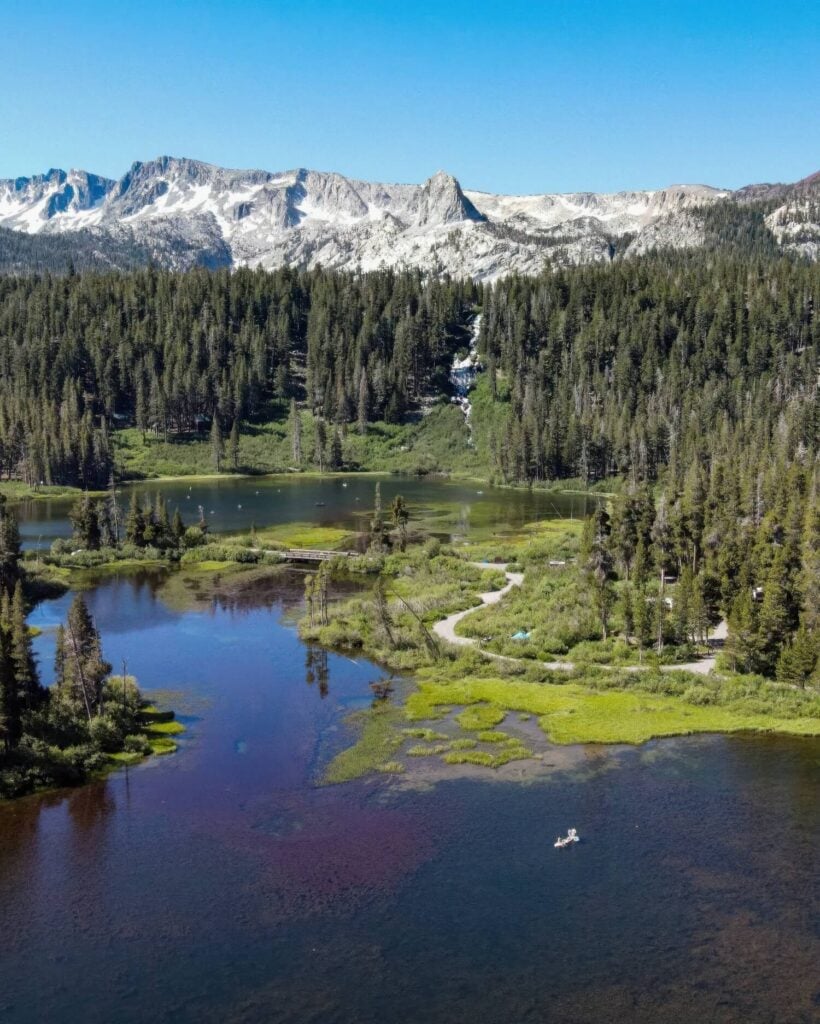
Five free springs, one road trip, zero reservations. Rock Tub, Crab Cooker, Shepherd’s Tub, Hilltop Tub, and Wild Willy’s cluster along Whitmore Tubbs Road and Benton Crossing Road, close enough that travelers chain all five into one day.
They are not interchangeable. Wild Willy’s is the largest and most popular, fitting 30 to 40 people, and early morning is the only realistic window for solitude. Rock Tub is roadside-accessible even for motorhomes and pays for it: the crew that covers the cluster has never seen it empty. Crab Cooker sits in a green valley and is the most scenic of the five, but the road in is rocky and pothole-ridden, needs a high-clearance vehicle, and the spring was bone dry when that crew filmed.
A primitive spring can stop working without notice, and no website will tell you. Nothing here has a thermostat or a posted temperature, so check the water before getting in. It can run scalding. Test in more than one spot, keep your head above water, and avoid digging in shallow sediment, per CDC guidance covered in the FAQ.
For California mineral water with a roof and a robe, the resort answer is Calistoga, where Indian Springs and Calistoga Spa Hot Springs run geothermal pools four hours west.
South of the Sierra, the answer changes again. Southern California hot springs run on a different model: Glen Ivy, Murrieta and the mineral-spring hotels of Desert Hot Springs all sit within two hours of Los Angeles, and day passes start at $15.
Quick comparison: Rock Tub for convenience and crowds, Wild Willy’s for size and a sunrise start, Crab Cooker for scenery if your vehicle can get there and the water is running. Free is the point. Certainty is the trade.
8. Homestead Crater, Utah: Warm Water Inside a 65 Foot Limestone Dome
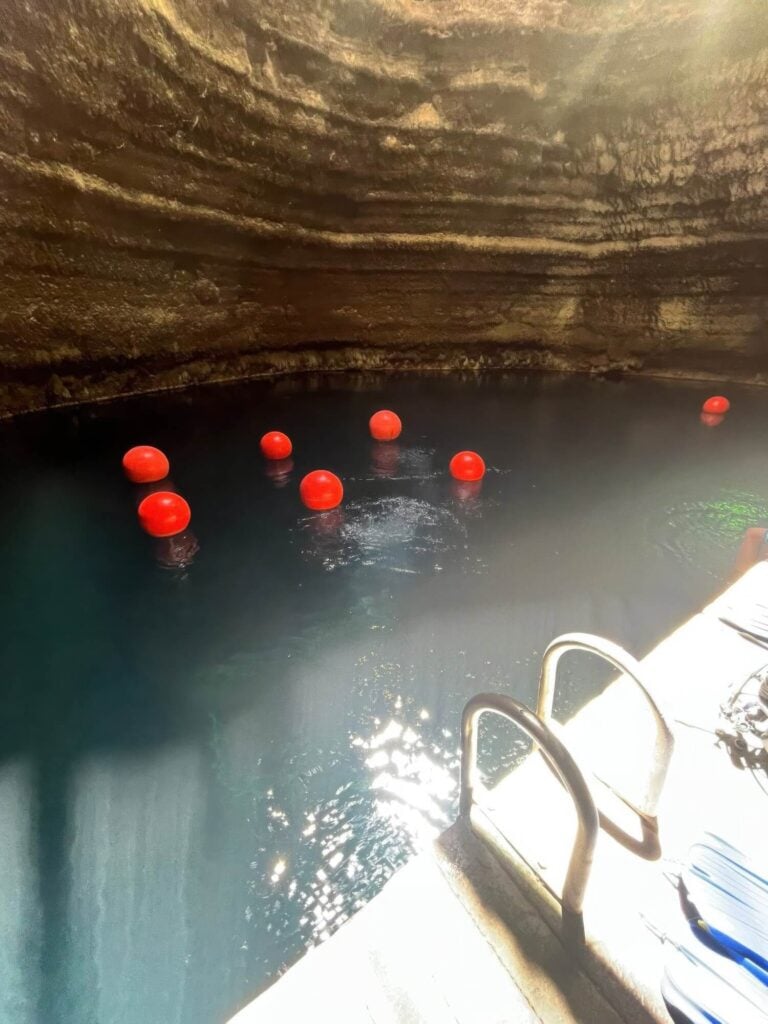
You can get scuba certified inside a hot spring. Homestead Crater is a 65-foot limestone dome enclosing a natural geothermal pool used for soaking, snorkeling, and open-water dive certification, the only property here where the water is deep enough to be a dive site.
Entry runs $40 per person per day plus tax as of January 2026. Reservations are mandatory and booked in advance through utahcrater.com, with no walk-ins: check the calendar, list every member of your party, and pay to confirm. Capacity is time-slotted, so a Saturday afternoon is not a Saturday-morning decision.
Because the dome encloses the pool, the water stays consistently warm year-round regardless of the weather outside. That makes this the reliable cold-season option for anyone not flying to Alaska for item 2.
The enclosure that makes it weatherproof also makes it indoor and finite. No mountain view, no open sky, and hard limits on how many people fit a slot. Against the free open-air springs in item 7, the trade is plain: you buy certainty and give up sky.
Direct recommendation: book the earliest slot on your date, and come for the snorkel or the dive rather than the soak. As a pure soak it is a $40 warm pool, and items 1 and 4 are better ones. As a dive site inside a geothermal crater, it has no US equivalent.
9. Iron Mountain Hot Springs, Colorado: 31 Pools, Two Price Tiers, and Weaker Water
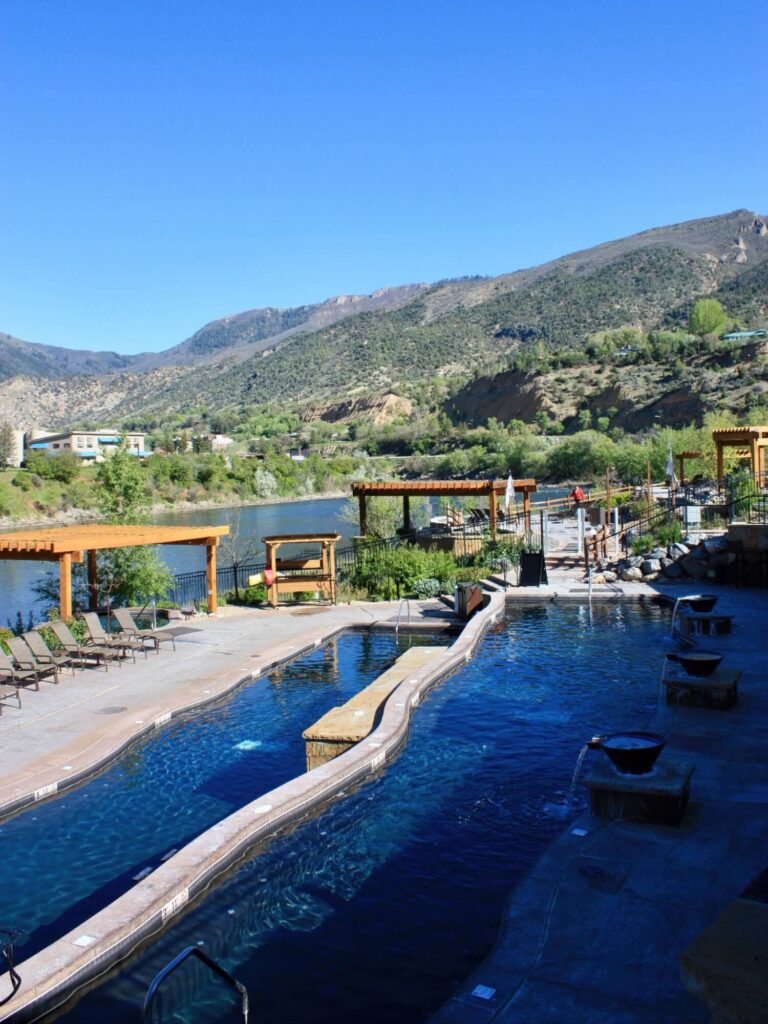
The pass you buy determines how much of the property you are allowed into. Standard gets you 18 pools. Premier opens all 31, plus several themed cold plunges modeled on traditions from hot springs abroad. Buy the cheap tier and you will watch other guests walk into water you cannot enter.
Setting is the real strength: riverfront on the Colorado River, with grounds that beat most of the field. It sits about a mile from Glenwood Hot Springs in item 1, so you are likely choosing between the two on the same afternoon.
One reviewer ranking Colorado’s springs called the mineral content weak, saying it “felt like soaking in chlorinated hot tubs,” against nearby Hot Sulphur Springs, whose stronger mineral smell and content he called more authentic. That is one reviewer’s read, not a lab result. If mineral content is one of the three mechanisms from the intro, a weak-mineral property is a different product from a sulfur-rich one, whatever the pool count says.
Hot Sulphur Springs is the alternative worth naming: continuously operating since 1864, with 21 pools and a rentable private cave pool.
Best for: pool-hoppers who want variety, contrast cycles, and a river setting. Buy premier or do not bother.
Skip if: mineral intensity is why you came. Drive to Hot Sulphur Springs, or spend the day in Glenwood’s Grand Pool.
10. Hot Springs National Park, Arkansas: Thermal Water Inside 1800s Bathhouses
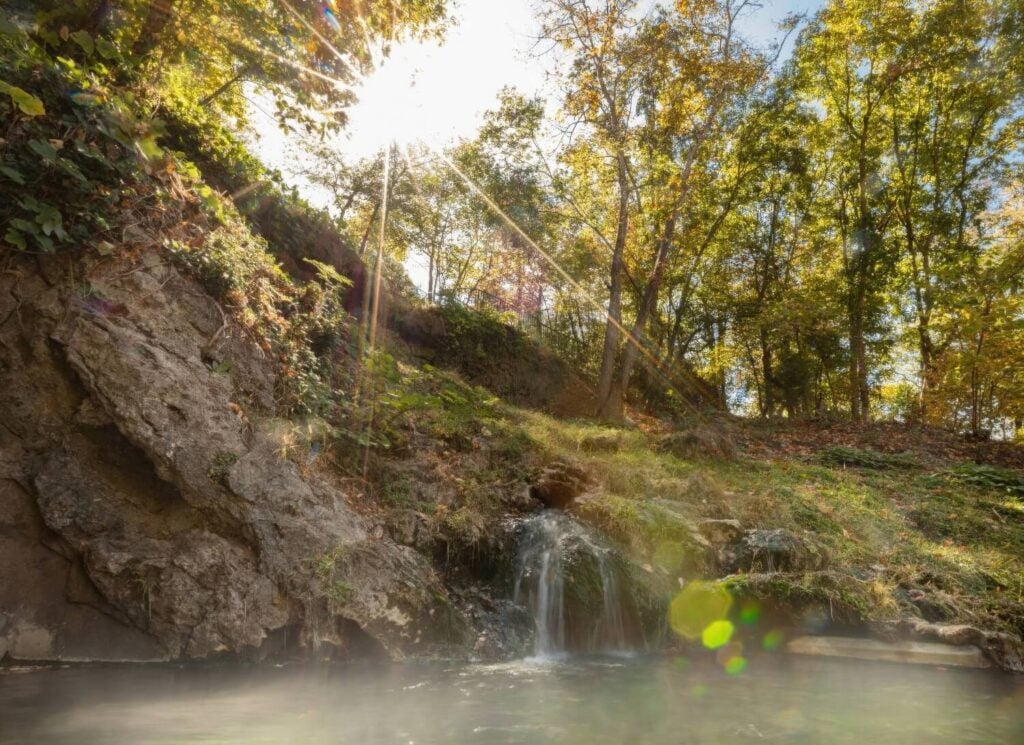
A national park whose main attraction is a row of buildings. Bathhouse Row is why Hot Springs, Arkansas holds national park status at all, and the flagship destination for hot springs in America east of the Rockies precisely because it is nothing like a wild spring.
Eight bathhouses line the row. Only two still operate as bathhouses. Buckstaff opened in 1912, is the only facility on the row that has never fully closed, and runs traditional individual tub baths.
Quapaw, built in 1922, runs modern spa services: thermal pools, private baths, and a steam cave. Both pipe thermal spring water straight in. Rates are not published on the park service’s page, so check with the operator before you budget.
This is an indoor bathing tradition preserved as a park, with trails and 1800s architecture, not a mountain pool steaming in the open.
East of the Rockies the soak is almost always a building: a bathhouse, a private tub, a heated indoor pool. The springs here are fewer and cooler, developed around medical treatment rather than recreation, which is why items 11 and 12 look as they do.
The verdict: right for travelers who want history and a walkable park town without a Western flight. Wrong if your mental image is steam rising off an outdoor pool in the snow. Confirm your bathhouse is open and booking before you drive.
11. Berkeley Springs, West Virginia: The Only Government Run Spa in America
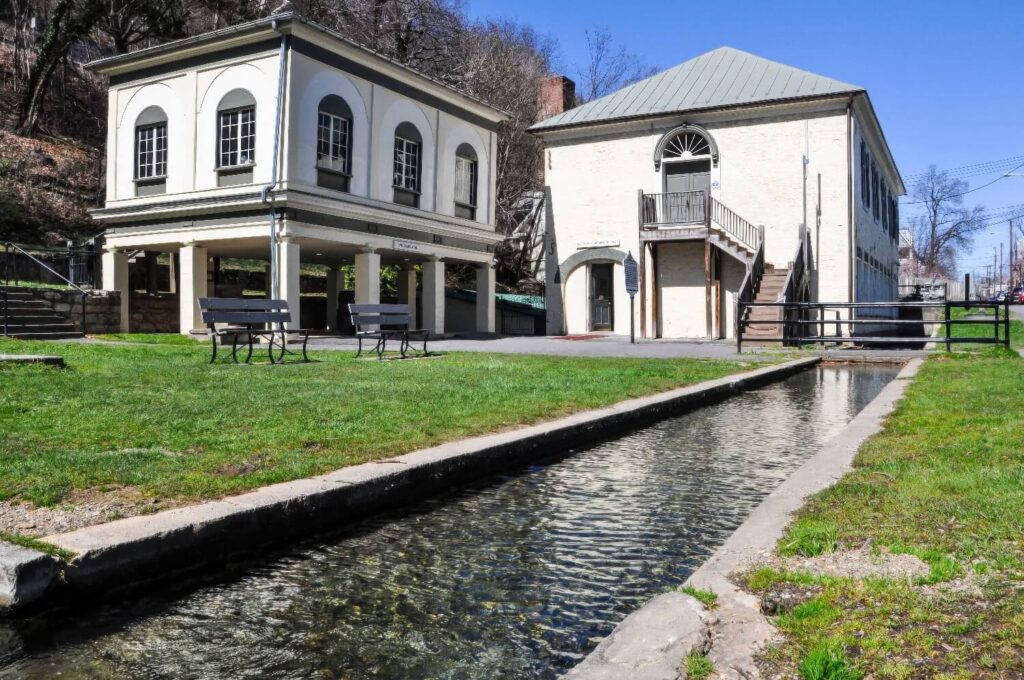
Berkeley Springs State Park is the only government-run spa in the United States. State employees run the tubs.
The public springs flow at a constant 74.3°F year-round, free to wade in at any hour. 74.3°F is lukewarm. The free spring is a wade, not a soak, and the genuinely hot experience means paying for a private tub where the water is heated rather than arriving that way. Most guides let readers assume otherwise.
The paid options split two ways, and that is the whole decision at the counter. The historic Roman Bath House has nine 750-gallon walk-in tubs in private chambers, booked in 30 or 60-minute sessions, water heated to 102°F. The newer main bathhouse has a 150-gallon jetted whirlpool bath, also heated to 102°F. One is a room-sized tub you step down into; the other is a large jacuzzi.
The town markets itself as America’s first spa town, with free public mineral bathing since colonial times. The institutional fact in the first line is the stronger claim.
Quick comparison: the free public spring is a 74.3°F wade and the history. The Roman Bath House 750-gallon walk-in tub at 102°F is an actual soak. The 150-gallon jetted bath is the fallback when the walk-in tubs are booked. Only the middle option is what most people mean by hot springs.
12. Roosevelt Baths, Saratoga Springs, New York: A 1930s Mineral Bath for $55
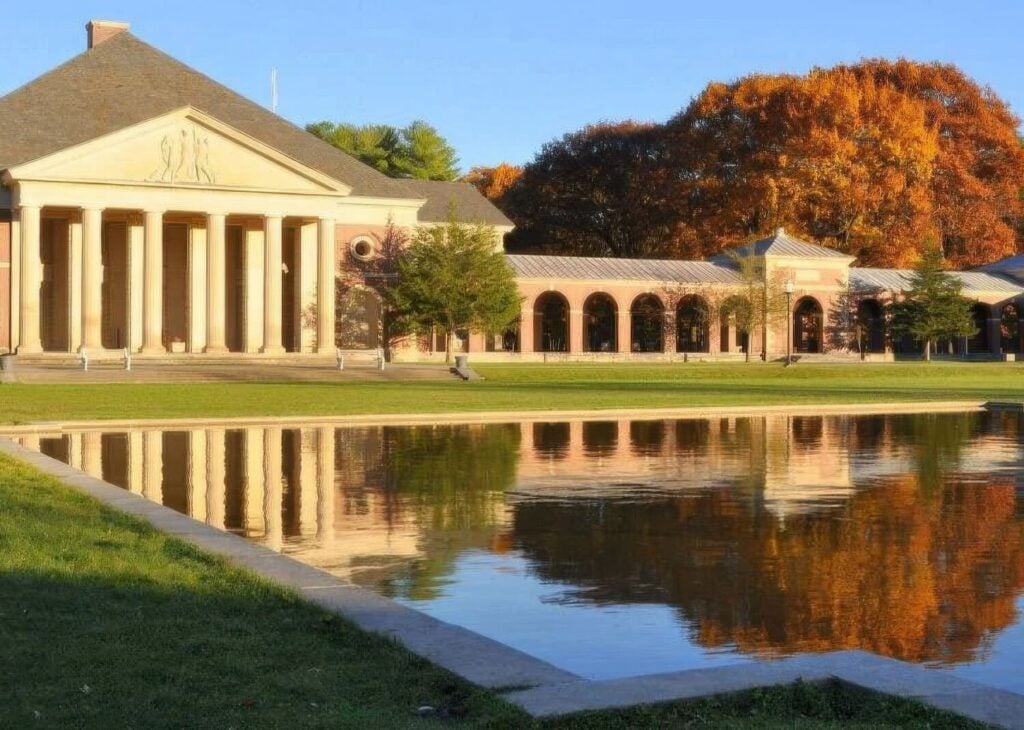
Fifty-five dollars buys a 40-minute private mineral bath at Roosevelt Baths, the cheapest paid soak on this list and $20 to $40 less than a day pass at Ojo Caliente. For anyone in the Northeast assuming a hot spring means a flight west, that price is the argument.
Roosevelt Baths opened in 1935 under an FDR-era preservation initiative and still occupies the original building, 91 years old, with much of its 1930s tile and fixtures intact. The water is iron-rich and naturally effervescent, the same mineral water historically bottled and sold as Saratoga Springs Water. You sit in water that fizzes. Nothing else on this page does that.
Hours are tight: Wednesday through Monday, 8:15am to 5:00pm, which closes Tuesdays entirely and rules out an after-work soak on every other day. And this is an indoor private tub, not an open-air natural pool. Anyone chasing the steam-in-snow image from items 2 and 5 should know that before booking.
Direct recommendation: book a weekday morning slot, take the 40-minute bath without adding spa services, and build the rest of the day around Saratoga Spa State Park. If you have been assuming a hot springs trip means airfare, this is the $55 test of whether mineral soaking is for you.
Hot Springs in the US: Frequently Asked Questions
Which states have hot springs?
Idaho, California, and Nevada hold more than half of the country’s thermal springs, each with 150-plus locations out of more than 1,000 nationally. Roughly 25 states have soakable springs. Colorado alone has over 120 identified springs, and the eastern outliers worth traveling for are Arkansas, West Virginia, and New York. California’s resort concentration sits in Napa Valley, not the Sierra.
What is the largest hot spring in the US?
Depends which measure you mean. The largest soakable pool is Glenwood’s Grand Pool at 1,078,000 gallons, marketed as the world’s largest outdoor mineral hot springs pool, though that superlative is promotional, not verified. By flow, Colorado’s largest single spring is the Yampa Spring at Glenwood: over 2,000 gallons per minute, more than 3 million gallons a day, and a depth nobody has measured.
Are US hot springs safe from the brain-eating amoeba?
The risk is real but extremely rare. Naegleria fowleri has been detected in Grand Teton National Park hot springs in a peer-reviewed USGS and NPS study. CDC guidance is behavioral rather than chemical: keep your head above water, hold your nose or wear a nose clip if you jump or dive in, and do not disturb shallow sediment. The CDC does not recommend water testing or warning signs, because no standardized test exists.
Can you soak in a hot spring while pregnant?
Stay under about 100°F (38°C), limit sessions to 10 to 15 minutes, and clear it with your doctor first. ACOG advises against sauna and hot tub use early in pregnancy, when a raised core temperature has been linked to neural tube defects. Heart conditions and high blood pressure are separate reasons to skip hot soaking.
Is Boiling River in Yellowstone still open?
No. The Boiling River soaking area was permanently altered by the June 2022 flooding and remains closed to public soaking. It is not considered safe or open, and any guide still recommending it is out of date. General rule for soaking spots inside national parks: verify status with the park before the drive.
Do you need a reservation or permit for US hot springs?
It runs across three tiers. Glenwood needs nothing: walk in, buy an all-day pass. Homestead Crater and Strawberry Park are advance-booking only with timed slots and no walk-ins. Conundrum requires a $6 Recreation.gov overnight permit with just 20 campsites a night, released 8:00am Mountain Time on February 15 for April through July dates and June 15 for August through November, plus a cancellation release four days out.
What are the rules of hot springs etiquette?
Keep everything out of the water. No soap, shampoo, sunscreen, or bug spray, including biodegradable products, which need 200-plus feet of soil contact to break down and can disrupt a spring’s mineral balance. No glass, decant into shatterproof containers. Test the temperature before entering. Stay on established trails, since off-trail damage has closed sites. Pack out everything, food scraps included. Some properties, Strawberry Park included, go clothing-optional after dark.