
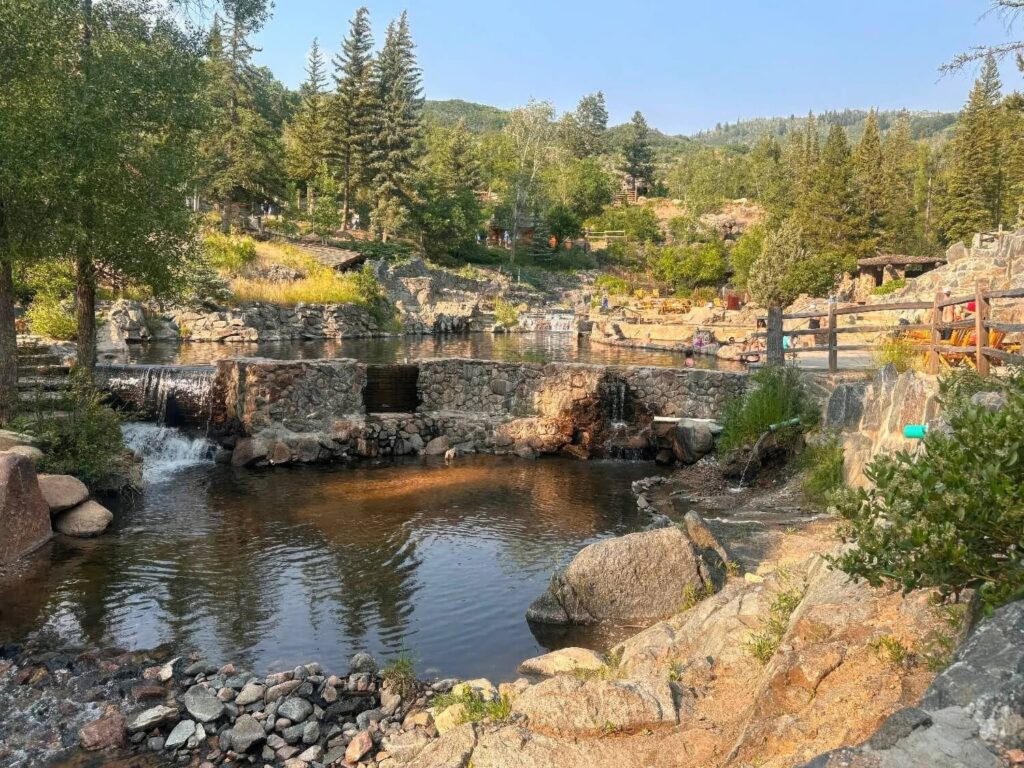
Strawberry Park Hot Springs, Colorado
Mineral Springs and Geothermal Waters: What the Science Actually Supports
Mineral springs and geothermal waters help with joint pain and some skin conditions, but the mechanism is heat, buoyancy, and specific water chemistry, not minerals soaking through your skin. Before booking, check the water type against what you want and whether the resort publishes mineral concentrations you can verify.
In 30 Seconds
- A mineral list with no mg/L and no date tells you nothing; ask for the water analysis instead.
- Cap hot-pool time; core temperature can hit 102°F in ten minutes, and pregnant or cardiac guests should check with a doctor first.
- Suits travelers with joint pain and first-timers at managed springs; skip if sulfur smell or hot immersion is a problem.
Castle Hot Springs in Arizona publishes five minerals with exact concentrations, down to two decimal places. Murrieta Hot Springs in California markets nine minerals and publishes no concentrations at all. Both tell you the same story: the minerals pass through your skin while you soak.
Four researchers went looking for the evidence behind that mechanism and concluded it was “scientifically unsupported”.
So what are you actually paying for? The honest answer is more interesting than either version. Mineral springs and geothermal waters produce real, measured effects on the body. They are mostly not the effects the brochure names. Heat, buoyancy, and a few specific water chemistries do the work.
That distinction changes what you should book. Below: what separates a mineral spring from a geothermal one, which hot springs benefits survive clinical scrutiny, what the four types of hot springs feel like in person, and how to tell whether a given resort earns the trip.
Mineral Spring or Geothermal Spring: Why the Label Changes Your Trip
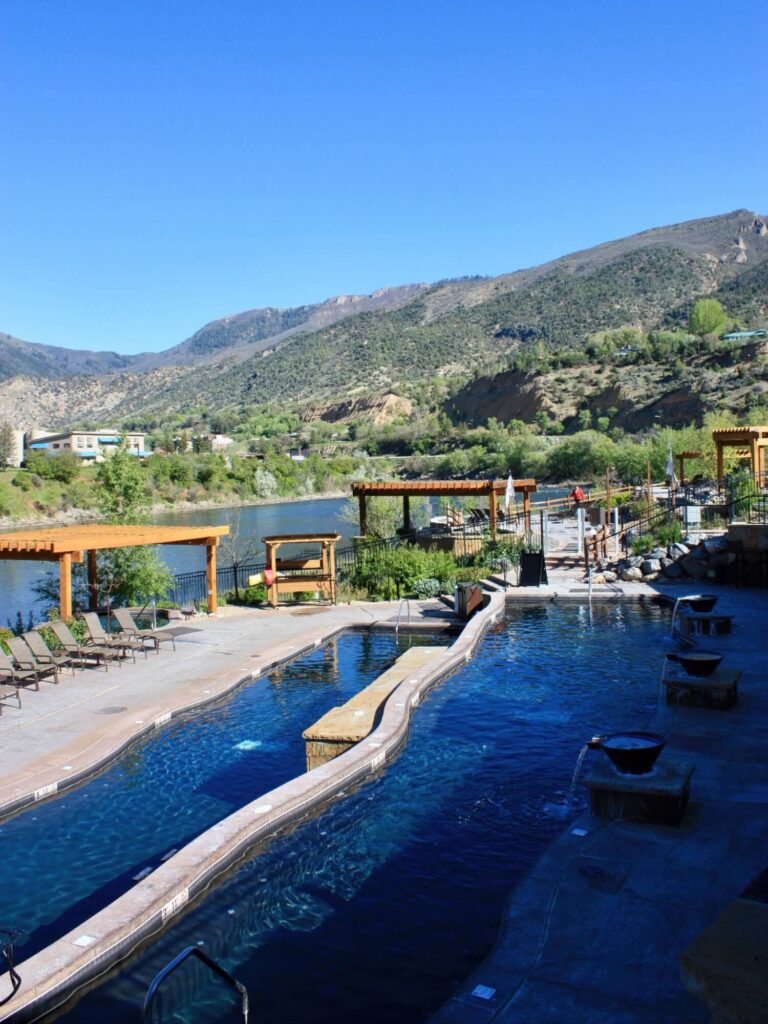
Florida’s best-known healing-waters destination, Warm Mineral Springs in North Port, sits at a constant 85°F year-round with no volcanic heat behind it. It is a mineral spring that is not a hot spring.
Heat and mineral density are two independent dials. A thermal spring is defined by temperature drawn from geothermal heat. A mineral spring is defined by dissolved mineral and gas content high enough to change the water’s taste or claimed medicinal effect. It can be cold, cool, or warm, classified by whichever mineral dominates: saline, sulfur, chalybeate (iron-rich), or alkaline.
Hot does not mean mineral-rich. Mineral-rich does not mean hot. Destinations sell you one dial while you quietly assume the other.
The heat itself comes from only two places. Shallow magma warms groundwater directly, or water circulates deep through fault systems and picks up heat from rock warmed largely by radioactive decay of potassium-40, uranium isotopes and thorium-232. That decay accounts for 45 to 90 percent of the heat escaping the Earth.
The second mechanism is the one that changes your booking. The longer and deeper the circulation path, the more rock the water dissolves on its way up. Hot Springs National Park’s thermal water is over 4,000 years old by the time it surfaces. Every spring’s profile is a product of its own plumbing, which is why no two mineral springs and geothermal waters are interchangeable.
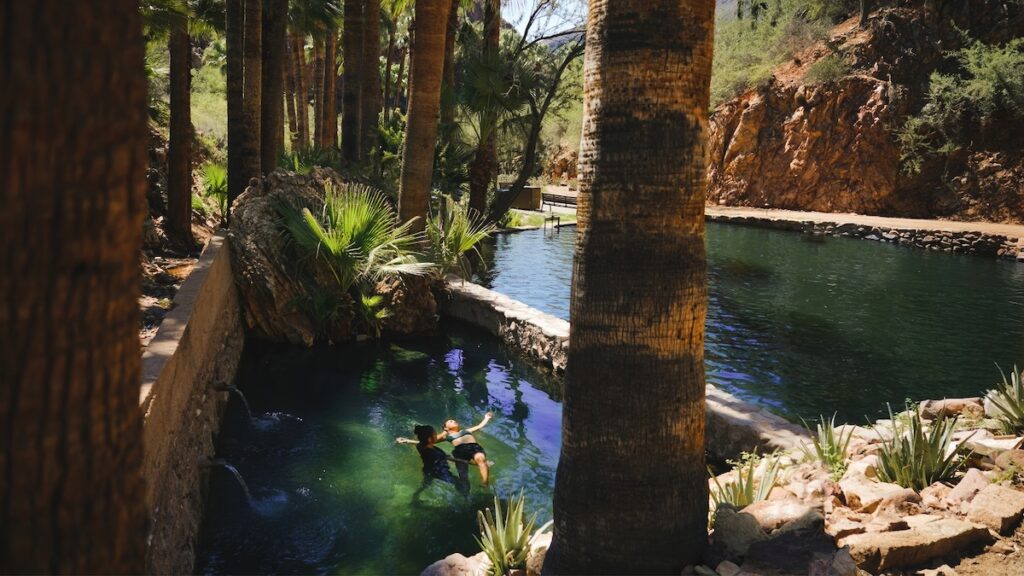
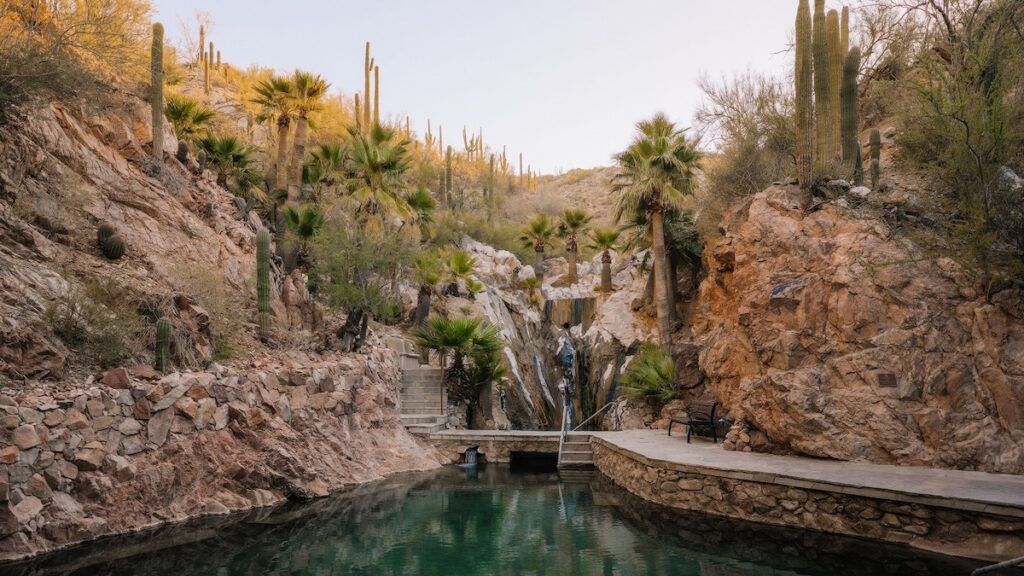
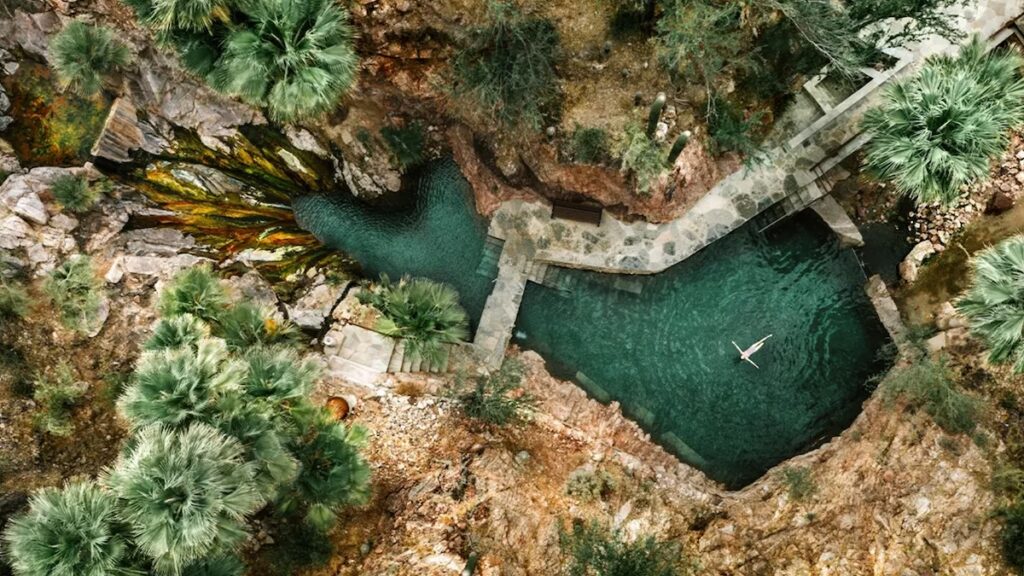
Two questions settle most bookings. If you want heat and visual drama, check surface temperature and flow rate: Castle Hot Springs surfaces over 200,000 gallons of 120°F water daily into a three-tier pool circuit running 106°F down to 86°F. If you want water chemistry, ask for the published analysis rather than the mineral list. Those are different requests, and resorts answer them very differently.
What Soaking Actually Does to You, According to the Research
The most repeated claim in hot springs marketing is that minerals travel through your skin while you sit in the water. One resort video puts it plainly: “as you soak your pores accept them through into your body.” That is how the whole category talks about itself.
The evidence does not support it. Uwe Gröber, Tanja Werner, Jürgen Vormann and Klaus Kisters reviewed the literature and found transdermal magnesium scientifically unsupported. Magnesium ions cannot meaningfully cross the lipophilic stratum corneum, and the only plausible entry routes, hair follicles and sweat glands, cover 0.1 to 1 percent of skin surface area.
The supporting studies are thin. The strongest one had nine participants and measured hair rather than serum magnesium. A 34-person Phase I trial using magnesium lotion found no significant serum difference against placebo.
Strip that claim out and a credible case remains.
| Condition | What the studies show | Confidence |
|---|---|---|
| Osteoarthritis, chronic low back pain | 16 of 17 trials (1989-2018, n=30-188) found significant pain reduction; OARSI endorses balneotherapy as complementary treatment | Direction consistent, study quality uneven (only 2 of 17 rated low bias-risk) |
| Fibromyalgia | Moderate-to-strong evidence for a small pain reduction and small quality-of-life gain | Real but modest |
| Psoriasis, atopic dermatitis | Dead Sea climatotherapy shows 70-88% plaque clearance across three decades of cohort studies, 6-8 month average remission after a 4-week course | Strongest of the three, and not a cure |
One caveat on that last row, because resorts borrow it most freely. Dead Sea water is roughly 34% magnesium and 28% potassium with sodium comparatively low at about 18%. A sodium-chloride-dominant resort pool is a different substance. Those clearance rates do not transfer.
Dr. Marcus Coplin, Medical Director of The Springs Resort in Pagosa Springs, offers the framework that replaces the myth: three effects, not one. Thermal, meaning controlled heat stress. Physical, meaning buoyancy taking gravity off loaded joints. Mineral, which is specific to each spring and where he is careful to say “it really isn’t more is better.”
His one measurable mineral example is sulfur. Soakers in a sulfur pool show greater pain reduction and lower inflammation than people in plain tap water at the same temperature.
The verdict: soaking in mineral springs and geothermal waters earns its place as an adjunct for joint pain and certain skin conditions. It is not mineral supplementation through your skin. A resort that sells it that way is telling you about its copywriting, not its water.
The Four Types of Hot Springs and What Each One Feels Like
Pagosa is a Ute word meaning stinky water. The Colorado town takes its name from the smell. A spring’s chemistry is something you meet with your nose several minutes before your skin.
Geologists sort thermal water into four hydrochemical types. Translated into what you smell, see and feel at mineral springs and geothermal waters, they break down like this.
Alkaline chloride and silica
Near-neutral pH, high dissolved silica, geyserite deposits around the edges. The water reads milky blue and feels soft rather than sharp, and the silica settles into a mud you can apply as a mask. The benchmark is Iceland’s Blue Lagoon at 99-102°F with salinity regulated to match the ocean.
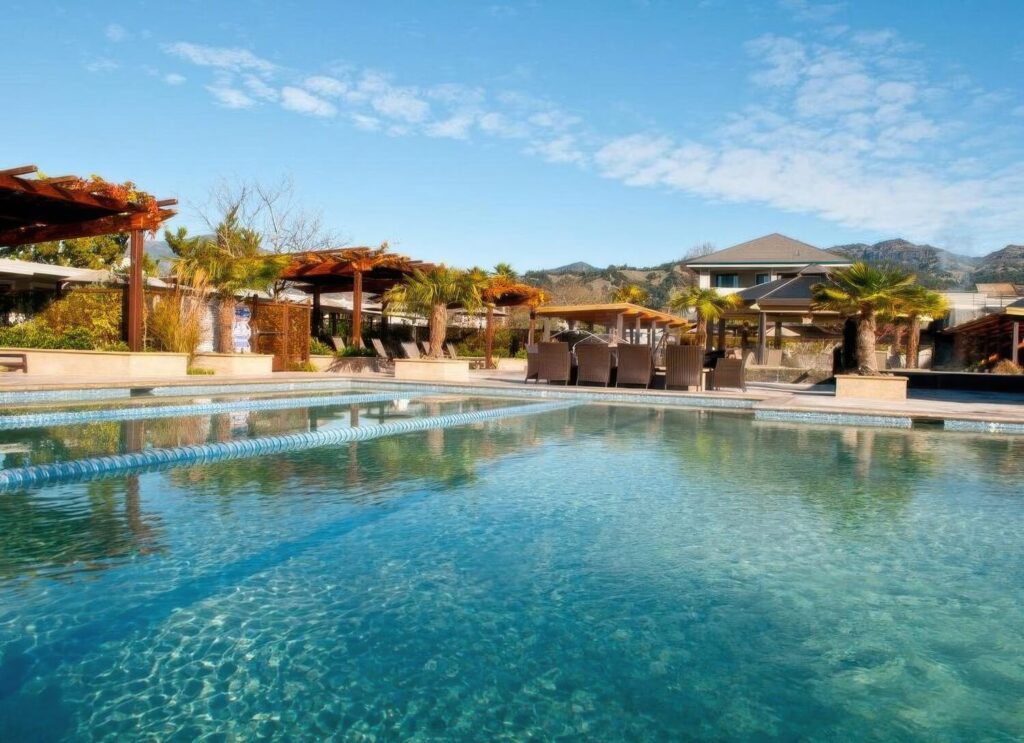
It is also a man-made lagoon, fed by Svartsengi Geothermal Power Plant runoff since 1976, and volume at the famous sites works against the calm they are sold on. Murrieta runs a US version at its Mud Beach, where visitors report noticeably softer skin and no staining on swimwear.
Acid sulfate
Hydrogen sulfide oxidizes to sulfuric acid, driving pH as low as 0.8 in extreme features. This is the rotten-egg category. Pagosa Springs sits within a Colorado system of 120-plus identified springs, and Beppu, Japan runs over 2,000 individual springs plus the “8 hells” sightseeing circuit.
Sulfur carries the best-documented mineral effect of the four. The smell is a genuine dealbreaker for some people, and the low-pH variants need active management before anyone bathes in them.
Bicarbonate
Carbon dioxide plus groundwater working on carbonate rock, precipitating white travertine terraces. Reservoir temperatures tend to run cooler, which makes these the most comfortable waters for a long soak. Dramatic to look at, mild to sit in: no smell, no color, nothing to react to. Pamukkale and Mammoth are the reference sites, and both restrict access heavily because travertine is fragile.
Iron-rich
Microbial communities oxidize iron into rusty clumps and deposits, staining the rock orange. This is the least commercially developed type of the four. Expect to meet it at unmanaged wild springs; almost nobody has built a resort on one. Chalybeate water is also the classic drinking-cure mineral of European spa towns, which is a different tradition from bathing in it.
Match the type to what you want. Photogenic and skin-focused, go silica. Joint pain, tolerate the sulfur. Long unhurried soaks with a view, bicarbonate.
How to Read a Resort’s Mineral Profile Without Being Sold To
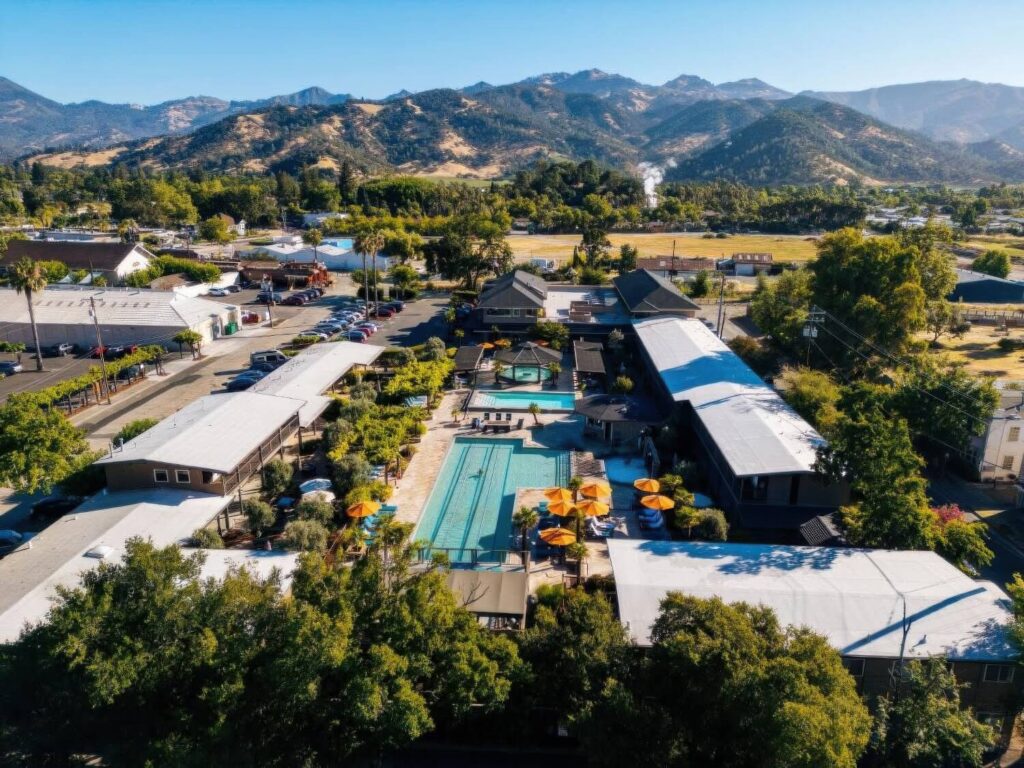
Castle publishes five minerals with exact concentrations. Murrieta markets nine and publishes none. Same category, same promise, two completely different standards of disclosure, and no reader has a benchmark for judging either.
Start with the numbers Castle publishes.
| Mineral | Concentration |
|---|---|
| Sodium | 218.89 mg/L |
| Bicarbonates | 137 mg/L |
| Calcium | 33.82 mg/L |
| Magnesium | 1.45 mg/L |
| Lithium | 0.30 mg/L |
Magnesium at 1.45 mg/L is a trace. Even if transdermal absorption worked, and the research section above covers why it does not, there is almost nothing there to absorb.
This is a sodium-bicarbonate water, and that is a perfectly good thing to be. It is just not the thing the mineral list implies. Our full review of Castle Hot Springs covers what that profile means for the property itself.
Murrieta’s nine minerals (sulfate, chloride, boron, calcium, lithium, potassium, sodium, silica, bicarbonate) is a longer list that tells you less. Without mg/L, a list is a claim, not data.
Three questions handle any mineral table you meet:
- Are concentrations published in mg/L, with a date? No numbers means no analysis you can check.
- Which one or two minerals dominate, and does that match the water type you want? Cross-reference the four types above.
- Is the claimed benefit supported for bathing, or borrowed from oral supplementation research? Most per-mineral benefit copy is borrowed. Coplin’s line is the anchor: every spring has its own balance, and more is not better.
Brandon Price of Medicine Springs explains the real mechanism accurately: geothermal water dissolves minerals from the rock layers it travels through, which is exactly why profiles are site-specific and non-transferable. Note where that quote is published. It sits on a resort’s own blog. Provenance is part of reading a mineral profile, and it feeds directly into how we score every spa we assess.
Where to Go: Matching Region to the Experience You Want
The Global Wellness Institute tracks Japan, Iceland, the USA, New Zealand, Turkey and Italy as the concentration points for this sector. That is your shortlist, and the category is large enough to have real infrastructure behind it: 31,200 establishments earning over $62 billion as of 2023.
Pick the region for the experience you want.
- Japan: density and ritual. Beppu counts more than 2,000 individual springs, and onsen bathing goes back at least two thousand years. Right for travelers who want the practice rather than the amenity package. Check tattoo policy first, covered below.
- Iceland: engineered spectacle. Blue Lagoon, silica-rich, 99-102°F, geothermal-plant origin. Right for a first-timer who wants the visual and the ease.
- Central Europe: Hungary and Tuscany carry the balneology tradition, including drinking cures, and come closest to a medical framing of bathing. Hungary and Turkey also generated most of the osteoarthritis trial evidence.
- Western US: range and accessibility, from roadside wild springs to full resorts. Colorado holds 120-plus identified springs, which Ute tribal members describe as ancestral healing sites used for time immemorial. California concentrates its mineral-water properties at two ends of the state. The north end of Napa Valley, where Dr. Wilkinson’s has run a mineral-springs operation for decades. The southern cluster runs from Glen Ivy in Corona down to Desert Hot Springs, where day passes start at $15 against Napa’s resort rates. From roadside wild springs to full resorts — 12 US soaks worth the trip ranks the standouts.
- New Zealand: geothermal landscape paired with resort infrastructure, and the only Southern Hemisphere entry on the GWI list.
The filter is simple. First trip to mineral springs and geothermal waters: go where the water type matches what you want and the facility is professionally managed. Been before, and the chemistry itself is the point: go where the tradition is oldest.
Where to try it
Hotels in This Guide
 SpaRator 8.5: Outstanding
Phoenix
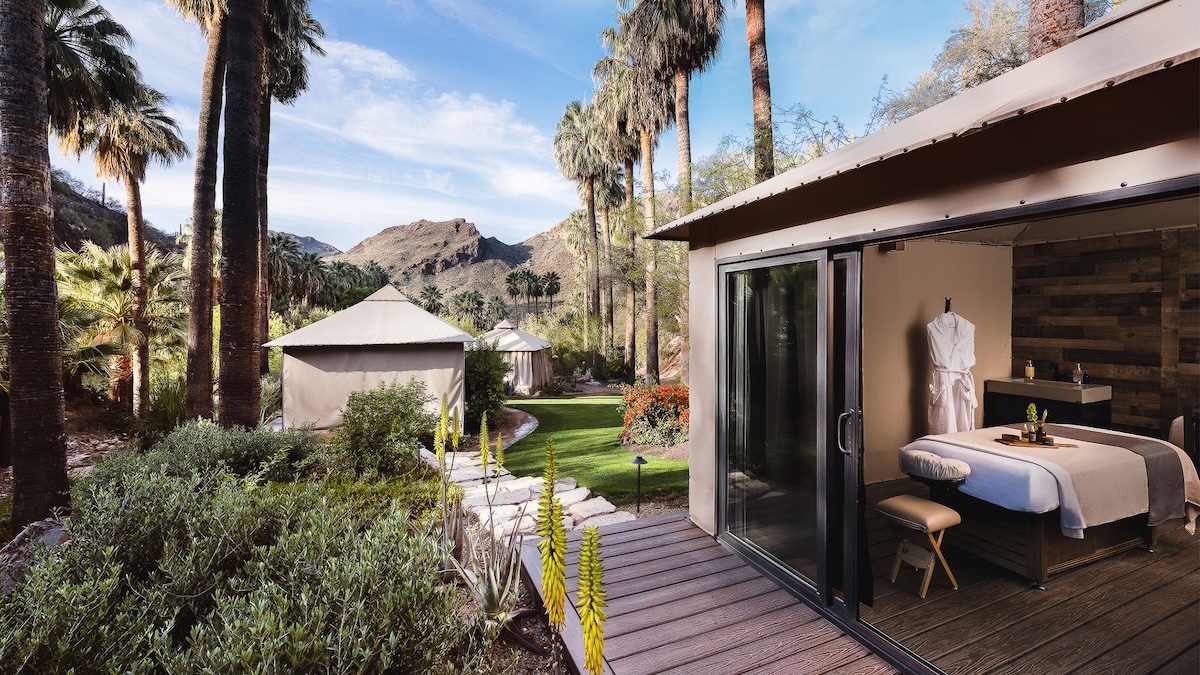
Castle Hot Springs
See the analysis: Castle Hot SpringsBook direct with the hotel: Castle Hot Springs
Day Pass or Overnight Stay: Running the Numbers on a Springs Trip
At Murrieta, one night in a King Junior Suite came to $368 plus a $59 resort fee, $427 total for two people. Two day passes each across two days would have run $396. The overnight stay covered the day passes and removed the clock.
The published day-pass rates: $99 per adult and $50 per child Friday through Sunday, $89 and $45 Monday through Thursday, 9am to 10pm, covering 27 geothermal pools plus the adults-only pool, bathhouse hall and panoramic sauna. Staying overnight adds 24-hour soaking, guest-only private pools, two robes, water bottles, an in-room sleep ritual tray, and free classes including aqua sound bath and restorative yoga.
Across the wider market, day passes run roughly $19 to $99 per adult depending on the resort and your residency, with some charging $50 for non-locals against $19 for locals, plus $18 robe and $5 towel rentals. Prices are as published across 2024 and 2025, and they will move.
Run four steps before you book:
- Price the day-pass total for the number of days you would realistically soak.
- Compare that against room rate plus resort fee, not room rate alone.
- Assign real dollar value to stay-only perks: skip-the-line wristbands, 24-hour access, private pools, included classes.
- When the totals land close, take the overnight. The stay buys you the removal of a deadline.
The math works the same way in Calistoga, where properties like Calistoga Spa Hot Springs sell both formats side by side.
One caveat that price does not predict: quality. Reviewers report algae in pools and irregular maintenance at some properties, alongside unreliable temperature control and malfunctioning jets. Read recent reviews for maintenance specifically. A premium rate is not a maintenance guarantee.
Thermal Bathing Etiquette and Who Should Skip the Soak
Anxiety about the rules keeps plenty of first-timers out of the water entirely. Which side is which, whether nudity is really mandatory, what happens if you get it wrong. Most of that anxiety resolves in a single sequence.
Terminology first: an onsen is a natural hot spring, a sento is a bathhouse with artificially heated water, and a rotemburo is an outdoor onsen.
The sequence, which generalizes well beyond Japan:
- Check the facility’s tattoo policy before you travel.
- Shoes off at the entrance, buy tickets, collect towels.
- Find the correct changing room. In Japan, curtain color signals it: red for women, blue for men.
- No swimsuits in a traditional onsen. You get a small towel, and it never touches the water.
- Shower and rinse completely at the washing station before entering the pool. This is mandatory, not optional.
- Keep hair and towel out of the water.
- Soak quietly. No swimming, no running, and avoid sitting where fresh hot water pours in.
- Dry off with the small towel before you step back into the changing room.
Tattoos remain a real planning variable. Most Japanese public baths still turn away tattooed guests, though the policy is loosening property by property. Confirm with the specific facility rather than assuming.
Then the part no resort page leads with. Hot immersion can raise core body temperature to 102°F within about 10 minutes, and hyperthermia during the first 4 to 6 weeks of pregnancy has been associated with increased risk of neural tube defects, miscarriage, and birth defects. Anyone pregnant or managing a cardiovascular condition should clear a soak with a doctor first.
For everyone else, three practical rules: hydrate before and after, cap your time in the hottest pools rather than riding it out, and do not soak with open wounds. The heat is doing more to your body than it feels like it is.
Mineral Springs and Geothermal Waters: Common Questions
Is soaking in mineral springs good for you?
Yes, as an adjunct for joint pain, with real caveats. 16 of 17 clinical trials found significant pain reduction in osteoarthritis, though only 2 were rated low bias-risk. Skin conditions have the strongest supporting evidence, and fibromyalgia shows a smaller effect. The transdermal mineral mechanism most marketing relies on is not supported. Heat and buoyancy explain most of the benefit.
Should you shower after mineral springs?
Showering before is mandatory etiquette. Showering after is your call. Onsen guidance says re-rinsing “doesn’t really make sense” if you want the mineral residue to stay on your skin. In practice many people rinse anyway, to lose the sulfur smell, wash off silica mud, or protect hair from harsh water. Some facilities suggest a quick cold rinse to stop the heating process.
How sanitary are natural hot springs?
Managed facilities are meaningfully safer than wild springs, and neither is risk-free. Naegleria fowleri thrives in warm freshwater up to about 115°F and enters through the nose. Legionella grows at 77-113°F, and a 2018-2019 cluster of five Legionnaires’ cases was linked to Hot Springs, Arkansas spa facilities using untreated spring water. Keep your head out of the water, avoid stagnant or poorly circulated pockets, and skip the soak entirely if you have open wounds.
Which state has the most geothermal hot springs?
Nevada. NOAA and USGS’s Thermal Springs List for the United States catalogued roughly 1,661 to 1,700 thermal springs across 23 states, heavily concentrated in the geothermally active west. Nevada, California, Idaho, Colorado and Wyoming hold the bulk of them, which is why almost every US springs itinerary points west of the Rockies.
Is hot springs water good to drink?
Only where it is tested and monitored. Hot Springs National Park’s water meets US safe drinking water standards and is over 4,000 years old at the surface. European bicarbonate drinking cures are associated with improved digestion, reduced LDL and fasting glucose, and reduced gastric acid. Colder mineral springs run mildly laxative. Untested spring water anywhere else can carry pollutants and bacteria.