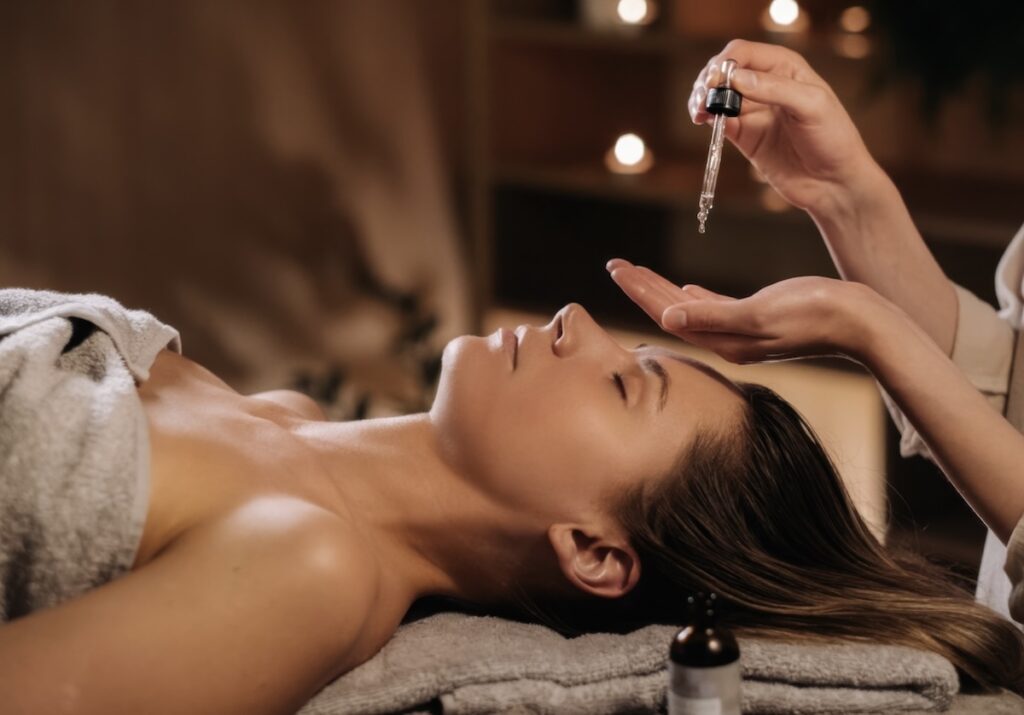
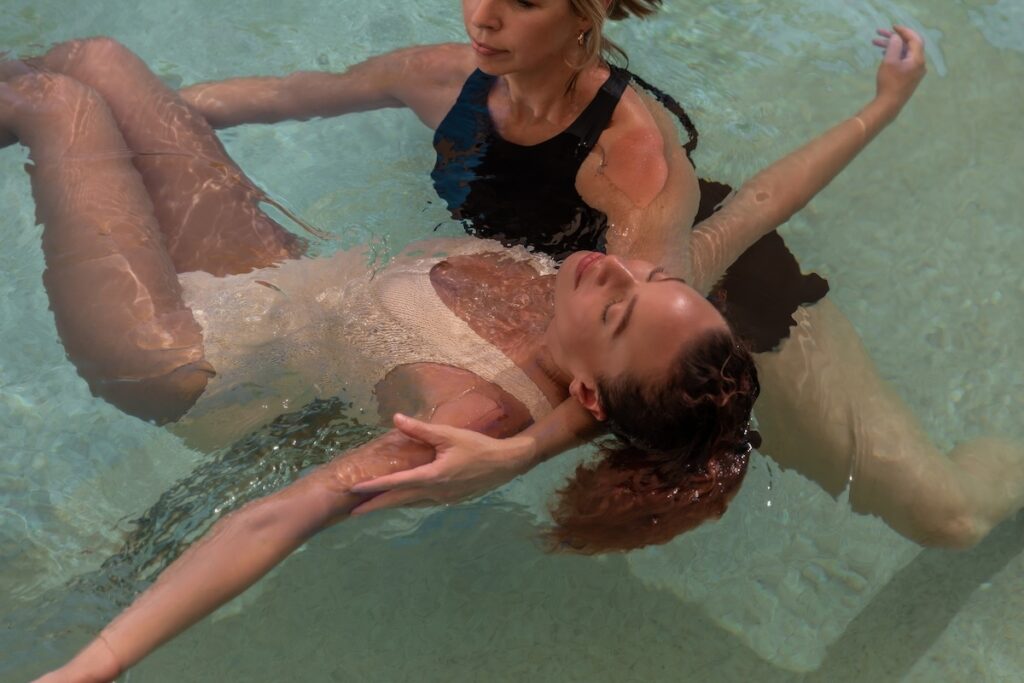
CIVANA Wellness Resort and Spa, Carefree
Watsu Explained: What Aquatic Bodywork Feels Like, What It Costs, and Where to Book It

Founder & Editor, Spa Hotel Finder
Experience
20+ years in media and travel publishing
The Telegraph · Condé Nast International · Time Out Group
Education
Executive MBA · ESCP Business School
Expertise
Spa Hotels · Spa Pricing and Resort Fees · Wellness Travel · Hot Springs and Bathing Traditions
Published · Updated · 12 min read
Watsu is a one-on-one treatment in chest-deep water warmed to about 95°F, where a practitioner holds and stretches you while you stay entirely passive. The decision that matters is how you feel about close, sustained contact: calming for some, a reason to skip for others.
In 30 Seconds
- Only one US resort publishes a straightforward watsu price; most expect a phone call.
- Independent practitioners charge $90 to $185 for 60 minutes, roughly half the resort rate.
- Suits travelers who find sustained contact calming or cannot switch off; skip it if you tense up or get motion-sick.
Watsu: what our scored hotels show
scored hotels offer it
Where they sit on the field
- Offers it
- Other scored hotels
Spa details are on file for 110 of 128 scored hotels, so the count is a floor.
See where to book itCanyon Ranch Tucson lists Watsu Aquatic Massage at $240 for 50 minutes, above most table treatments on the same menu, under a description about softening muscles and opening energy pathways. That tells you the price and almost nothing about what will happen to you.
In practice: a practitioner stands with you in chest-deep water held near 95°F, cradles your head and lower back, and floats, rotates, and stretches your body for the whole session while you do nothing at all. No table, no draping, no oil. The modality started at a northern California hot springs in the early 1980s, which is why it turns up on resort spa menus rather than in clinics.
Nobody has explained this to you because the treatment is genuinely rare. Several of the most obvious US wellness resorts, including two built on hot springs, carry no aquatic bodywork on their published menus. What follows is where you can actually book watsu, what it costs, what happens from the pool steps onward, and who should skip it.
What Watsu Actually Is, and Why It Was Invented at a California Hot Springs
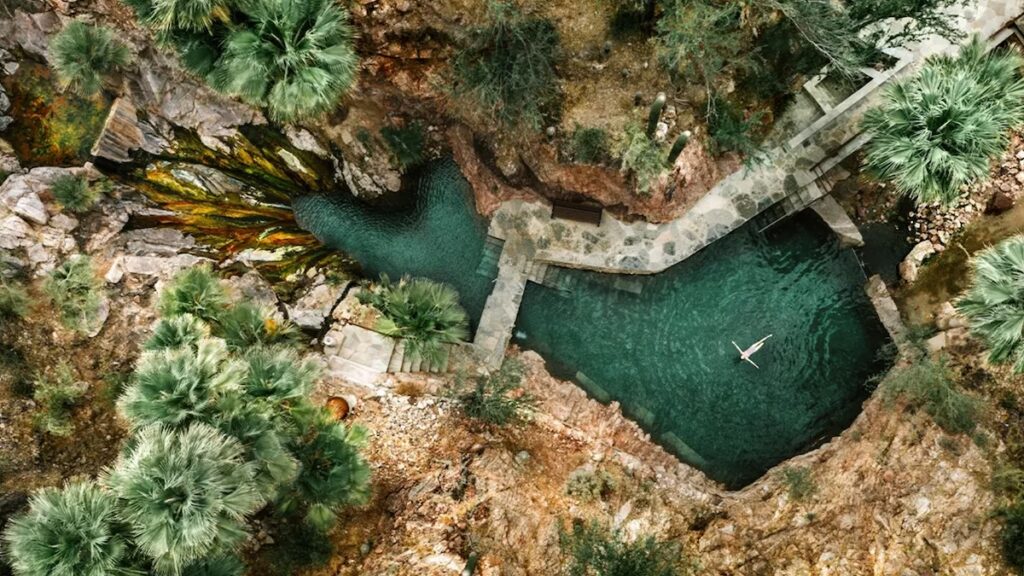
Two things guests confuse it with, and neither is close. A table massage leaves gravity intact: you lie still while a therapist works on you. A thermal soak leaves you upright in hot water with nobody touching you. Watsu applies shiatsu pressure-point work and joint mobilization while a practitioner carries your whole body weight in warm water, and you stay fully passive from the first minute to the last.
The water specification is the treatment, not a footnote. Practitioners target 35°C, or 95°F, and the working comfort range runs roughly 94 to 97°F, tight enough that some report noticing swings of half a degree. Depth sits near 1.2 meters, chest-deep on most adults, so a practitioner can move you without lifting you. A recreational pool runs nowhere near that.
Harold Dull developed the modality at Harbin Hot Springs in northern California in the early 1980s, after studying Zen Shiatsu in Japan and floating his students in the warm pools there. Watsu came out of a springs property, not a clinic, and that is the entire hotel connection.
Anyone planning a pilgrimage should check first. Harbin lost roughly 95% of its facilities in the 2015 Valley Fire and reopened partially in January 2019, and its own rebuild updates still list projects in progress.
Practitioner Toru Ogasawara describes the point as freeing the body from gravity and from mental control at once.
Water temperature, not the name printed on the menu, separates real watsu from a spa improvising in a lap pool.
Which US Resorts Actually Offer Watsu, and What They Charge
Six US properties have watsu or watsu-family aquatic bodywork confirmed on their current published materials. Exactly one of them publishes a straightforward price.
| Property | Session | Published price | The catch |
|---|---|---|---|
| Canyon Ranch Tucson (AZ) | Watsu Aquatic Massage, 50 minutes | $240 | Swimwear required. The only clean a-la-carte rate in this list |
| Castle Hot Springs (AZ) | Watsu (Water Shiatsu), 60 minutes, in mineral hot-springs water carrying lithium, magnesium, and bicarbonates | Not published | Sold inside the Wellness Through Water package, which carries a three-night minimum |
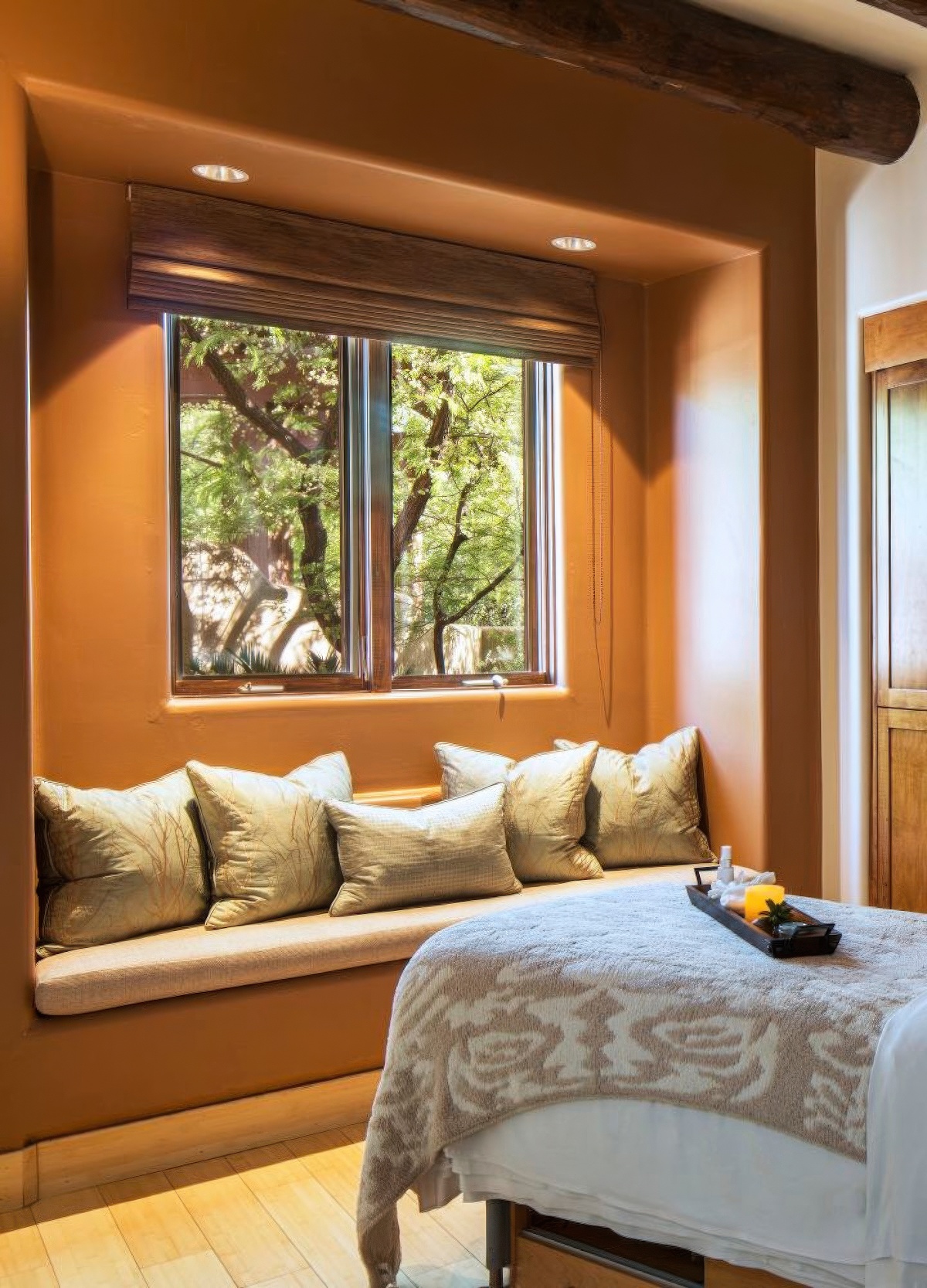
| Sanctuary Camelback Mountain (Paradise Valley, AZ) | 90 minutes with sound-bowl fusion, plus a separate Motherhood Watsu | Treatment band $185 to $375; Motherhood Watsu $415 Mon to Thu, $435 Fri to Sun | Reintroduced in 2023 with six practitioners and a dedicated immersion pool. No standalone watsu rate published online, so confirm by phone |
| Carillon Miami (FL) | Watsu & Aquatic Healingwork, plus WaterDance and Healing Dance, inside a 70,000 sq ft spa | Not published | No duration published either. The wellness concierge line is the only route to a number |
| Amangiri (Canyon Point, UT) | Watsu pool built into the 25,000 sq ft spa’s hydrotherapy circuit | Not published | Multi-night wellness packages run $4,515 to $12,345 per person |
| Golden Door (San Marcos, CA) | Watsu with craniosacral work and Tibetan singing bowls, on the menu since the late 2000s | No a-la-carte rate | One inclusive price, around $10,450 for seven days. Sessions run at capacity during men’s weeks |
Absence is the more useful half of this list. Two Bunch Palms in Desert Hot Springs appears in older listings with a watsu pool, but the current spa menu carries no watsu line item. Miraval Arizona has no aquatic bodywork in any menu category, from Ayurveda through Prenatal.
The Springs Resort in Pagosa Springs, sitting on 45-plus geothermal pools, shows no watsu in its published services. Neither Ojo Santa Fe nor Ojo Caliente lists it, and watsu near Santa Fe comes from a private practice rather than the resorts. Hot-springs branding and the word hydrotherapy on a menu do not imply anyone on staff can float you.
Call the spa before you book the trip, not after. Practitioner rosters run to a handful of people and menus move both ways: Sanctuary Camelback Mountain went years without watsu before bringing it back in 2023, and Two Bunch Palms went the other direction.
Where to try it
Scored Hotels with Watsu
These are today's SpaRator scores for hotels that offer it, highest score first.
We may earn a commission when you book through these links. It never affects a SpaRator score, and no hotel hosted or paid for this analysis. How we earn
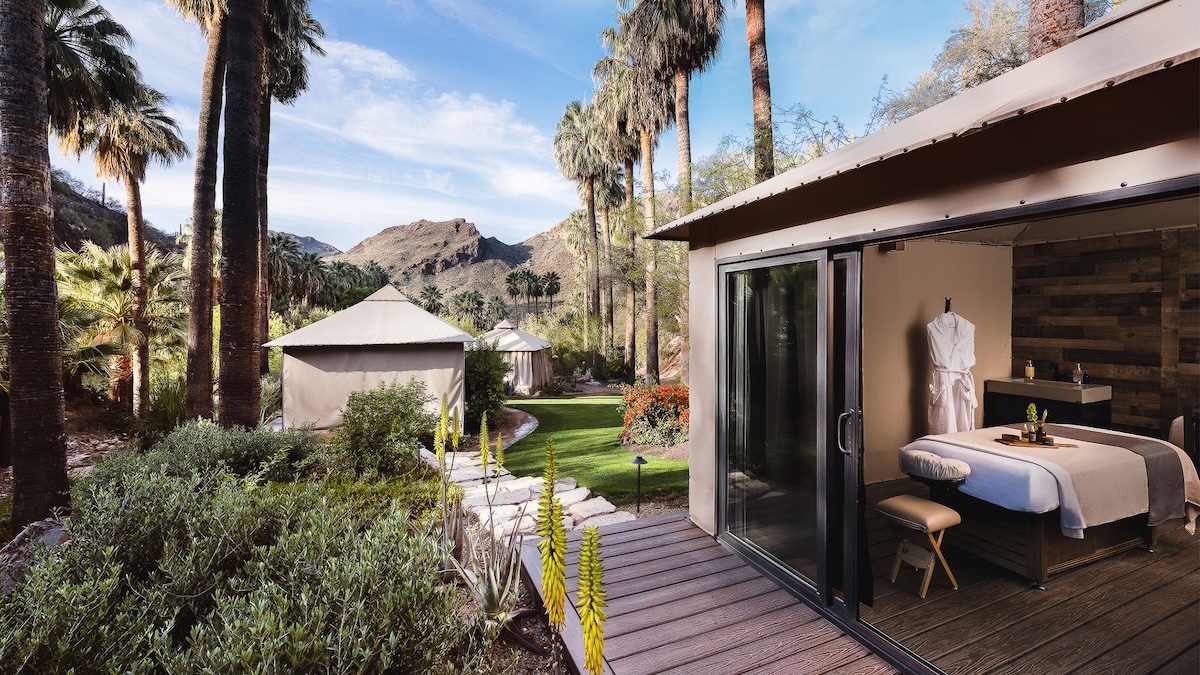 SpaRator 8.5: Outstanding
Phoenix
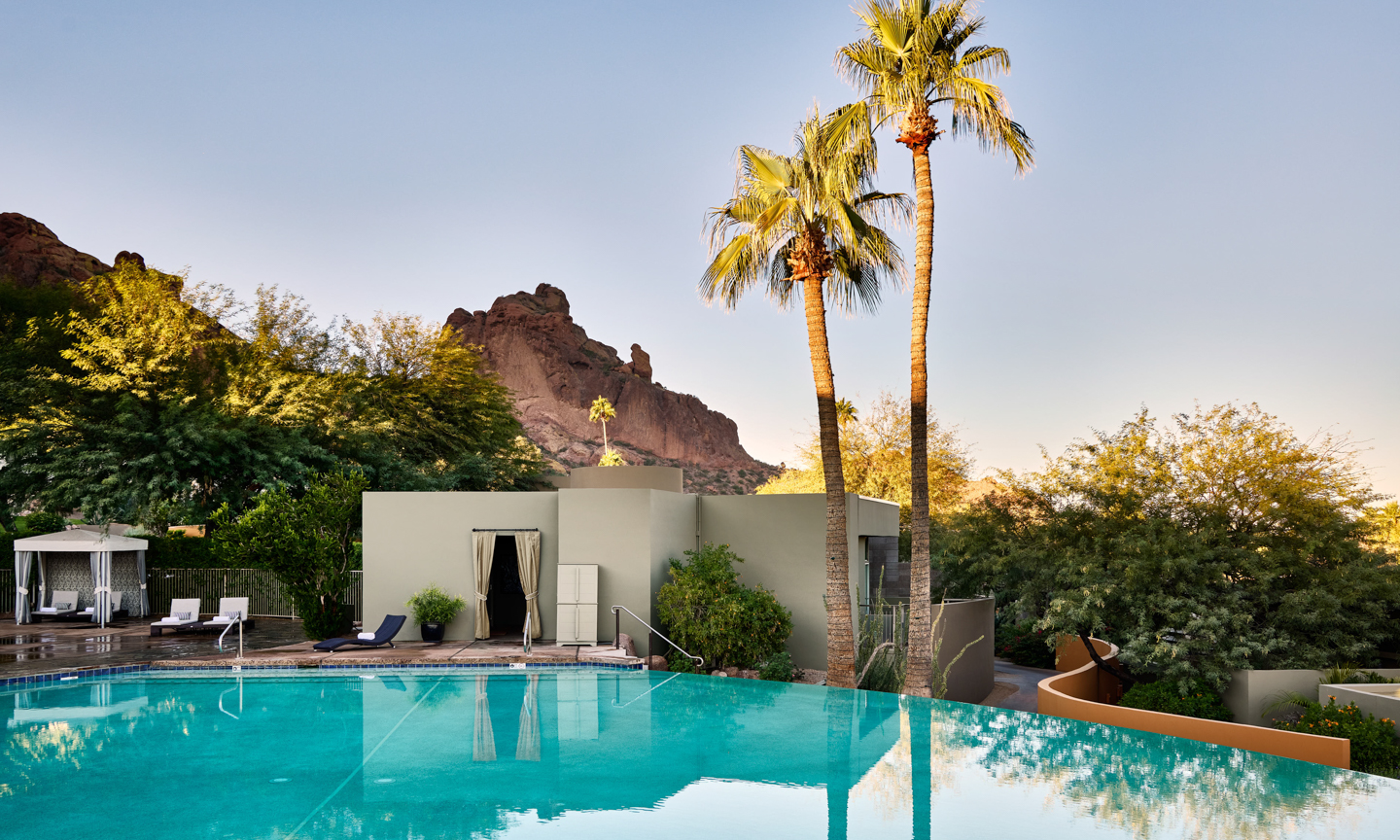
Castle Hot Springs
- 60 min$295
- 90 min$445
 SpaRator 7.3: Solid
Scottsdale
Sanctuary Camelback Mountain Resort and Spa
- 60 to 90 min$260 to $390
 SpaRator 7.0: Solid
Scottsdale
Boulders Resort & Spa Scottsdale, Curio Collection by Hilton
- 50 min$255
- 80 min$345
What Happens in a Watsu Session, From the Pool Steps to the Last Float
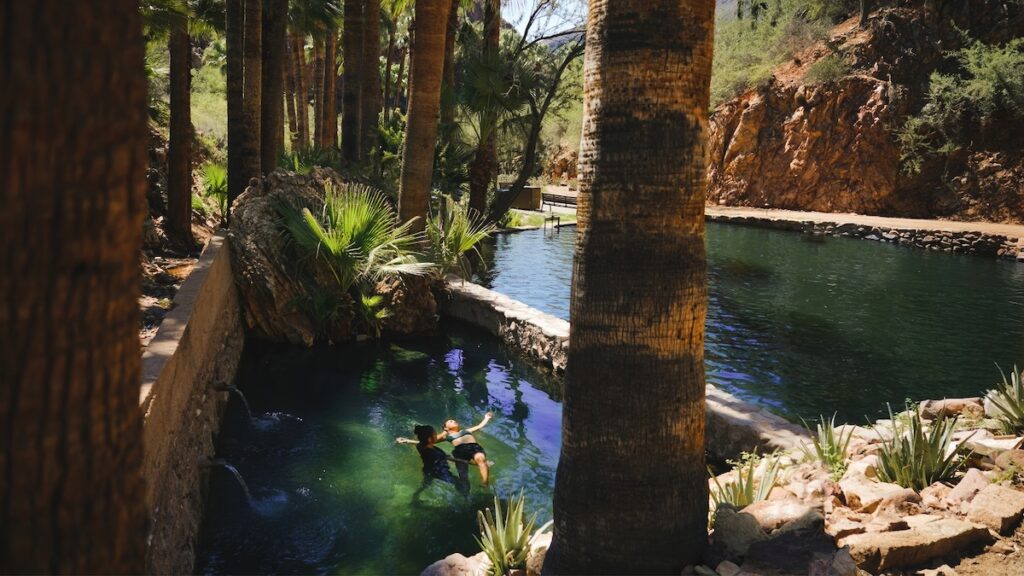
You will be asked to do nothing. Not to relax, not to breathe deeply, just nothing, and first-timers routinely find that doing nothing while a stranger moves them through water is harder than it sounds.
It starts dry. The practitioner takes a health history, asks how comfortable you are in water, and asks what you want from the session. You wear swimwear, required at Canyon Ranch and standard elsewhere, and the practitioner may offer leg floats and a nose clip.
The first thing that happens in the water is nothing much. Michelle, a practitioner working in Ibiza, describes holding the client’s head in one hand and the sacrum in the other, then simply sensing where the body is before moving anything.
Then the sensory drop. Your mouth stays above the surface and your ears go under. Practitioner Julie Hickey tells first-time clients exactly that before they get in, and it is the most useful sentence anyone can hand you, because near-silence is what makes watsu feel unlike any massage you have had. One filmed session account describes ears filling with water and something close to sensory deprivation setting in from there.
From there the session builds: supported floating and breath synchronization first, then leg swaying and torso rotation, then supported stretches and backbends. Longer or more advanced sessions can include brief underwater submersion on a held breath. You agree to that part beforehand, and nobody springs it on you.
The close is several minutes of stillness, then the practitioner walks you back to the pool wall. Ogasawara notes that unlike stacking two table massages into one day, clients tend to leave refreshed rather than flattened.
Fifty minutes at Canyon Ranch, 60 at Castle Hot Springs, 90 at Sanctuary Camelback Mountain. Watsu sessions run 50 to 90 minutes across the modality, and the practical read is that 50 minutes is a sampler while 90 is where the work actually happens.
The Closeness Factor: Who Books Watsu Twice and Who Should Skip It
Nobody selling this says the quiet part out loud. A person you met twenty minutes earlier holds your head and body against theirs, continuously, for the whole session, while your ears are underwater. No version of watsu involves less physical contact than a table massage, because the contact is the mechanism.
You set the limits on land. The pre-session conversation is where you say what you do not want, submersion is opt-in, and you can ask to go back to the wall at any point.
It suits people who want to be carried and have nothing asked of them. Julie Hickey works with clients rebuilding a felt sense of safety in water after an accident. Late-pregnancy guests are a recurring group, as is anyone whose nervous system will not switch off on a table.
It does not suit people who tense under sustained contact, who will spend 50 minutes bracing at $240. Emotional release is common enough that practitioners expect it: Toru Ogasawara describes clients coming to tears, or reporting sensations of the womb or of flying. Continuous rotation also overstimulates some people’s vestibular system, and motion sickness is a documented watsu precaution.
Skip it outright with open wounds, active infections, severe cardiac conditions, or uncontrolled epilepsy. Ask your doctor first about respiratory issues, pregnancy complications, or a genuine fear of water.
Best for: guests who find sustained contact calming, late-pregnancy travelers, anyone who cannot switch off on a table.
Skip if: a stranger’s touch makes you tense, you get motion-sick easily, or you want a treatment you can forget.
Does Watsu Actually Work? What 27 Studies Found and What They Did Not
The largest evidence synthesis on watsu covers 27 peer-reviewed studies, and its own authors are unusually blunt about how thin the field is.
The 2020 systematic review and meta-analysis by Schitter and colleagues in PLOS ONE pooled results across those studies. Eleven on pain produced a Hedges’ g of -0.71, ten on physical function -0.76, and five on mental outcomes -0.68. Those are moderate to large effects, the size a person notices for themselves rather than the size a statistician has to go looking for.
Then the same paper grades the underlying evidence as low to moderate at the best, citing small participant numbers, unclear risk of bias, and no standardized dosing. A review this bullish on its outcome data and this candid about its limits is rare. Take the numbers and the caveat as one package.
Two specifics a guest might care about. A controlled pilot in the third trimester of pregnancy put nine women in the watsu arm against eight passive controls and found lower self-reported stress and pain, improved mood, and no adverse effects. Two small fibromyalgia pilots point the same direction. Nine people is a signal, not a finding.
Practitioners also offer mechanisms the trials never measured: warm water making fascia more elastic, the mammalian dive reflex lowering heart rate, hydrostatic pressure acting as a lymphatic pump. Treat those as practitioner explanation, not physiology.
The honest read is that watsu is a well-supported relaxation and pain-relief treatment sitting on a thin research base, worth booking as a spa treatment and not worth booking instead of medical care.
Watsu, Ai Chi, WaterDance: How to Read Every Water Treatment on a Spa Menu
One question sorts every wet treatment on any spa menu: who is doing the work?
Someone floats you
This is the aquatic bodywork family, all recognized by the World Aquatic Bodywork Association. Watsu holds you close at the surface, ears under, mouth above. WaterDance, also called WATA, moves you underwater with nose clips through Aikido-style rolls and inversions, built around breath holds and meaningfully more dynamic. Healing Dance blends WaterDance’s three-dimensional freedom with watsu’s closeness.
Jahara works in quiet circles with gentle spinal traction, developed for clinical settings. Janzu cradles you at the surface like a baby, purely calming. If you do not want your face underwater, ask for watsu or Janzu by name.
You do the work
Ai Chi is the one guests most often mistake for watsu. It is a standing sequence of breathing-linked, progressive-resistance movements drawn from qigong and tai chi, usually run as a class. Nobody touches you.
A machine does the work
A Vichy shower runs a horizontal rail of shower heads over a wet table while a therapist works on you. A dry hydromassage bed drives its jets inside a covered waterbed, so you never undress or get wet. Neither one floats you.
None of it is the self-serve thermal circuit, which is unstaffed and usually included with a spa day pass.
| Menu name | Who moves you | Face underwater | Closest to |
|---|---|---|---|
| Watsu | Practitioner | No | Being carried while half asleep |
| WaterDance | Practitioner | Yes | A slow underwater dance |
| Healing Dance | Practitioner | Sometimes | Watsu with more travel |
| Jahara | Practitioner | No | Supported spinal decompression |
| Janzu | Practitioner | No | Being rocked |
| Ai Chi | You | No | Tai chi in a warm pool |
| Vichy shower | Therapist plus water | No | A massage in the rain |
| Hydromassage bed | Machine | No | A jet-powered mattress |
Why So Few Hotel Spas Offer Watsu, and Why It Costs More Than a Massage
The scarcity has a spreadsheet behind it. A dedicated watsu pool runs roughly 15,000 liters for one practitioner, about five meters across, or 30,000 liters for two, held at 95°F year round with dual heating, pH pinned at 7.2, and UV sanitization because warm water grows bacteria fast. That pool serves exactly one guest at a time. The row of treatment tables next door serves several, on faster turnover, staffed by therapists who trained in months rather than the two to three years a WABA certification takes.
That math lands on the price line. Canyon Ranch charges $240 for 50 minutes. Private practitioners charge $90 to $185 for 60 minutes and $135 to $240 for 90, while a standard US table massage runs $80 to $150 an hour. Resort watsu costs roughly double the private rate for a shorter session.
What the premium buys is narrow and worth naming: a purpose-built pool instead of a converted therapy pool, and the ability to book it without leaving the property. That is the whole of it.
If the modality is what you want rather than the resort, find a WABA-certified practitioner near where you are traveling and keep the difference. If the resort stay is the point, book watsu the day you book the room, because the rosters are small.
FAQs
What is a Watsu treatment?
Watsu is passive, one-on-one bodywork performed in chest-deep water held near 95°F. A practitioner floats, cradles, and stretches you while applying shiatsu pressure-point work, and you do nothing at all. Your mouth stays above the surface while your ears stay under. Sessions run 50 to 90 minutes depending on the property.
How much does a Watsu session cost?
Canyon Ranch Tucson charges $240 for a 50-minute Watsu Aquatic Massage, the clearest published resort rate in the US. Private practitioners charge $90 to $185 for 60 minutes and $135 to $240 for 90. Most resorts bundle watsu into a package rather than publishing a standalone price, so expect a phone call.
Does aqua therapy really work?
For pain, physical function, and mood, yes, based on pooled data from 27 studies in a 2020 PLOS ONE review that found moderate to large effect sizes. The same authors rate the evidence low to moderate at the best, citing small samples and no standardized dosing. Promising rather than proven, and no replacement for medical treatment.
Do I need to know how to swim for Watsu?
No. The practitioner supports your head and body continuously for the whole session in chest-deep water, so you never swim, tread, or hold yourself up. Nose clips and leg floats are usually offered. Tell the practitioner beforehand if water makes you anxious, because it changes how the session is paced.
What do you wear for a Watsu session?
Swimwear. Canyon Ranch requires it and it is standard everywhere else, since watsu involves no draping and no oil. Wear something that stays put while you are rotated and stretched. Leave contact lenses out, because your ears go under and in some sequences your face does too.
Is Watsu awkward?
It is close, sustained contact with one person for the entire session, and whether that reads as comforting or intrusive tells you whether to book it. There is no lower-contact version, because the holding is the treatment. You set limits on land before you get in, submersion is opt-in, and you can stop at any point.
Is Watsu safe during pregnancy?
A controlled pilot study in the third trimester found lower stress and pain, improved mood, and no adverse effects, though the watsu arm held only nine women. Sanctuary Camelback Mountain sells a dedicated Motherhood Watsu at $415 Monday through Thursday and $435 Friday through Sunday. Clear it with your own provider first.
Every Hotel We Score
Every dot is one of the 128 hotels with a SpaRator score, left to right from low to high. Lit dots mark the hotels that offer this treatment. Select any dot to see the hotel's name and score.
Market
Showing 128 of 128
- Offers it
- Spa details on file, not listed
- No spa details on file yet
Hover or tap a dot to see the hotel.
No hotel here is lit yet.