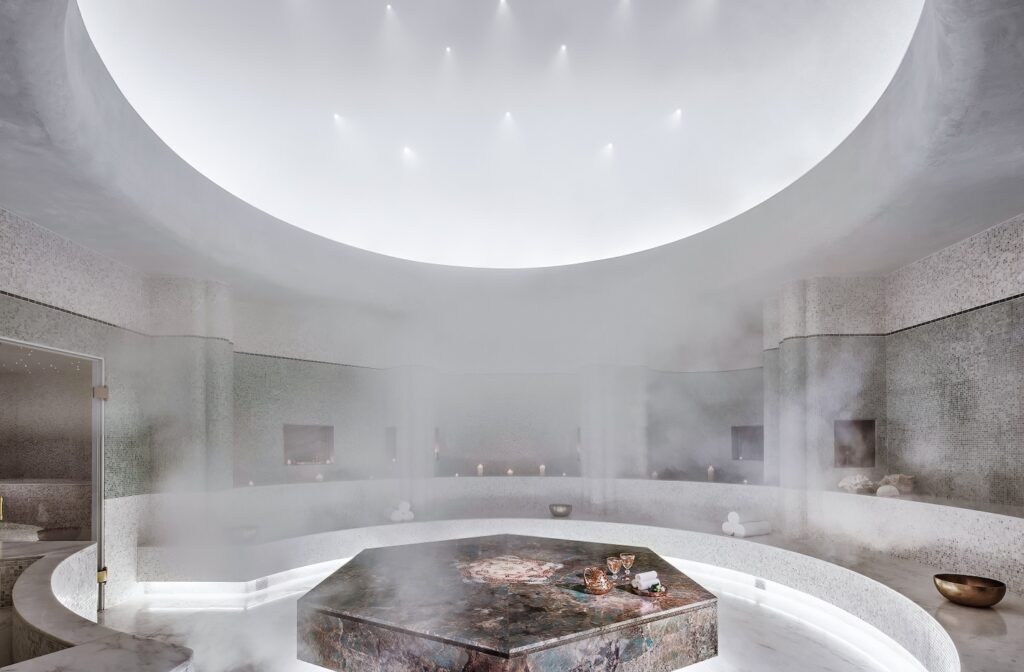
Sandpearl Resort, Clearwater Beach
What Is a Hydrotherapy Circuit? A Traveler’s Guide to the Thermal Suite
A hydrotherapy circuit is a series of warm rooms, cool plunges, and quiet rest areas you repeat in rounds, typically 60 to 120 minutes. Learn the real temperatures, the right order, and what to check before paying for access.
In 30 Seconds
- Count stations before paying: two or more heat rooms, real cold immersion, a rest area, no queue.
- Book evening or the second morning slot; both beat midday and the first.
- Suits first-timers and anyone with 90-plus minutes; skip it if your time is short or the day is crowded and pricey.
Thermal circuit: what our scored hotels show
scored hotels offer it
Where they sit on the field
- Offers it
- Other scored hotels
Spa details are on file for 84 of 102 scored hotels, so the count is a floor.
See where to book itYou are standing in a robe in front of six unmarked doors, and nobody has told you which one to open first. One cruise passenger solved that problem by watching the couple already in the mud room and copying whatever they did, because the guided walkthrough never happened.
A hydrotherapy circuit (sold on spa menus as a thermal circuit, thermal suite, hydrothermal circuit, or thermal journey) is a set sequence of heat, cold, and rest stations you move through in rounds, usually across 60 to 120 minutes. The natural counterpart is a mineral hot spring, the same heat-and-cold rhythm, outdoors, and our guide maps the hot springs you can soak in outdoors around the country. The closest natural version of a full circuit is Murrieta Hot Springs in Southern California, which runs more than 25 pools from 50F to 104F and rechecks and posts the temperatures every two hours.
The venue’s own page will tell you it is restorative. It will not tell you what each room does and at what temperature, what order to use them in, how long to stay, which etiquette rules get enforced in silence, or why the same 90 minutes costs about 46 euros in Budapest and $178 in Manhattan.
So we put the temperatures next to the sources that measured them, the dosage numbers next to the studies behind them, and the prices next to the venues charging them.
What a Hydrotherapy Circuit Actually Is, and How to Spot a Fake One
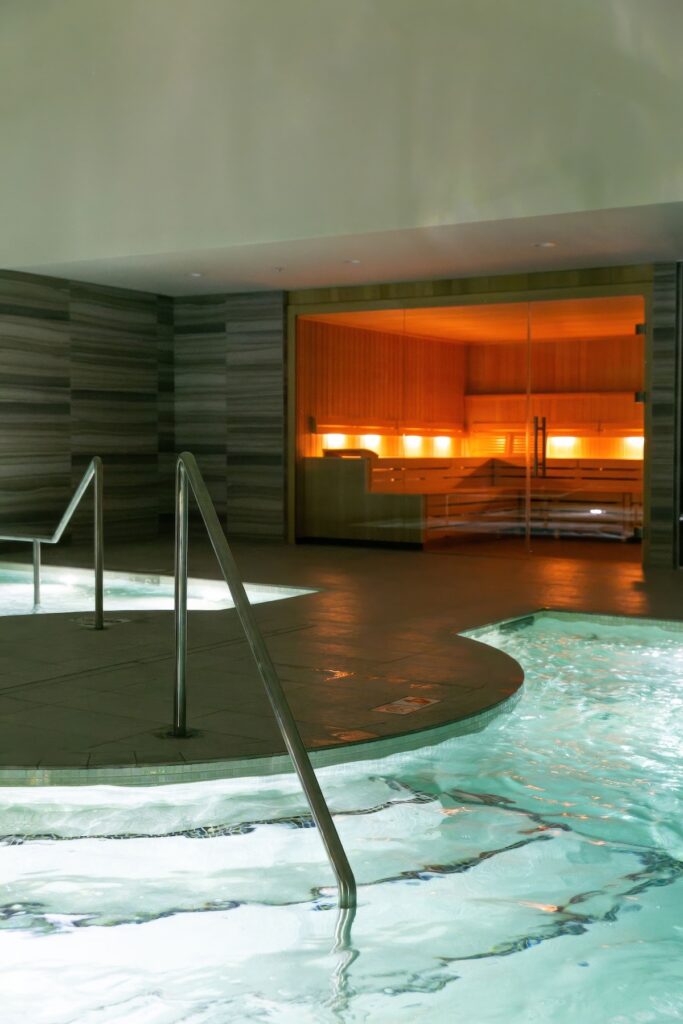
Plenty of hotels sell “thermal circuit access” that turns out to be a sauna, a steam room, and a warm pool. You could have used all three at a decent gym, and you would not have paid a day-pass rate for the privilege.
The difference is structure. A hydrotherapy circuit is not a collection of amenities; it is a designed loop: heat up, cool down, rest, repeat. That four-step shape traces back to Roman bathhouse ritual and still governs how a thermal suite is laid out, as spa designers describe it. Menus rename it constantly (thermal circuit spa, thermal journey, hydrothermal circuit), but the sequence is the product.
Four tests separate a real circuit from a repackaged amenity list.
- Two or more heat stations at different humidity levels. Spa William Gray in Montreal runs a Finnish sauna, a steam room, and a herbal sauna. One hot box is not a circuit.
- Real cold immersion, not a cool rinse. The Chedi Andermatt in Switzerland spans 107F down to 64F across four baths. If the coldest thing on the property is a shower, the loop has no second half.
- A dedicated rest area. Rest is a station, not the leftover bench space near the lockers.
- Capacity you will not queue for. A cruise guest rated one three-hour thermal suite around 7 out of 10 purely on crowding: the hot plunge holds two or three people, the heated hammam benches about eight, with a 10 to 15 minute wait at peak.
Circuits are proliferating for a reason. The Global Wellness Institute’s Hydrothermal Initiative lists “From Sauna Boom to Hydrothermal Circuits” among its 2026 trends, crediting urban operators like Othership and Bathhouse with raising the baseline and pushing wellness from hotel amenity to hotel anchor.
Before you pay, open the spa’s amenity list and count the stations against those four tests.
Every Thermal Circuit Station Explained, With Real Temperatures
The steam room runs at roughly half the temperature of the dry sauna, around 45C against 90C, and most people find it harder to sit through. Near-total humidity blocks evaporative cooling, so your sweat has nowhere to go. That one fact is why sequencing matters and why the room names on a spa menu are not interchangeable.
| Station | Typical temperature | Humidity | What it does | Practical time |
|---|---|---|---|---|
| Finnish (dry) sauna | 80-100C / 176-212F | 10-15% | Raises core temperature fast; the most evidence-backed station here | 10-15 min |
| Steam room / hammam | 43-46C / 109-115F | Near 100% | Wet heat that loosens airways and muscle without the dry sting | 10-15 min |
| Tepidarium | ~37C air, surfaces up to 15C hotter | ~20% | Heated loungers that hold you neutral between rounds | 15-20 min |
| Laconium | Gentle dry heat, below sauna range | Low | Soft entry room if 90C is punishing | 15-20 min |
| Caldarium | Hot and humid, Roman-style | High | Wet heat with a bathing pool rather than benches | 10-15 min |
| Kneipp walk | 30-34C hot, 18-20C cold | n/a | Alternating leg baths for circulation | 5-10 min |
| Snow room | -10C / 14F with falling snow | n/a | Dry cold, easier on the chest than immersion | 1-3 min |
| Cold room | 4-13C / 40-55F | Low | Controlled cooling if you will not get in a plunge | 3-5 min |
| Cold plunge | Below 15C / 59F | Immersion | The contrast trigger the whole circuit is built around | 1-2 min |
| Salt room (halotherapy) | Ambient | Dry salt aerosol | Marketed for skin and respiratory benefit; thinnest evidence here | 15-20 min |
| Experience / Scottish shower | Alternating hot and cold | n/a | Compressed contrast; a midpoint or a finisher | 1-2 min |
Raises core temperature Drops it Alternates both Holds you neutral
Every station does one of three jobs: raise your core temperature, drop it, or hold you neutral while your body recovers. Treating that third job as dead time is the most common misread of a hydrotherapy circuit. Cooling is diversifying too, and the Global Wellness Institute expects 2026 builds to lean on snow rooms, experience showers, and controlled cold rooms at 12-15C rather than one extreme plunge. Our sauna guide goes deeper on sauna types and temperature bands.
Best for a first timer: sauna, steam, cold plunge, rest lounge. Skip when you are short on time: halotherapy, mud rooms, and flotariums, which are texture rather than mechanism. A mud room, in particular, belongs mid-circuit rather than at the end, and where a mud bath fits in the sequence covers the cumulative-heat problem that creates.
How to Do a Thermal Circuit: Order, Rounds, and How Long in Each Station
Hot for 10 to 15 minutes. Cold for 1 to 2. Rest for at least as long as the heat took. Three rounds, finish cold. That is the whole protocol, and everything below is the evidence for it.
- Shower. Every venue requires it, and it does real work: warm water starts the vasodilation the heat station will finish.
- Heat. Steam or sauna, whichever the room is quieter in.
- Cold. Plunge, snow room, cold room, or cold shower.
- Rest. Horizontal if the tepidarium or lounge allows it, water in hand.
- Repeat. Two or three rounds total, ending on cold.
The end-on-cold rule has a practical basis. Finish hot and you keep sweating into your clothes for 20 minutes; finish cold and surface vessels constrict, shutting the process down cleanly.
Dosage is where most people get it wrong in the expensive direction. Dr. Susanna Soberg’s own study, discussed in detail on Huberman Lab, found cardiometabolic benefits at roughly 11 minutes of cold and 57 minutes of sauna heat per week, split across two or three sessions of 1-2 minutes cold and 10-15 minutes hot. The Finnish KIHD cohort points the same way on heat: benefit climbs to about 19 minutes per sauna sit, plateaus near 30, and past that adds nothing and possibly some risk.
The counterintuitive part: the goal is not to tolerate the cold. The beneficial shock response fades within the first minutes, so a plunge you barely notice is a plunge that has stopped working.
Book the hydrotherapy circuit before your massage, not after, since heat and cold loosen tissue and the post-treatment window is better spent horizontal. Evening slots run far quieter than midday, and the second morning slot beats the first, because heated benches need about an hour to come up to temperature.
Shorten or skip the cold after wine at dinner. On arrival day after a long flight, favor heat and rest over aggressive contrast rounds. Ask for the guided station walkthrough when you book, not when you arrive and staff are turning over lockers.
The most common mistake is not the cold being too cold. It is two minutes of rest after fifteen minutes of heat.
Does Contrast Therapy Work? The Evidence, and Who Should Skip It
Contrast therapy’s proven advantage is over doing nothing at all. Not over a cold bath. Not over stretching. That is the honest ceiling, and it is worth knowing before you build a trip around it.
Heat is where the evidence is strongest. The KIHD cohort published in JAMA Internal Medicine in 2015 followed 2,315 middle-aged Finnish men for a median of nearly 21 years and found higher sauna frequency and duration inversely associated with sudden cardiac death, fatal coronary heart disease, fatal cardiovascular disease, and all-cause mortality. A 2018 BMC Medicine cohort extended the association to women, and a Mayo Clinic Proceedings review synthesizes the wider literature. The caveat is real: these are observational studies of people who sauna habitually, not trials of one spa visit.
Contrast therapy itself is thinner. A 2013 PLOS ONE systematic review of 18 trials found contrast water therapy significantly reduced muscle soreness and strength loss at under 6, 24, 48, 72, and 96 hours versus passive recovery. All 18 trials carried a high risk of bias, and the method was not clearly better than cold immersion alone, warm immersion, compression, active recovery, or stretching.
The metabolic claim deserves deflating too. The study behind “cold plunges boost metabolism” doubled sugar-breakdown capacity only after two hours of cold exposure daily for four weeks, which is not what a 90-second dip delivers, and most human cold research has been run in men.
Marcus Coplin, naturopathic medical director at The Springs Resort in Colorado, calls heat and cold “healthy stressors.” The alternation is the mechanism, not either extreme on its own, which is why GWI’s Don Genders reads 2026 design as moving away from single shock moments toward moderate, protocol-driven programming.
Safety, plainly. Cold immersion is contraindicated in pregnancy at any trimester. Get medical clearance first if you have hypertension, a medicated arrhythmia, a prior heart attack or stroke, or severe peripheral artery disease. Exit immediately for uncontrollable shivering, chest pain or pressure, palpitations, or severe breathlessness.
Expect less next-day soreness and a genuinely good 90 minutes. Do not expect a hydrotherapy circuit to rebuild your metabolism.
Your First Spa Hydrotherapy Circuit: What Happens and What the Rules Are
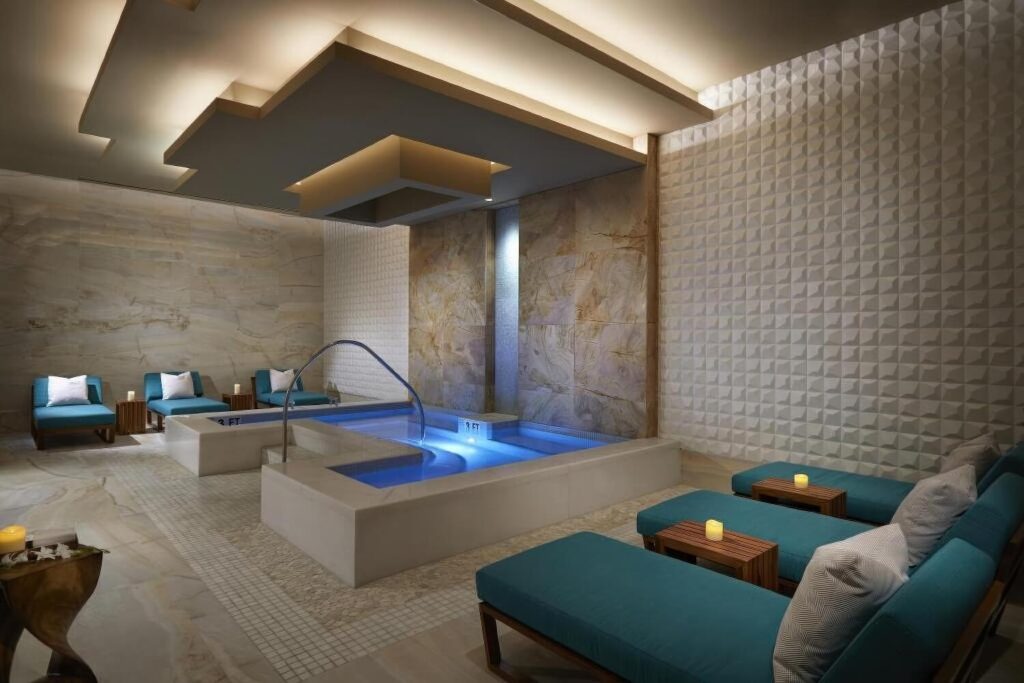
Everyone else in that quiet room already knows how a hydrotherapy circuit works. Nobody wrote the rules on the door.
Arrive 15 minutes before your slot. You will get a locker, a robe, and usually slippers. Change, then shower thoroughly before you touch any shared water, and leave your phone and every piece of jewelry behind.
Ask for the station tour, run the loop from the previous section, then finish in the rest lounge with water. That is the entire visit. The cruise guest from the opening had simply missed that walkthrough during a sea-day rush. Book the moment access opens, too: high-demand venues sell fixed blocks only, so you take the three-hour window on offer rather than the one you planned your day around.
The rules that go unstated:
- Shower properly before entering shared water. In Icelandic pools, skipping it is treated as genuinely offensive, not a technicality.
- Remove all jewelry. It tarnishes in thermal water and burns skin in a sauna.
- Bring your own waterproof sandals. Plenty of venues do not supply them.
- Phones stay in the locker, always.
- Thermal areas are quiet zones. Conversation happens, but low and brief.
- Sit on your towel. Never bare skin on sauna wood.
Swimwear is the traveler’s landmine, and the rule varies by country. Germany, Austria, Switzerland, and the Netherlands are typically textile-free by default in saunas and thermal areas. France, Spain, and Portugal require swimwear in virtually every spa setting. Poland, Czechia, Slovakia, Hungary, and Slovenia vary venue by venue, often with gender-separated nude areas.
The logic is hygiene, not ideology: swimwear worn outdoors carries residue that thermal water is not filtered to handle. Many northern European spas also run one mandatory-swimwear day a month, the German Textilbadetag, worth checking if you would rather keep your trunks on. US and UK hotel spas require swimwear almost universally, so the surprise only runs one direction for American travelers.
If you get it wrong, an attendant will tell you, quietly, the way they tell someone every hour of every day.
What a Hydrotherapy Circuit Costs, and When It’s Worth Booking
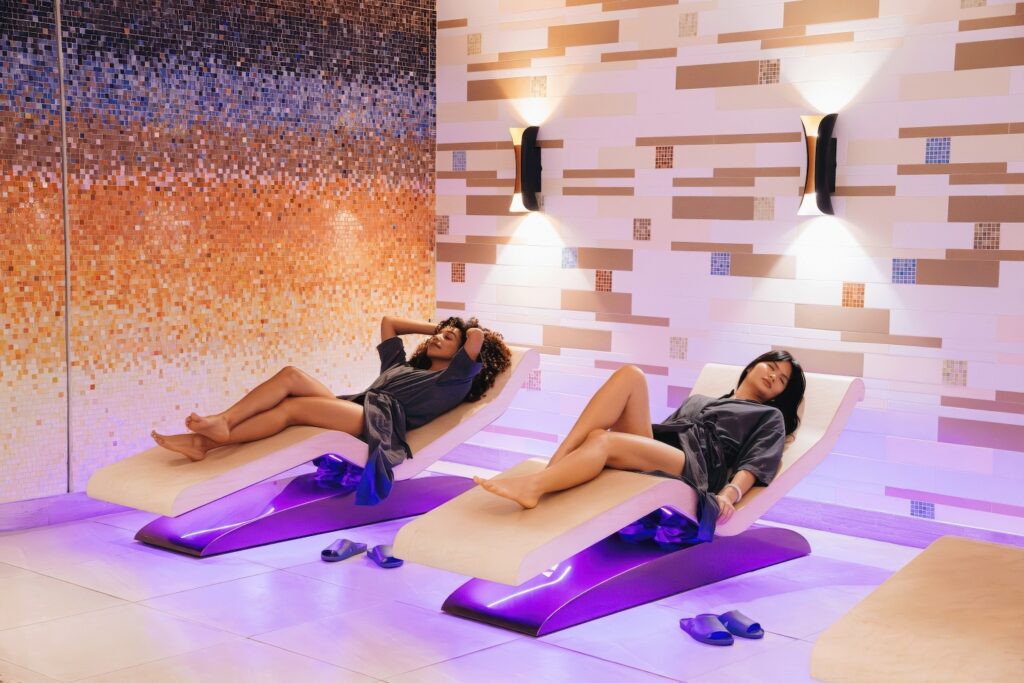
The same 90 minutes of hot and cold water costs about 46 euros in Budapest and $178 in Manhattan, and the price tells you almost nothing about which one you will enjoy more.
Budapest’s historic baths remain the value benchmark. Szechenyi’s full-day weekday ticket with a locker runs about 13,200 HUF (roughly 46 euros), weekends 14,800-15,800 HUF, Rudas 12,000 HUF on a weekday, and Palatinus and Lukacs between roughly 3,600 and 9,000 HUF depending on ticket type. Gellert, the bath most people search for first, has been closed for renovation since October 1, 2025, with reopening planned for 2028.
Resort and cruise circuits sit in the middle. Garza Blanca in Los Cabos charges $59 per person for six stations. Virgin Voyages prices its thermal suite by demand, $39 on port days against $59 on sea days, surge pricing timed precisely to when the room is most crowded.
At the top of the ladder, Spa William Gray in Montreal runs $55-110 CAD for three hours, and AIRE Ancient Baths New York starts at $178 for a two-hour circuit across six pools.
Often you can pay nothing extra. Many hotel spas include thermal suite access with any booked treatment, so a 60-minute massage can undercut a massage plus a separate day pass. Ask whether access is bundled before you book either one.
A hydrotherapy circuit is worth it when the venue passes the four station tests, you have 90 minutes or more, and you are not paying a peak-day premium to stand in line. Skip it for a 45-minute window, a two-station “circuit,” or a busy weekend at premium pricing. If you want to check a property before you book, our SpaRator scoring rates spa hotels on facilities and value.
Where to try it
Scored Hotels with a Thermal Circuit
These are today's SpaRator scores for hotels that offer it, highest score first.
We may earn a commission when you book through these links. It never affects a SpaRator score, and no hotel hosted or paid for this analysis. How we earn
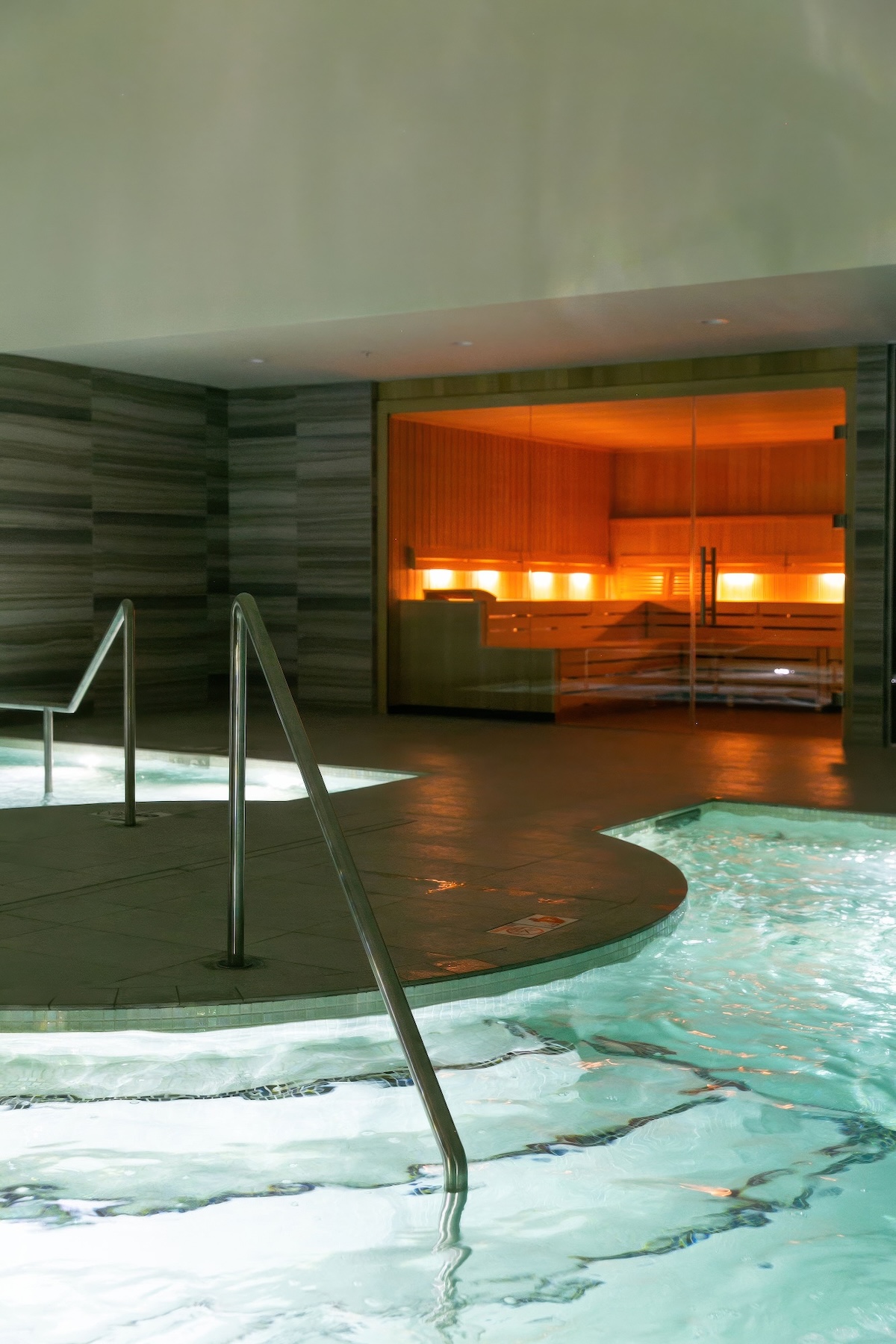 SpaRator 8.1: Outstanding
Scottsdale
CIVANA Wellness Resort and Spa
See the analysis: CIVANA Wellness Resort and SpaSee Live Rates: CIVANA Wellness Resort and Spa SpaRator 8.1: Outstanding
Miami
The Standard Spa, Miami Beach
See the analysis: The Standard Spa, Miami BeachSee Live Rates: The Standard Spa, Miami Beach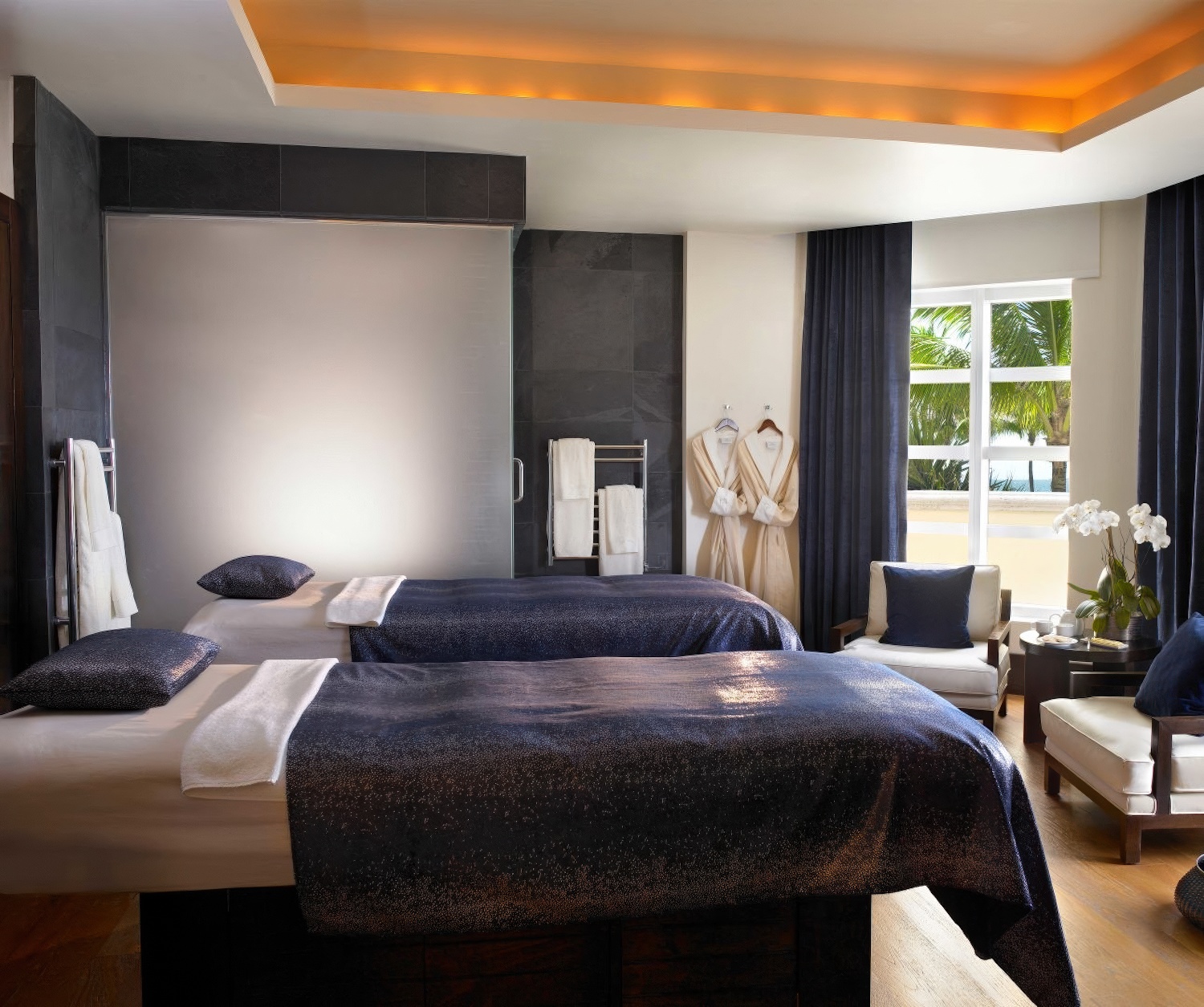 SpaRator 8.0: Outstanding
Miami
Acqualina Resort & Residences
See the analysis: Acqualina Resort & ResidencesSee Live Rates: Acqualina Resort & Residences SpaRator 7.8: Strong
Miami
Faena Hotel Miami Beach
See the analysis: Faena Hotel Miami BeachSee Live Rates: Faena Hotel Miami Beach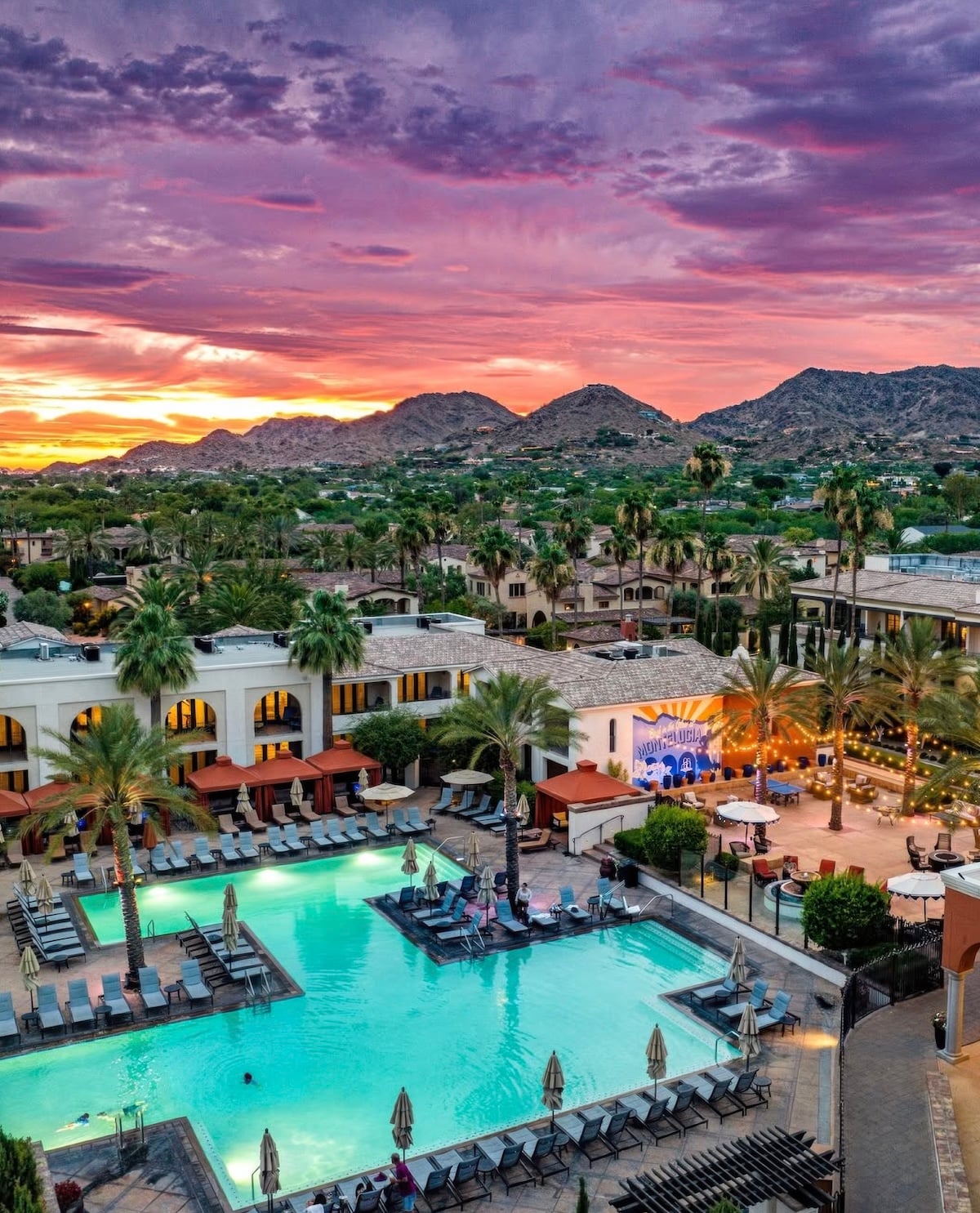 SpaRator 7.8: Strong
Scottsdale
Omni Scottsdale Resort & Spa at Montelucia
See the analysis: Omni Scottsdale Resort & Spa at MonteluciaSee Live Rates: Omni Scottsdale Resort & Spa at Montelucia SpaRator 7.8: Strong
Phoenix
The Global Ambassador
See the analysis: The Global AmbassadorSee Live Rates: The Global Ambassador SpaRator 7.7: Strong
Naples
Naples Beach Club, A Four Seasons Resort
See the analysis: Naples Beach Club, A Four Seasons ResortSee Live Rates: Naples Beach Club, A Four Seasons Resort SpaRator 7.6: Strong
Phoenix
Arizona Biltmore, LXR Hotels & Resorts
See the analysis: Arizona Biltmore, LXR Hotels & ResortsSee Live Rates: Arizona Biltmore, LXR Hotels & Resorts SpaRator 7.5: Strong
 SpaRator 7.5: Strong
Scottsdale
Grand Hyatt Scottsdale Resort
See the analysis: Grand Hyatt Scottsdale ResortSee Live Rates: Grand Hyatt Scottsdale Resort
Hydrotherapy Circuit FAQs
What is a thermal circuit in a spa?
A thermal circuit is a sequenced loop of heat, cold, and rest stations, typically a sauna, a steam room, a cold plunge, and a relaxation area, that you move through in rounds over 60 to 120 minutes. Spa menus also sell it as a hydrotherapy circuit, thermal suite, hydrothermal circuit, or thermal journey. The sequence is the product, not the individual rooms, which is why a sauna and a steam room alone do not qualify.
How long should a thermal circuit session last?
Plan on 60 to 120 minutes total, covering two or three rounds. Each round runs 10-15 minutes of heat, 1-2 minutes of cold, then rest for at least as long as the heat phase lasted. The Finnish KIHD dose-response data cited by Dr. Susanna Soberg shows sauna benefit rising to about 19 minutes per sit and plateauing near 30.
Is the thermal spa worth it?
Yes, if the venue has at least two heat stations, real cold immersion, a proper rest area, and you have 90 minutes to use them. No, if you are squeezing it into 45 minutes or paying premium rates for two stations. Price is a poor signal on its own: the range runs from roughly 46 euros in Budapest to $178 in New York.
Should I finish on hot or cold?
Cold. Standard guidance is to end the final round on cold exposure for the thermogenic tightening effect, and practically, finishing hot means you keep sweating once you dress. A Scottish or Swiss alternating-pressure shower works as either a mid-circuit station or the closing one.
Do I need a swimsuit?
It depends entirely on the country. Germany, Austria, Switzerland, and the Netherlands are typically textile-free in saunas and thermal areas. France, Spain, and Portugal require swimwear. Central and Eastern European venues vary, often with gender-separated nude areas, and the rule is hygiene-driven. US and UK hotel spas require swimwear.
Who should avoid a hydrotherapy circuit?
Skip cold immersion entirely if you are pregnant, at any trimester. Get medical clearance before booking if you have hypertension, a medicated arrhythmia, a history of heart attack or stroke, or severe peripheral artery disease. Leave the cold station immediately if you experience uncontrollable shivering, chest pain, palpitations, or severe shortness of breath. Heat stations carry their own cautions, so clear the whole circuit with your doctor, not just the plunge.
19 Scored Hotels, Ranked by Score
We may earn a commission when you book through these links. It never affects a SpaRator score, and no hotel hosted or paid for this analysis. How we earn
- SpaRator 8.1: Outstanding
CIVANA Wellness Resort and Spa
Scottsdale
- SpaRator 8.1: Outstanding
- SpaRator 8.0: Outstanding
- SpaRator 7.8: Strong
- SpaRator 7.8: Strong
- SpaRator 7.8: Strong
The Global Ambassador
Phoenix
Show all 19 hotelsShow fewer hotels
- SpaRator 7.7: Strong
- SpaRator 7.6: Strong
- SpaRator 7.5: Strong
Canyon Ranch Tucson
Tucson
- SpaRator 7.5: Strong
Grand Hyatt Scottsdale Resort
Scottsdale
- SpaRator 7.5: Strong
The Ritz-Carlton, Naples
Naples
- SpaRator 7.4: Solid
- SpaRator 7.2: Solid
- SpaRator 7.1: Solid
- SpaRator 7.1: Solid
The Scottsdale Resort and Spa
Scottsdale
- SpaRator 6.8: Modest
- SpaRator 6.5: Modest
- SpaRator 6.4: Modest
Kimpton Miralina Resort and Villas
Scottsdale
- SpaRator 6.4: Modest
Every Hotel We Score
Every dot is one of the 102 hotels with a SpaRator score, left to right from low to high. Lit dots mark the hotels that offer this treatment. Select any dot to see the hotel's name and score.
Market
Showing 102 of 102
- Offers it
- Spa details on file, not listed
- No spa details on file yet
Hover or tap a dot to see the hotel.
No hotel here is lit yet.