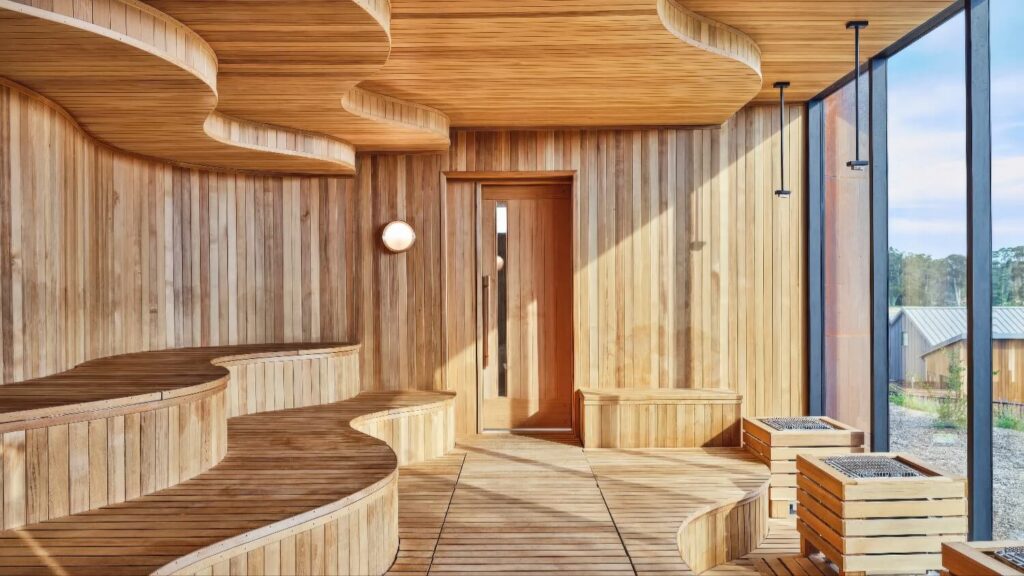
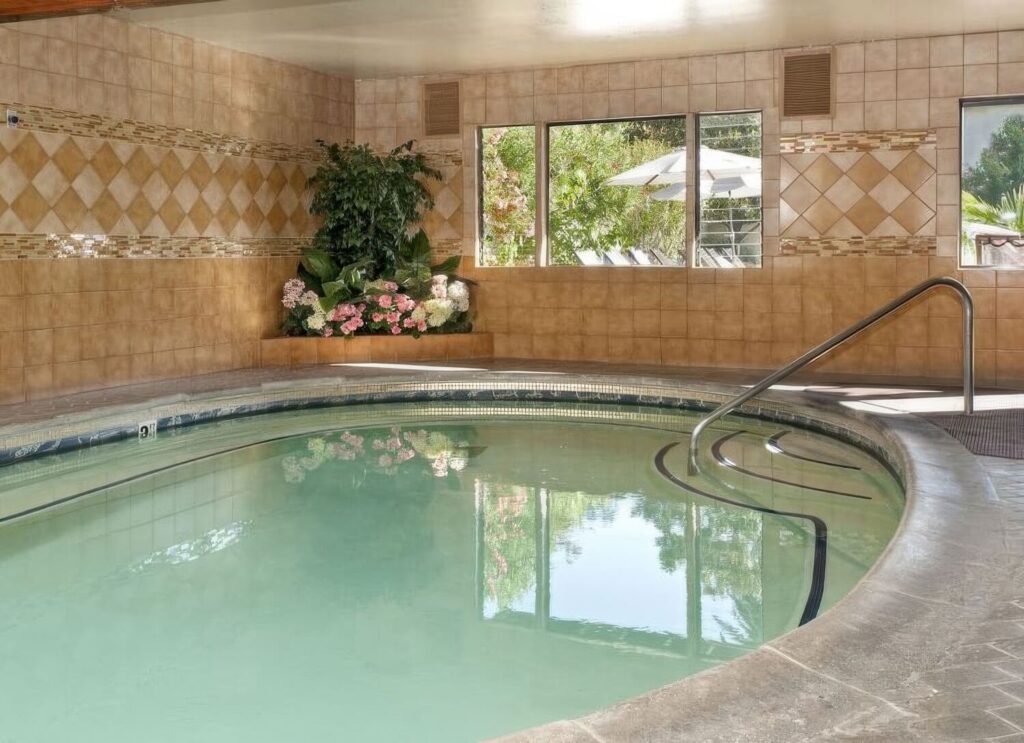
Roman Spa Hot Springs Resort, Calistoga
Communal Bathing: A Traveler’s Guide to Bathhouse Culture Around the World
A bathhouse is any shared space built for soaking, sweating, and lingering rather than swimming laps, and still alive as a daily ritual from Japanese onsen to Icelandic thermal baths. Start here to decide whether communal bathing is for you and which tradition to try first.
In 30 Seconds
- The biggest first-timer fear is the nude walk from locker room to bath, and it is mandatory in Japanese and Russian traditions.
- Nearly half of Japan's hot spring facilities still refuse visible tattoos, so email before booking an onsen.
- Suits travelers weighing a nude against a swimsuit ritual; skip it if you already know your comfort level.
The question is never whether the water is nice. It’s whether you have to walk from the locker room to the bath fully naked, whether your tattoo gets you turned away at the door, and whether you’ll break a rule nobody wrote down. First-timer guides flag that nude walk as the biggest fear, well ahead of anything that happens once you’re in the water.
Communal bathing is bathing together in a shared space as a social act, not just a hygienic one, and it survives as daily practice in Japan, Turkey, Morocco, Russia, Finland, Korea, Hungary, and Iceland. Japan alone has around 27,000 onsen facilities.
This guide covers what each tradition asks of you: what you wear or don’t, how gender rules and tattoo policies differ by country, what the health research supports, and where to bathe communally right now, natural hot springs across the United States. Our wider library of spa travel guides goes deeper on individual destinations.
What Is Communal Bathing, and What Counts as a Bathhouse?
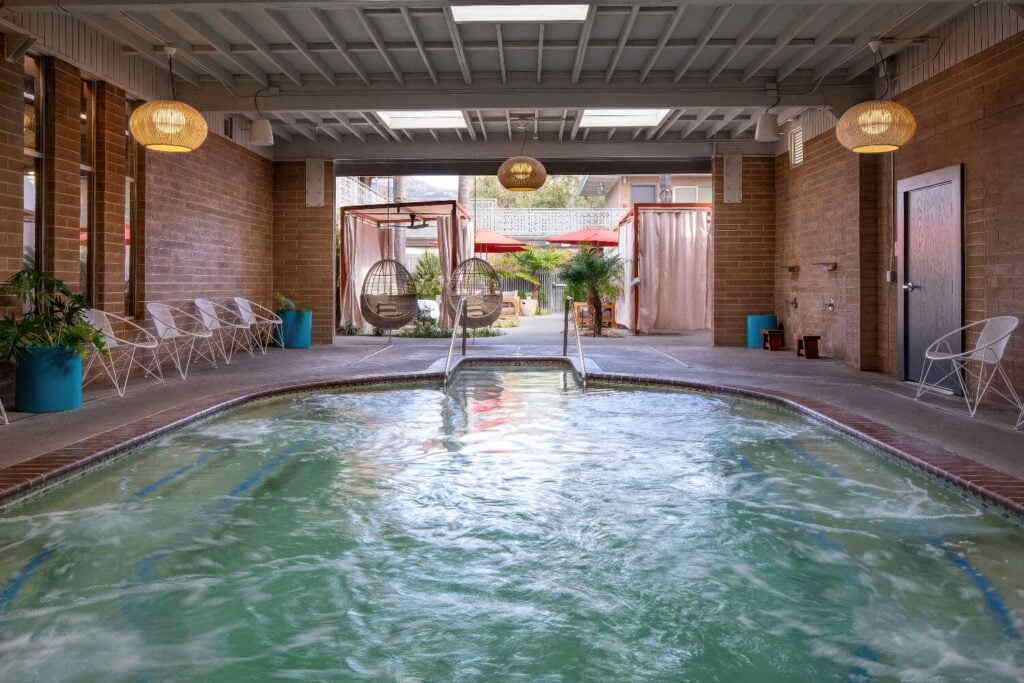
Communal bathing is the practice of bathing together in a shared space as a social and hygienic act, rather than privately at home. The water is the setting. The point is the time you spend in it, usually with other people, usually slowly.
Three markers separate a bathhouse from a swimming pool or a hotel spa:
- You wash before you get in. The shared water is only for soaking; the cleaning happens at a shower or washing station first.
- The water is for stillness, not laps. Soaking, sweating, and cooling, in rounds.
- The room is built for lingering. Ledges, benches, tea, conversation. No lane ropes, no clock.
Japan draws the sharpest line in any bathing culture, and it’s written into law rather than marketing. An official onsen must draw water that emerges from the ground at a minimum of 25°C and contains at least one of 19 designated chemical elements occurring naturally in the source. What that water carries up with it varies spring by spring; our breakdown of mineral and geothermal water covers the four types and what each feels like. A sento uses heated tap water. Two rooms can look identical and run the same rituals while sitting in different legal categories, which is why an onsen commands the higher price and justifies the detour.
The living traditions this guide covers:
- Onsen and sento (Japan)
- Hammam (Turkey and Morocco)
- Banya (Russia)
- Sauna (Finland)
- Jjimjilbang (Korea)
- Thermal baths (Hungary and Iceland)
Each has its own sequence, its own bathhouse etiquette, and its own answer to the nudity question. That last one varies more than anything else and gets a full section below.
Why the World Bathed Together, and Why It Nearly Stopped
At the height of the empire, Rome had roughly one bathhouse per 1,000 residents. At that density, communal bathing wasn’t exotic. It was infrastructure, closer to a corner shop than to a spa.
Roman baths were where people met, argued, made deals, and killed an afternoon. Entry was cheap enough that the bathhouse was one of the few civic spaces a laborer and a senator might share, which is more than modern spa pricing can claim. That pattern repeated across the Ottoman world, medieval Europe, Russia, and Japan for centuries. The neighborhood bath was simply where you got clean, because home was not.
What ended it wasn’t prudishness. It was plumbing. Once a private bathroom became standard equipment in every dwelling, the walk to the neighborhood bathhouse lost its practical reason to exist, and attendance fell off a cliff within a generation or two.
The numbers are blunt. Tokyo’s sento count dropped from 2,687 in 1968 to 462 in 2022. Cairo’s hammams went from more than 70 to eight by the year 2000. Two cities, two unrelated traditions, the same curve.
Some operators are fighting it directly. Tokyo’s Hinodeyu, a working neighborhood sento, now runs comedy nights and gaming events alongside the baths, on the logic that a bathhouse whose only product is hot water has already lost to the shower at home.
Which is exactly why the traditions that survived are worth traveling for. Onsen, hammam, banya, and sauna endured where purely utilitarian bathhouses did not, because cleanliness was never the whole point. The heat, the ritual, and the company were. Everything below is a living version of that, not a reconstruction.
Japan: Onsen, Sento, and What Actually Happens Inside
Locals take the pre-bath scrub-down very seriously, and onsen guides warn newcomers to wash properly “to avoid the grumpy mumble” from other bathers. That’s the whole risk, and it’s manageable: the rules are few, fixed, and learnable in five minutes. Nobody is watching to see whether you belong. They’re watching to see whether you soaped up first.
Japan has around 27,000 onsen facilities nationwide, and communal bathing remains standard practice on domestic trips, especially at ryokan inns where the bath is the reason for the stay. The urban sento is the part in decline. The mineral-water onsen, protected by the legal standard described above, is not.
The full sequence for a first onsen visit:
- Undress completely in the changing room. Swimwear is not permitted. Everything goes in the locker.
- Take only the small modesty towel in. Never let it touch the bathwater. Most people fold it and rest it on their head.
- Wash and scrub thoroughly at the seated washing stations. Sit, soap, rinse fully. This is the step that matters.
- Tie up long hair so it stays clear of the water.
- Enter slowly and quietly. No jumping, no splashing.
- Keep your voice down and leave your phone in the locker. Cameras are strictly prohibited.
- Soak 10 to 15 minutes at a stretch, around 30 minutes total. Get out and cool off between rounds.
- Hydrate before you go in, and skip the bath after drinking alcohol.
Now the honest limitations. Full nudity is mandatory at most facilities and there is no swimsuit workaround. Facilities are almost entirely gender-segregated, so couples and mixed groups split up at the door and meet afterward; genuine mixed-gender konyoku baths still operate but are rare. Tattoos are a real constraint rather than a theoretical one, with the numbers covered in the etiquette section below.
If any of that rules out the onsen you had in mind, the urban sento is the workaround worth knowing. They’re cheaper, easier to reach on a city itinerary, run the identical ritual with heated tap water, and a growing number are explicitly tattoo-friendly.
Hammam, Banya, and Sauna: Turkey, Morocco, Russia, and Finland
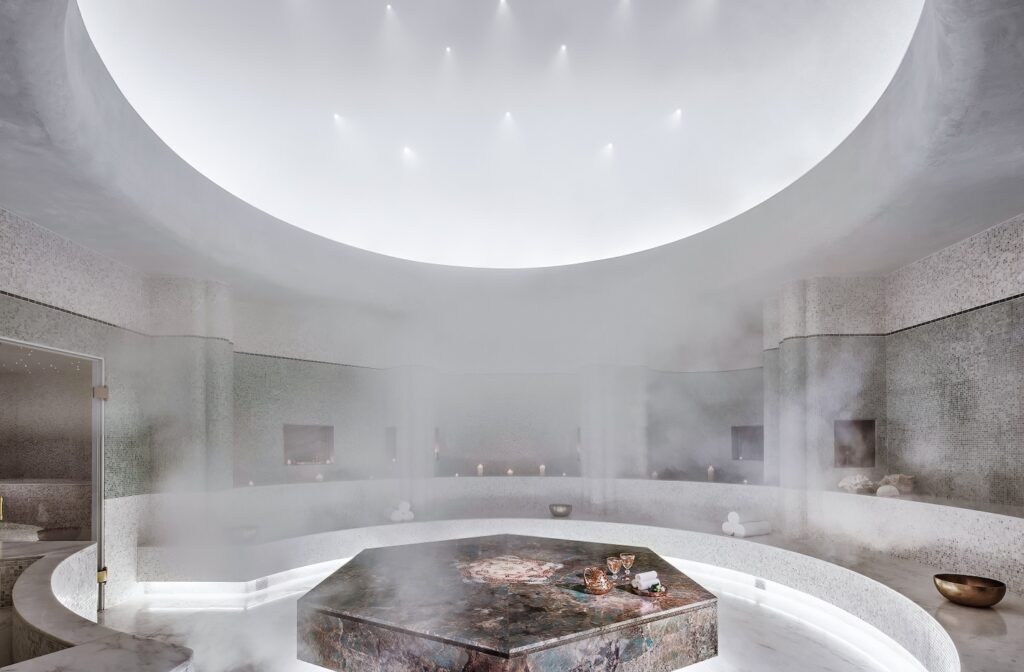
These are the communal bathing traditions where you are not left alone with your thoughts. Someone will scrub you raw with a coarse mitt or beat you with a bundle of hot birch branches, and both are the point rather than a mishap. What separates the four is who does what to you, how hard, and for how long.
Turkish hammam
You enter wrapped in a pestemal, acclimate in the warm room, then lie on the gobektasi, a heated marble platform at the center of the hot room, until you’re sweating properly. An attendant delivers a full-body kese exfoliation scrub, the attended cousin of the treatment-room scrub and wrap, then a foam massage, then a rinse, and you finish in the cool room with tea or sherbet. Suits travelers who want the ritual performed for them inside architecture worth seeing on its own: domes, marble, fountains. Limitation: the kese is more vigorous than first-timers expect, and Istanbul’s marquee tourist hammams cost more and feel more staged than a neighborhood one three streets away.
Moroccan hammam
Black olive soap (savon beldi) and a kessa mitt, bucket baths on tiled benches instead of a marble slab, in gender-segregated steam rooms. It is more physically vigorous than the Turkish version and considerably cheaper. Suits travelers who want an everyday local ritual rather than a showpiece. Limitation: less English-language accommodation once you step outside the main tourist hammams.
Turkish or Moroccan?
Book Turkish for the architecture and a fuller first experience with clear pricing and English service. Book Moroccan for a cheaper, harder scrub where you’re one of the neighbors rather than one of the guests. Nervous first-timer: Turkish. Done it before and want the real version: Moroccan.
Russian banya
The differentiator is the venik, a bundle of birch, oak, eucalyptus, linden, or juniper branches that an attendant called a banshik wafts, presses, taps, and rubs across your body to drive steam into skin and muscle. A banya is a multi-hour social occasion, not a wash. At Moscow’s Varshavskie Bani, steam rounds alternate with cold plunges, and freshwater crayfish counts as a banya must between rounds. Two etiquette rules: ask before borrowing someone else’s venik, which can carry sentimental value, and tip the banshik who gives you a venik massage.
Finnish sauna
The simplest ritual of the four: heat, then cold air or a plunge, repeated until you’re done. It carries the lowest etiquette burden of any tradition here and the most cultural normalization, including mixed and family use in Finland itself. The catch is availability. Outside the Nordics, an authentic wood-fired public sauna is far harder to find than a commercial infrared cabin marketed as the same thing.
Korea’s Jjimjilbang and Europe’s Thermal Baths: The Easiest First Visits
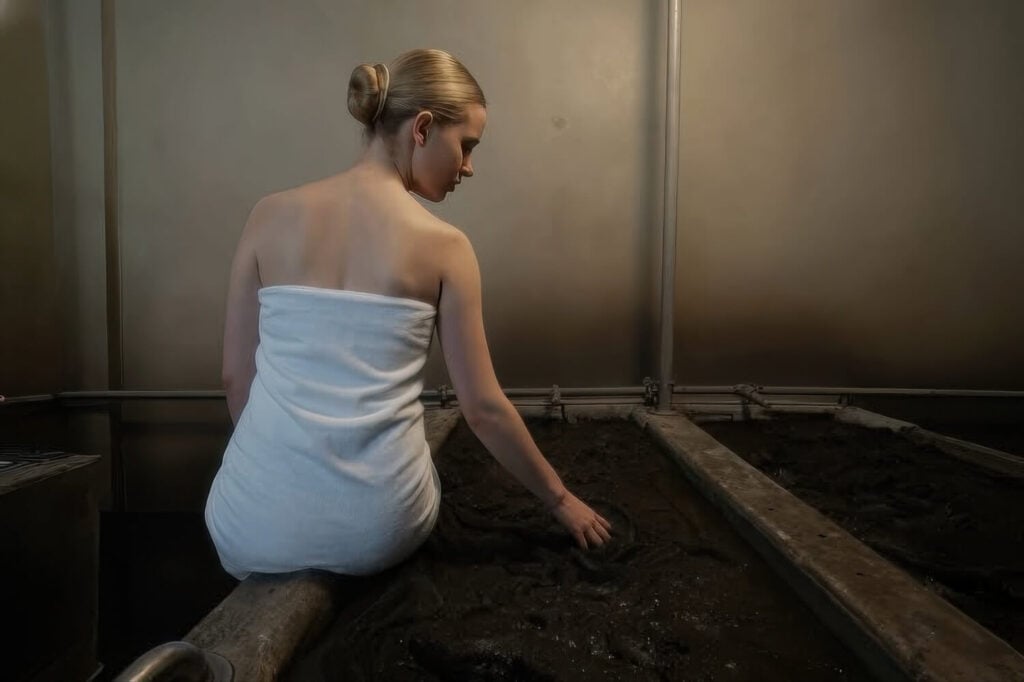
If mandatory nudity is what’s stopping you, two traditions remove it almost entirely: the Korean jjimjilbang and the thermal baths of Hungary and Iceland. Start with either and you get the full communal bathing experience without the locker-room walk.
The jjimjilbang works on zones, and this is the single most useful fact in Korean bathing. The pools are gender-segregated and nude. The shared sauna floors and lounges are mixed-gender and require the cotton uniform issued at check-in, usually a t-shirt and shorts in orange, pink, or tan.
You check in, take a locker key and uniform, leave shoes at the entrance, shower thoroughly before the baths, move between pools and steam rooms, then change into the uniform for the common floors: a 24-hour food court, massage chairs, heated sleeping rooms, and the folded towel hat everyone recognizes from K-dramas.
One honest caveat from someone who tested the limit. A creator who spent 24 hours in a Seoul jjimjilbang found the overnight portion the hardest part, concluding that “we are simply not used to sleep on the floor surrounded by other people.” Go for a few hours. If you do stay the night, bring earplugs.
Hungary and Iceland remove the question altogether: swimsuits throughout, no exceptions, no zones to learn. This is mainstream public infrastructure rather than a niche ritual. Hungary’s baths drew more than 42 million visits nationally in 2019, and Budapest’s Szechenyi, Europe’s largest medicinal bath complex, takes over a million visitors a year.
The trade-off is plain. At that scale the biggest venues feel closer to a tourist attraction than to an intimate ritual, and they get crowded. Go early, or go to a smaller bath.
Bathhouse Etiquette: Nudity, Gender Rules, and Tattoos
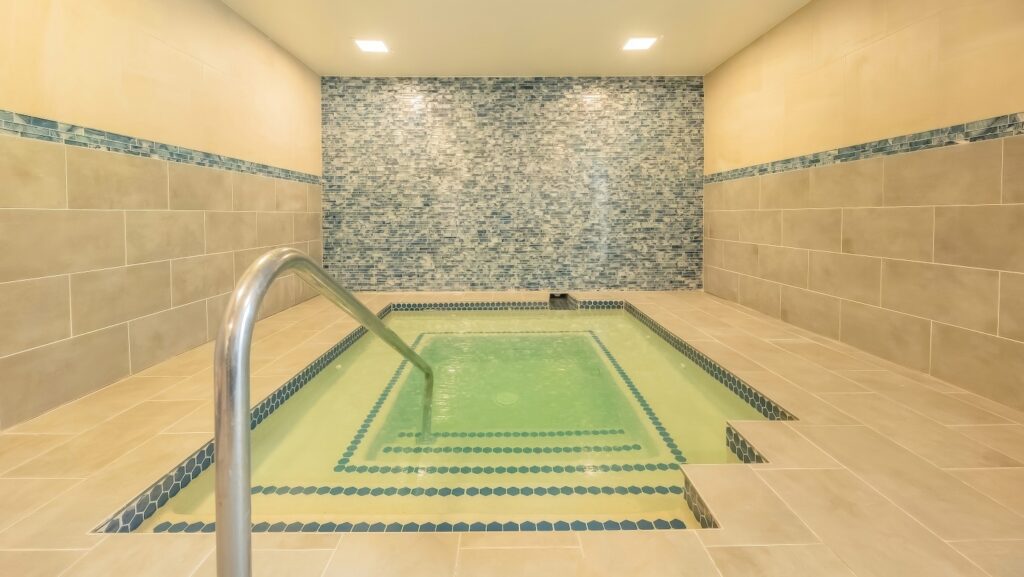
Three questions decide whether you actually book: will I be naked, will men and women be separated, and does my tattoo get me thrown out. Answers in order.
What you wear, by tradition
- Japanese onsen and sento: fully nude. Small modesty towel only, never in the water.
- Russian banya: fully nude in the steam room, sometimes with a felt hat.
- Korean jjimjilbang: nude in the gender-segregated pools, cotton uniform in the mixed common areas.
- Turkish hammam: wrapped in a pestemal throughout.
- Moroccan hammam: undressed or in underwear, in gender-segregated steam rooms.
- Hungarian and Icelandic thermal baths: swimsuits throughout.
Mandatory nudity is a genuine access barrier for a lot of first-time Western travelers, and we won’t pretend otherwise. If it’s a hard no for you, the swimsuit traditions are the answer, and you give up nothing essential by choosing them.
In the US, the clothing-optional tradition sits with hot springs rather than bathhouses. Desert Hot Springs has adults-only clothing-optional properties drawing on the same aquifer as their conventional neighbors, and the region’s wild springs run on unwritten rules with nobody on staff to enforce them.
Gender rules
Are bathhouses male only? No. Nearly every tradition separates men and women by section or by time slot rather than excluding either. Japanese onsen have been gender-segregated since the Meiji period (1868 to 1912), and mixed-gender konyoku baths persist only in small numbers.
The practical consequence for travelers: couples and mixed groups get split for the bathing portion and reunite afterward, so plan the timing. Gay bathhouses exist as a separate men-only category with a different history, which is worth knowing so search results don’t confuse you.
Tattoos
Nearly half of Japan’s roughly 27,000 hot spring facilities still refuse entry to anyone with a visible tattoo, a rule rooted in the Edo-era association of irezumi with the Yakuza rather than in anything about you. About 30% now admit tattooed guests if the ink is covered with a sticker, and roughly 20% welcome visible tattoos with no conditions.
Some operators, Hoshino Resorts among them, issue cover stickers sized 8cm x 10cm, so a tattoo that fits under one sticker is usually workable. Email the facility before you book. Attitudes toward small foreign fashion tattoos are more relaxed than toward large traditional Japanese work, and tattoo-friendly sento directories exist for both Tokyo and Osaka.
One rule holds everywhere on this list, in every communal bathing tradition: wash thoroughly before you get into shared water.
What the Research Actually Shows About Heat Bathing
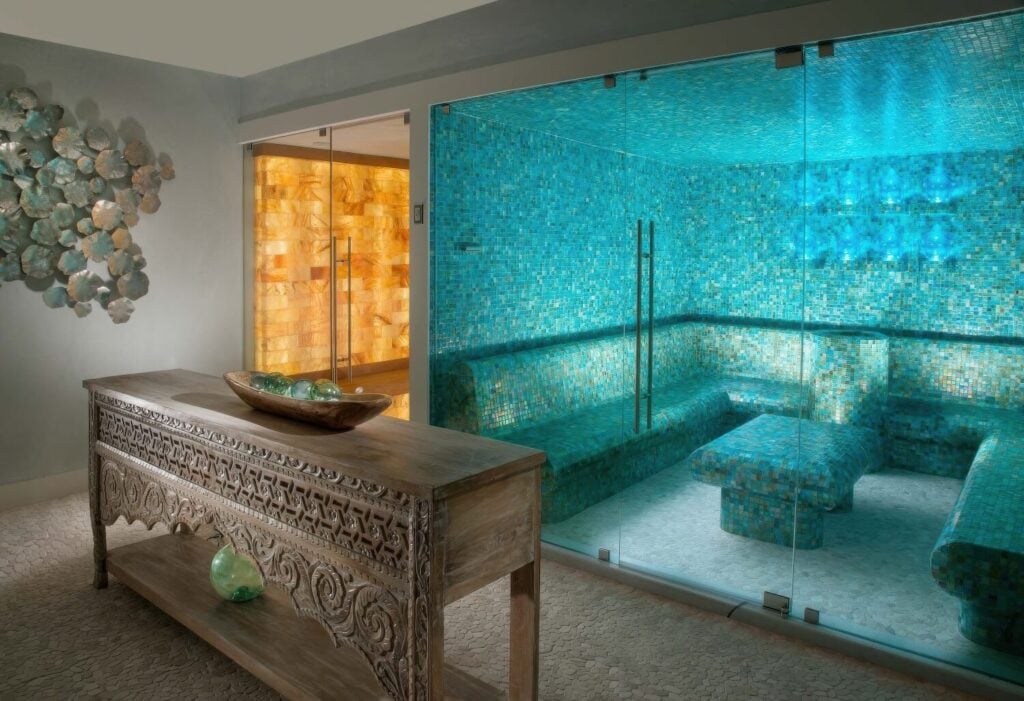
In the Finnish Kuopio Ischaemic Heart Disease cohort, men who used a sauna four to seven times a week had a 63% lower risk of sudden fatal cardiovascular events than once-weekly users. That is the strongest number in this field, and it comes with conditions.
The same cohort found 66% lower dementia risk and 65% lower Alzheimer’s risk at four to seven sessions per week compared with one. Both findings are dose-dependent, the pattern researchers look for when separating a real effect from a coincidence.
It isn’t purely observational either. An eight-week Finnish intervention trial in adults with coronary artery disease ran four sessions a week of 20 to 30 minutes at 79°C and measured improved vascular function. That moves part of the evidence past correlation, a distinction most wellness coverage skips.
Now the limits. These are Finnish cohort findings, largely in men, at frequencies no traveler reaches on a two-week trip. Extreme heat carries real cardiovascular risk, which is why the clinical work used supervised protocols rather than unsupervised sitting in a hot room. If you have a heart condition, ask a doctor before a banya round or a high-heat sauna.
The same caution applies to the recovery claims spa marketing attaches to heat, including whether spa hotels actually improve your sleep.
The health case for communal bathing is real but partial. What these places do best is put you in a room with other people for two hours.
The Modern Bathhouse Revival and Where to Try It Now
The bathhouse is being rebuilt fastest in the countries that abandoned it first. Private plumbing killed the American public bath a century ago; American cities are now opening new ones at a premium price.
The U.S. sauna market is projected to grow around 6.2% a year through 2030, and physical health is only half the driver. Cigna’s 2025 Loneliness in America report found 67% of Gen Z and 65% of millennials reported feeling lonely.
Harry Taylor, cofounder of the bathhouse chain Othership, puts it directly: “After years of individualized wellness culture, people are looking for spaces that make them feel connected.” That shift shows up across spa and wellness travel trends, not just in cities.
Othership runs four locations across New York and Toronto plus a forthcoming Upper East Side outpost, built around a 90-person sauna, custom cold plunges, breathwork, and a tea lounge, positioned openly as an alcohol-free alternative to a bar. Bathhouse operates in Flatiron and Williamsburg, Saint runs private saunas and ice-bath studios, Furoya takes the Japanese route, and AIRE Ancient Baths rebuilds Roman and Ottoman bathing circuits at a luxury-spa price.
The strongest signal is arriving from Japan itself. Hoshino Resorts is opening the first Japanese-operated onsen inn in the United States, in Sharon Springs, upstate New York, with up to 70 rooms targeted for 2028. Sharon Springs was a 19th-century hot-spring resort town that declined over the last century, which makes this a literal revival.
The modern social bathhouse is a produced experience: its guided hot-and-cold circuits are scheduled in classes and priced at a premium, and it’s a genuinely different product from a neighborhood sento or a Moroccan hammam. It is also the cheapest way to find out whether communal bathing suits you before you build a trip around it.
Where to try it
Highest Spa Treatments Scores
This guide's treatment isn't on our hotels' records yet, so these are the top-ranked of the 70 hotels scored under the current Guidelines, by Spa Treatments score, the nearest SpaRator measure.
We may earn a commission when you book through these links. It never affects a SpaRator score, and no hotel hosted or paid for this analysis. How we earn
 SpaRator 8.6: Outstanding
No. 1=
- SpaRator 7.5: Strong
No. 1=
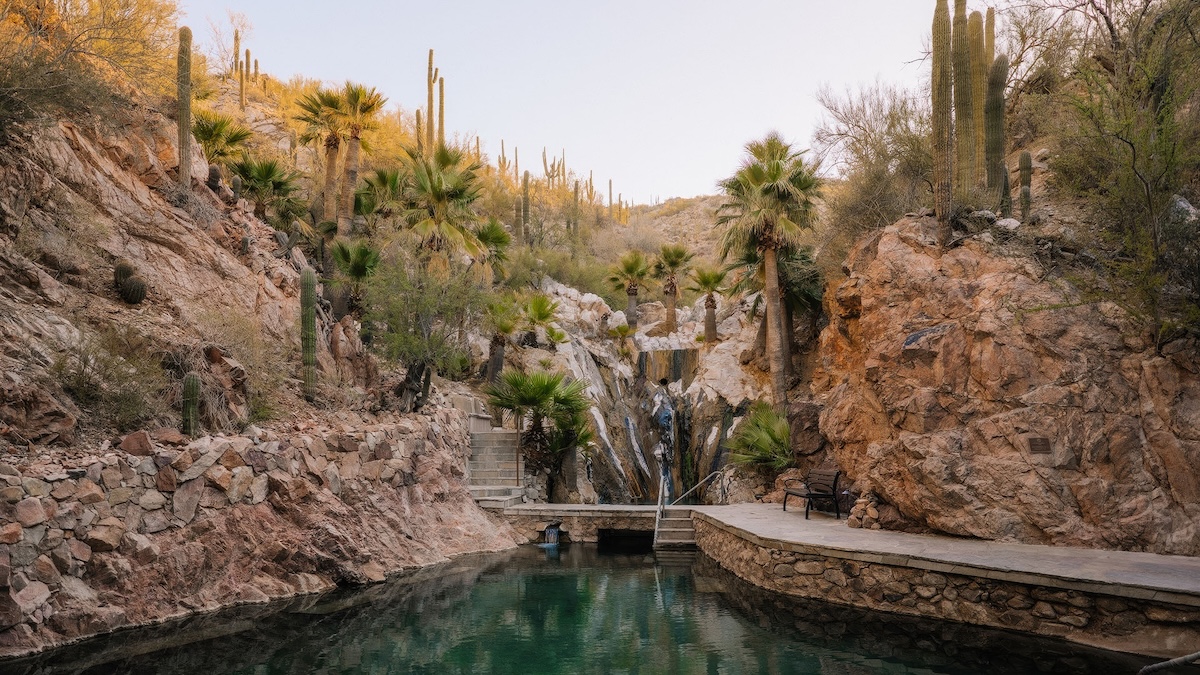 SpaRator 8.5: Outstanding
No. 3=
Phoenix
Castle Hot Springs
See the analysis: Castle Hot SpringsBook direct with the hotel: Castle Hot Springs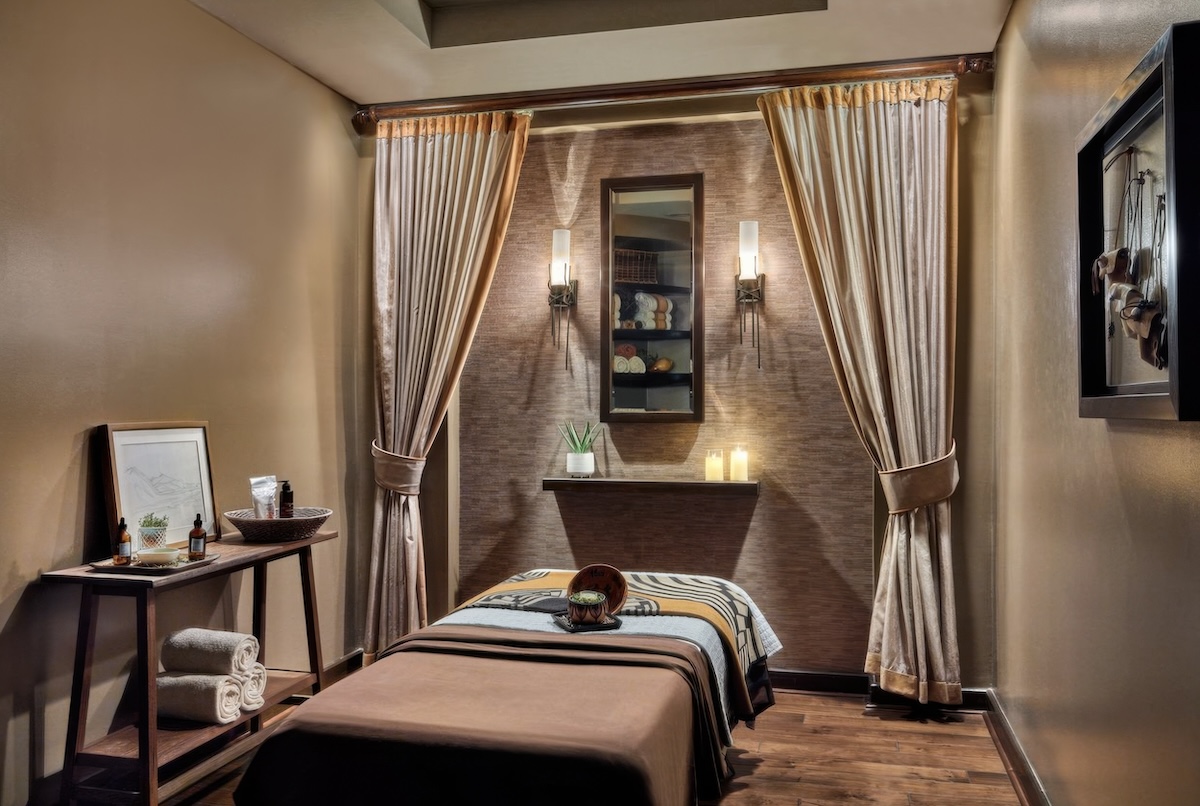 SpaRator 7.3: Solid
No. 3=
Phoenix
Sheraton Grand at Wild Horse Pass
See the analysis: Sheraton Grand at Wild Horse PassSee Live Rates: Sheraton Grand at Wild Horse Pass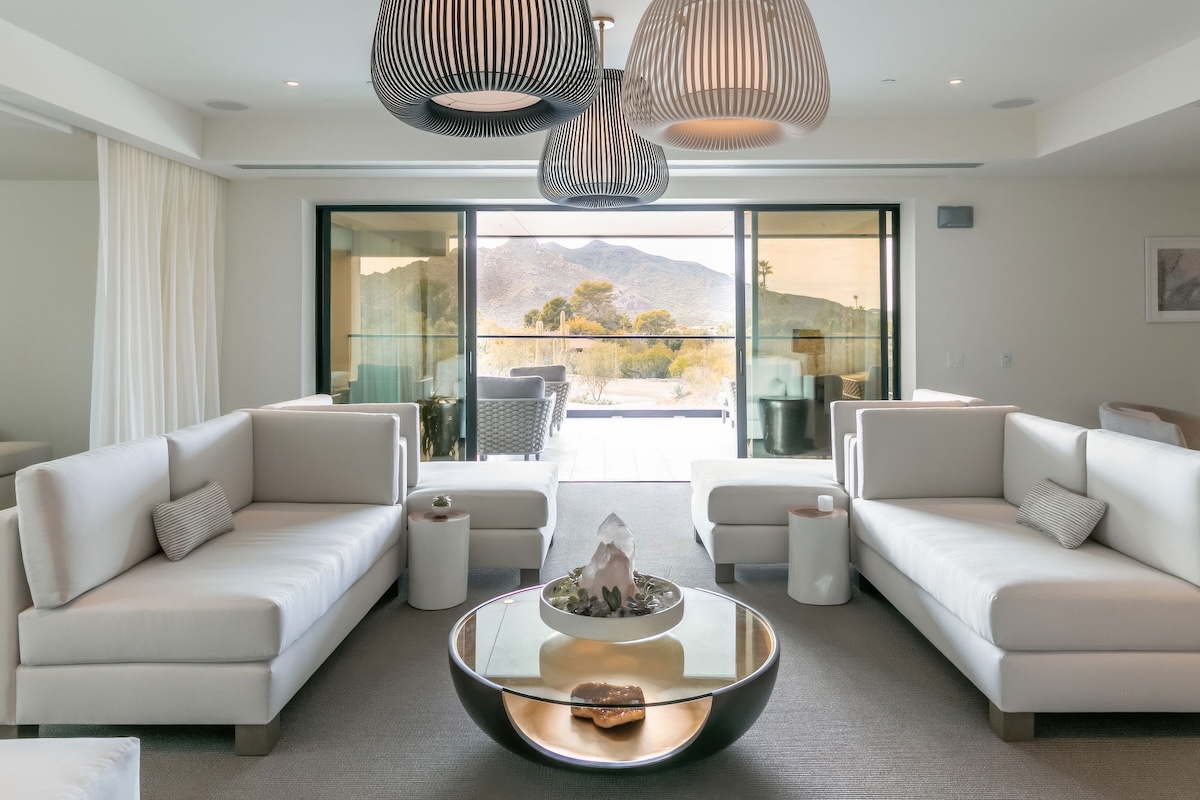 SpaRator 8.1: Outstanding
No. 5
Scottsdale
CIVANA Wellness Resort and Spa
See the analysis: CIVANA Wellness Resort and SpaSee Live Rates: CIVANA Wellness Resort and Spa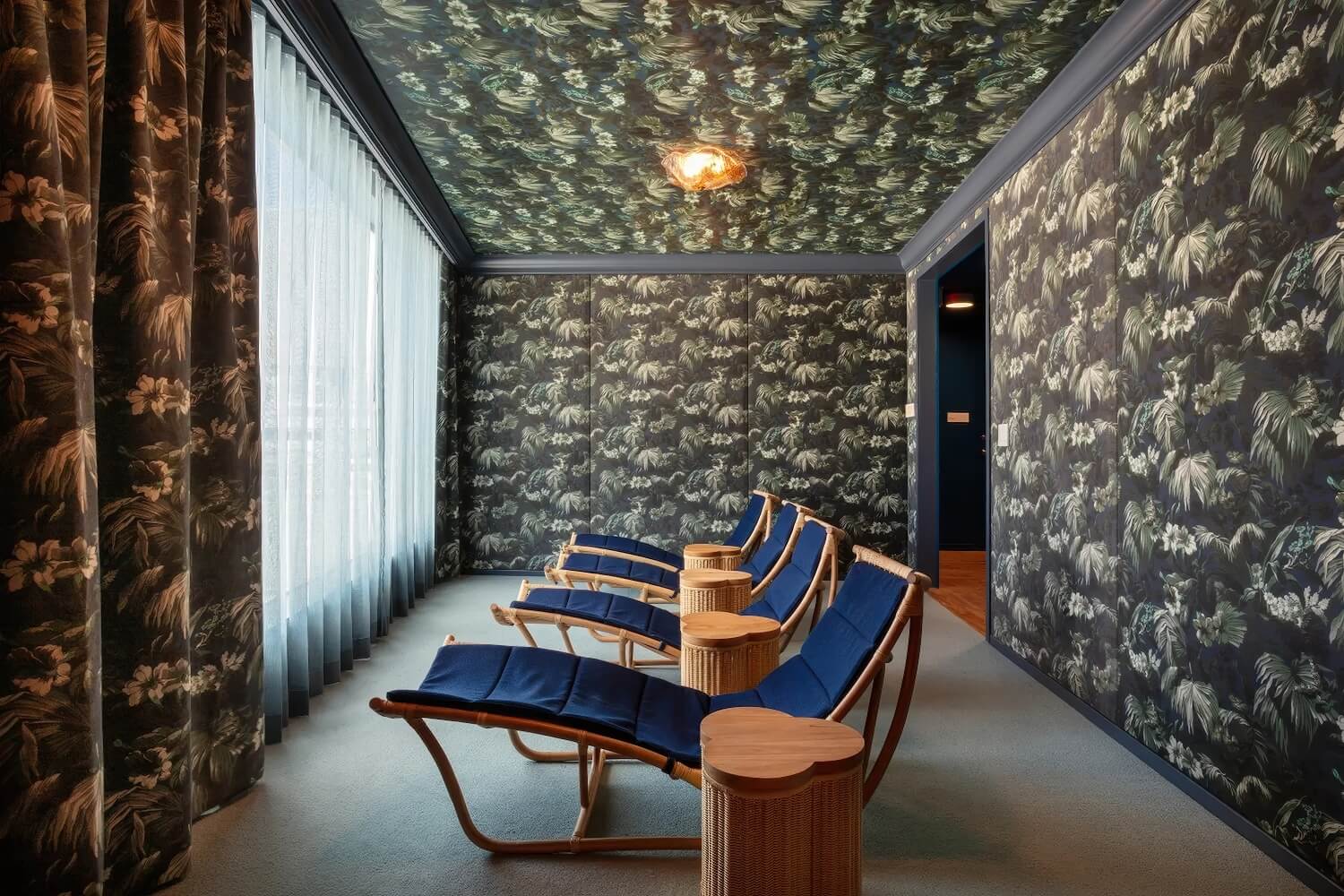 SpaRator 8.1: Outstanding
No. 6=
Miami
The Standard Spa, Miami Beach
See the analysis: The Standard Spa, Miami BeachSee Live Rates: The Standard Spa, Miami Beach SpaRator 7.8: Strong
No. 6=
Miami
Faena Hotel Miami Beach
See the analysis: Faena Hotel Miami BeachSee Live Rates: Faena Hotel Miami Beach SpaRator 7.8: Strong
No. 6=
Phoenix
The Global Ambassador
See the analysis: The Global AmbassadorSee Live Rates: The Global Ambassador SpaRator 7.4: Solid
No. 9=
Scottsdale
Four Seasons Resort Scottsdale
See the analysis: Four Seasons Resort ScottsdaleSee Live Rates: Four Seasons Resort Scottsdale SpaRator 7.0: Solid
No. 9=
Scottsdale
Boulders Resort & Spa Scottsdale, Curio Collection by Hilton
See the analysis: Boulders Resort & Spa Scottsdale, Curio Collection by HiltonSee Live Rates: Boulders Resort & Spa Scottsdale, Curio Collection by Hilton
Communal Bathing FAQs
What is communal bathing?
Communal bathing is bathing together in a shared space as a social and hygienic act, rather than privately at home. It survives as a living daily practice in Japanese onsen and sento, Turkish and Moroccan hammams, Russian banya, Finnish sauna, Korean jjimjilbang, and the thermal baths of Hungary and Iceland, each with its own ritual sequence and etiquette.
Is communal bathing common in Japan?
Yes, though far less common than at its peak. Japan has around 27,000 onsen facilities nationwide, and onsen bathing remains standard on domestic trips and ryokan stays. The neighborhood sento is the part that collapsed: Tokyo went from 2,687 sento in 1968 to 462 in 2022 as private bathrooms became universal.
What exactly happens in a bathhouse?
You undress or change, wash thoroughly before entering any shared water, then move through one or more heat stages: a soaking pool, a steam room, a heated marble platform, or a sauna. Many traditions add a scrub or massage ritual, such as a Turkish kese scrub or a Russian venik massage, followed by a cooldown with tea or food.
Do you wear clothes in a bathhouse?
It depends entirely on the tradition. Japanese onsen and sento and Russian banya bathing areas are nude, and Korean jjimjilbang is nude in the gender-segregated pools and uniformed in the mixed common areas. Hungarian and Icelandic thermal baths are swimsuit-based throughout. Turkish hammams use a pestemal wrap.
Are bathhouses male only?
No. Most traditions are gender-segregated by section or by time slot rather than male-only, so women’s facilities exist alongside men’s almost everywhere. A small number of mixed-gender konyoku onsen still operate in Japan. Gay bathhouses are a separate men-only category with a distinct history, which is why search results can look misleading.
Can I go to a Japanese onsen if I have a tattoo?
Possibly, but check the specific venue before you book. Roughly half of Japan’s hot spring facilities still ban visible tattoos, about 30% allow them if covered with a sticker (Hoshino Resorts sizes theirs at 8cm x 10cm), and around 20% welcome them unconditionally. Tattoo-friendly sento directories cover Tokyo and Osaka.
What is the difference between a Turkish and a Moroccan hammam?
Turkish hammams are larger and more ornate, built around the gobektasi heated marble platform, with a kese scrub and foam massage delivered by an attendant. Moroccan hammams are smaller and more everyday, using black olive soap and a kessa mitt for a bucket-bath scrub that most first-timers find more physically vigorous.