Stanly Ranch, Auberge Resorts Collection, Napa
Sauna Guide for Beginners: How to Use the Heat Rooms at a Spa Hotel
Sauna benefits are real, but they hinge on dose: about 20 minutes near 174°F, several times across a stay, not one scorching session. This guide settles which door to open first and how to run your first thermal circuit without finding out the hard way.
In 30 Seconds
- Confirm access before booking: many hotel thermal suites require a paid treatment or day pass, and guests often learn at check-in.
- If only one heat room fits your schedule, pick the traditional sauna; infrared needs close to an hour to pay off.
- Suits spa-hotel beginners who want to run a proper thermal circuit; skip it if you only need a quick gym sauna stop.
Sauna: what our scored hotels show
scored hotels offer it
Where they sit on the field
- Offers it
- Other scored hotels
Spa details are on file for 84 of 102 scored hotels, so the count is a floor.
See where to book itMost sauna advice is written for someone with a gym membership or a basement renovation budget. This sauna guide is for the person standing in a robe at a spa hotel, facing four unlabeled doors with ninety minutes on the clock.
The rules change at the door, and again at the next one. In a German sauna park, sitting bare on a clean towel is the hygiene standard, while a swimsuit is expected two rooms away at the pool deck.
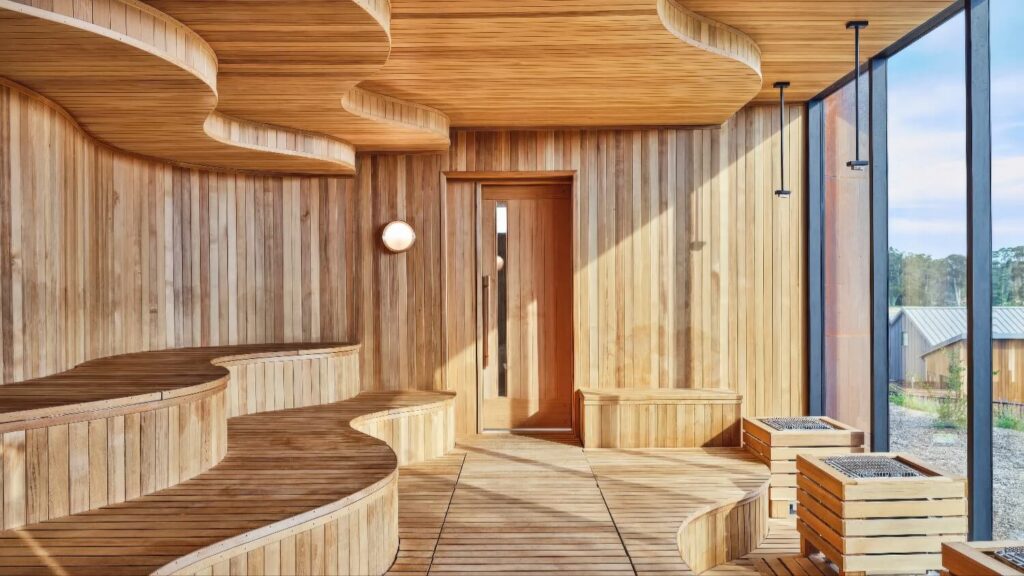
A spa hotel sauna is not a gym sauna. It sits inside a sequenced thermal suite, and the sequence is the point. A property can own a sauna, a steam room and a plunge pool and still not have a real thermal suite.
The heat is well evidenced, though dose matters more than peak temperature. Sauna etiquette causes the real anxiety, and it is country-specific: one American-raised host needed three or four visits to a German sauna park before she got comfortable.
Types of Saunas You Will Meet at a Spa Hotel
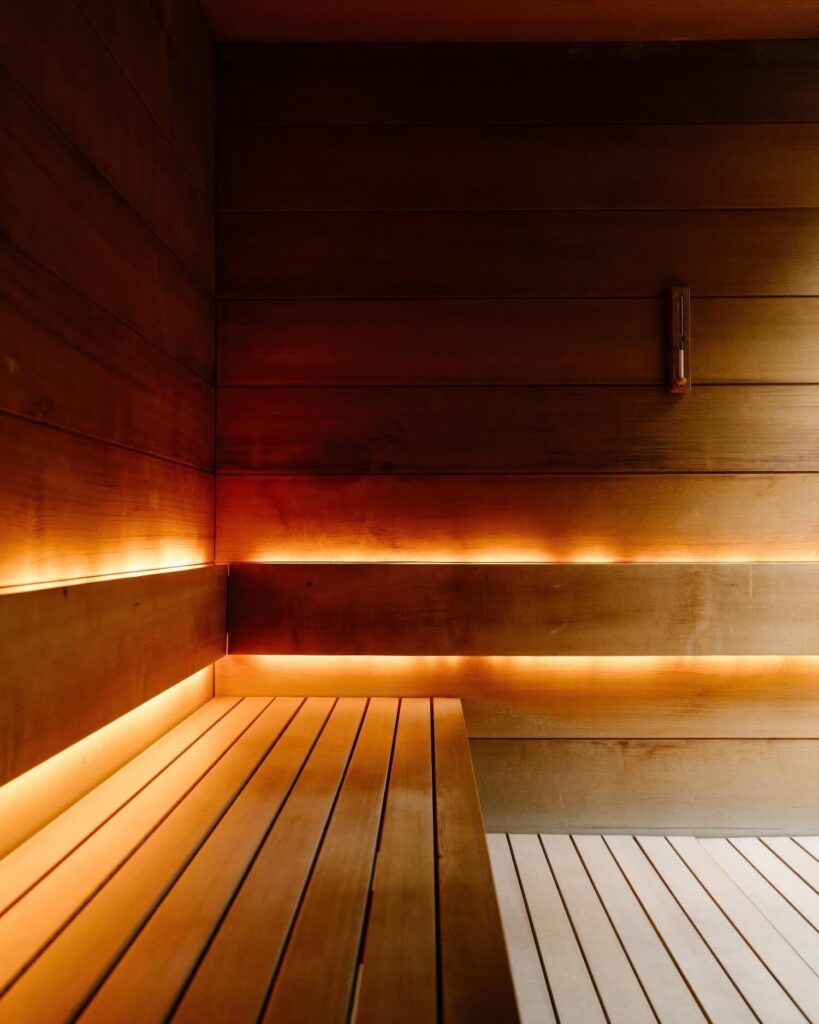
Guess wrong at the first door and you spend most of a ninety-minute window in the room that suits you least. Beginners almost always open the infrared door first because it is the most comfortable room in the suite, then get the least out of a short session.
Traditional Finnish sauna
The anchor room, and the one carrying the strongest evidence base. Ignore the scorching 100°C (212°F) image: many Finns prefer 70-80°C, or 158-176°F, and dedicated treatment saunas run at 60°C (140°F) or lower. Finland has an estimated 3 million-plus saunas against roughly 2.5 million cars for a population of 5.5 million, so the milder version is the authentic one.
Löyly, the steam burst from water poured on the stones, is your intensity dial. Finnish practitioners describe it as the soul and spirit of sauna, not an optional flourish.
Infrared sauna
Runs around 145°F (63°C) and feels manageable from the first minute. The trade-off is time. Dr. Rhonda Patrick puts the infrared requirement at roughly 45 to 60 minutes to match the cardiovascular dose of a 20 to 30 minute traditional session at 180°F (82°C). Comfortable is not the same as efficient.
Steam room and hammam
Wet heat at a lower temperature, complementary to the sauna rather than a substitute. High humidity mutes the sweat feedback most beginners use to judge time, so guests stay longer than they intended. Spa sequencing guidance puts it after the dry heat, not before it. Here’s everything you need to know about what a hammam is and what the ritual involves.
Banya
Russian-style, more social, built around venik branch treatments and multiple deep rounds that can stretch toward two hours. The cardiovascular load is heavier than a standard sauna: one practitioner needed a full following day to recover. Not the room to start with.
The thermal suite itself
The fifth type is not a room. A real thermal suite is defined by the sequence rather than the inventory: warm-up room, intense heat, cold contrast, experience shower, rest, repeated as a loop. Zoning and engineering turn three rooms into one journey, one of the facility factors we weigh in how we score spa hotels.
If you only have time for one room, take the traditional sauna. Best evidence, best ritual, fastest payoff. Choose infrared only if you have a genuine hour to give it, and treat the steam room as your second stop rather than your first.
How to Use a Sauna: Running Your First Thermal Circuit
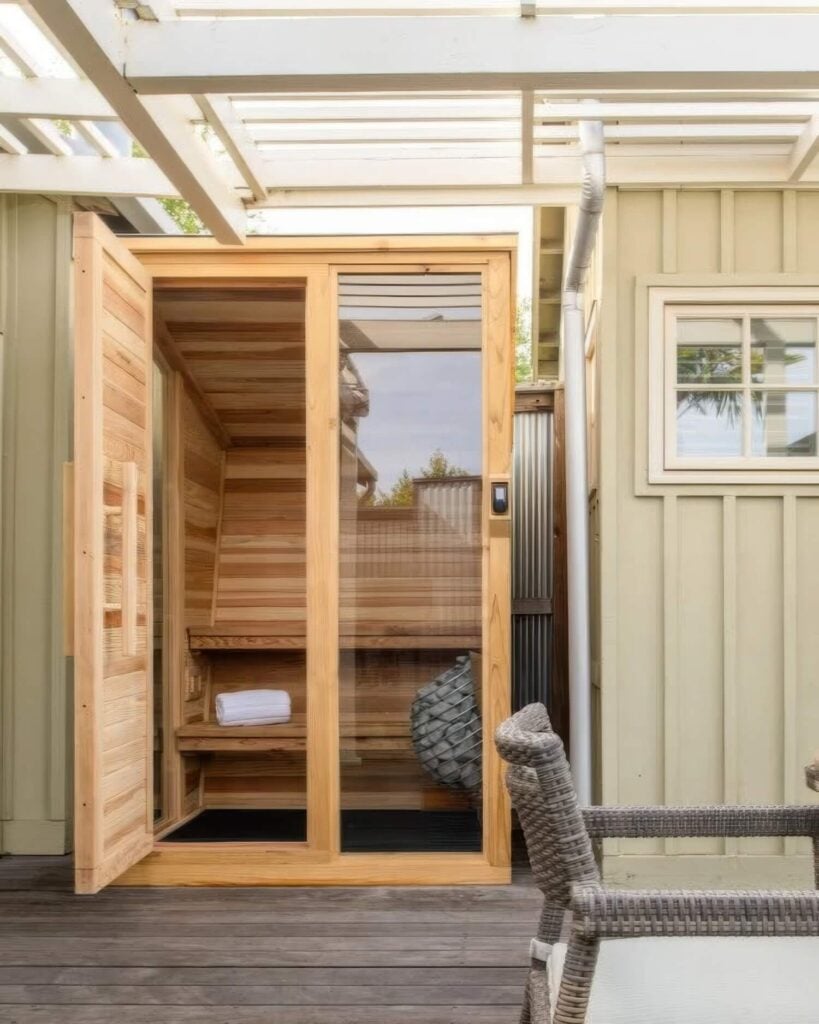
Sauna first, steam second, cold third, rest fourth, then repeat. Most guests run that order backwards or skip the cold contrast entirely, which costs them the effect the suite was engineered to produce.
The full circuit runs like this:
- Gentle warm-up room (laconium or tepidarium) if the suite has one
- Sauna, dry heat, to raise core temperature and open pores
- Steam room, wet heat, to hydrate skin and loosen congestion
- Cold contrast: plunge pool, cold shower, or snow room
- Experience shower to transition
- Heated rest lounge
- Repeat two to four times
Duration is where beginners get it wrong in both directions. Start at around 5 minutes on your first sitting, building to 15 or 20 minutes across repeat visits, and give yourself at least 20 minutes to cool down afterward. Lasting one or two minutes on a first attempt is completely normal.
Your first round is usually your longest, and each round after it gets shorter, not longer. Most guests assume the opposite and read shrinking tolerance as failure.
Finns do not use clocks at all. The instruction from Finnish practitioners is that you are your own sauna master, reading your heartbeat and breathing instead of a timer. The real-time signals are a heartbeat that changes or races, breathing that turns shallow or labored, restlessness, and touching your face repeatedly. When any of those show up, cool down.
Dizziness, nausea, or a genuinely racing heart is not a signal to interpret. It is an exit. Leave the heat immediately rather than matching someone else’s tolerance.
Cooling down has its own order, and German sauna culture is specific about it: fresh air outside first, then a cold shower starting with the extremity farthest from your heart (right foot, left foot, right arm, left arm, then torso and face), then roughly 30 minutes of rest before the next round. Inside the room, you can also sit lower on the bench, lie down, use a bucket of cool water, or open the door for air.
Before the first round, shower off oils, lotion and deodorant, sit on a towel, and hydrate with mineral water or electrolytes, since plain water may not be enough. No heavy meal in the two to three hours before.
On your first visit at a hotel spa, do one short round, take the full cool-down, and decide from there. That single round tells you more about your tolerance than any rule above.
Sauna Etiquette by Country: Germany, Finland, Japan, and US Resorts
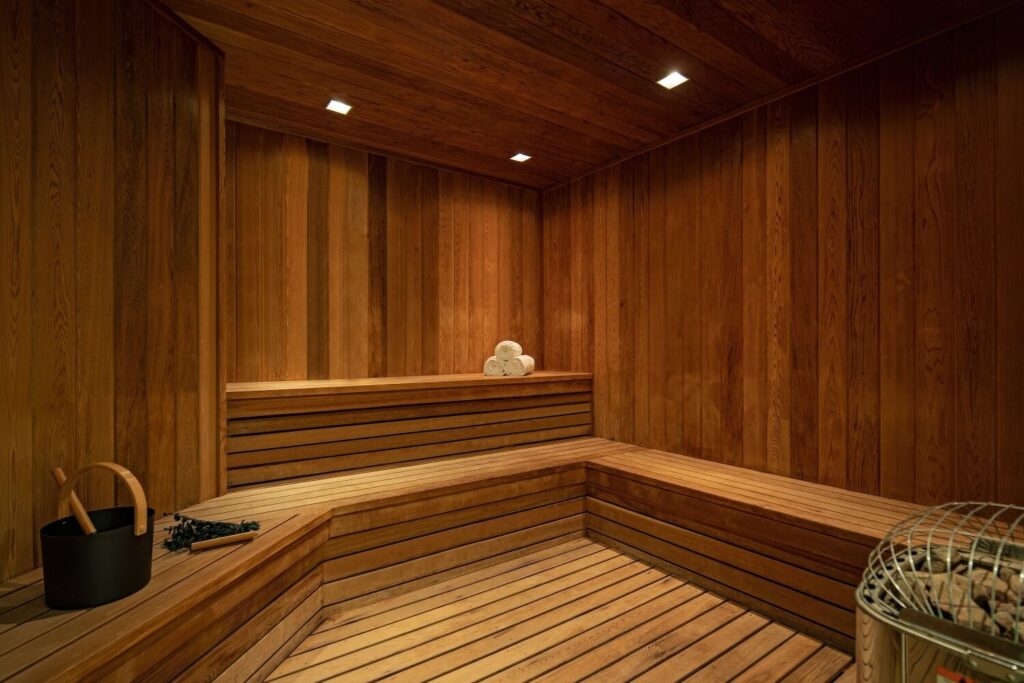
German nudity rules are a hygiene protocol, not a social attitude. Sweat-soaked fabric is considered unsanitary for the next bather, and skin should never touch the wood directly. Once you read the rule that way, most of the discomfort dissolves.
Germany and Austria
Textilfrei is the norm inside the sauna room, but the rule is room-specific: swimsuit in the pools, robe while walking the facility. A towel goes between skin and wood at all times, bare feet on the floor excepted. Stay silent unless the room is marked a talking sauna, close the door fast, and never touch someone else’s running sand-timer. Phones and cameras are banned outright and can get you ejected.
The numbers: standard rooms run about 90°C (194°F), with some at 70-80°C, a gentler Bio-sauna sits near 50°C (122°F) and more humid, sessions last 10 to 15 minutes, sand-timers mark 5, 10 and 15, and most guests do one to three rounds.
Finland
The distinction that matters is room type, not country. Mixed-gender public saunas expect a towel or swimsuit; single-gender and private saunas expect nudity. Seat pads go on the bench before you sit, and löyly is expected rather than optional.
Non-alcoholic beer and grilling sausages by the stove are accepted Finnish customs, contradicting the absolutist “alcohol and sauna never mix” rule other guides push. That is custom, not medical advice, and alcohol in real heat stays a cardiovascular risk.
Japan (onsen and sento)
Wash and rinse your entire body at an individual washing station before entering the communal bath. Phones and cameras are strictly prohibited in the bathing area.
Tattoos are the live issue. Most public baths still prohibit visible ink, rooted in a historical association with organized crime, though a 2015 Japan Tourism Agency study found about 30% of hotels and inns would permit a tattooed guest. Adhesive cover patches handle small tattoos, a private family bath (kashikiri-buro) removes the risk, and emailing ahead settles it.
US resorts
Swimsuit-standard, co-ed by default, far less ritual and much more variation between properties. It’s the same easygoing norms you’ll find at most American hot springs. Layout and policy are rarely posted, so tell the front desk it is your first visit and let staff walk you through it.
The anxiety is common enough that Afar published an entire essay about it. Check what the specific room requires. In Germany, the answer changes between the sauna door and the pool deck.
Aufguss: The Sauna Ritual Most Guides Skip
A trained saunameister walks in carrying a towel and a bowl of scented water, the door closes, and for the next few minutes nobody leaves.
Aufguss is a German ritual in which a saunameister (or aufgießer) pours water infused with essential oils onto the hot stones and fans the resulting steam toward bathers with a towel, sometimes choreographed to music. It is competitive at the top end, with championships including one at the Japan Sauna Festival.
The ritual typically arrives about 15 minutes into a session and the fanning lasts roughly two minutes. Heat spikes noticeably, and the saunameister controls the pacing rather than you, which makes an Aufguss more intense than a self-paced sitting. That is the honest limitation: an Aufguss is more intense than a self-paced sitting. If the spike worries you, take a lower bench, which Finnish practitioners use to moderate the heat and level blood pressure.
Treat the etiquette as a hard rule. Arrive a few minutes early, and do not enter or leave once it has begun, which is treated as highly disruptive and socially penalized. If you are near your heat limit, step out just before it starts.
You no longer need a flight to Europe to find one. A Las Vegas Review-Journal post described a 180-degree theatrical Aufguss as the hottest thing to hit Las Vegas in years, and a new Denver spa markets towel-whipping Aufgussing rituals alongside cold plunges and salt scrubs. It has become a headline US amenity, part of the same shift we track in spa and wellness travel trends.
Counter-intuitively, a guided ritual is easier for a nervous first-timer than a self-paced session, because somebody else is running it. Check the Aufguss schedule at check-in, pick a slot that is not your first round of the day, and sit near the door only if you genuinely might need it.
Sauna Benefits: What the Research Actually Shows
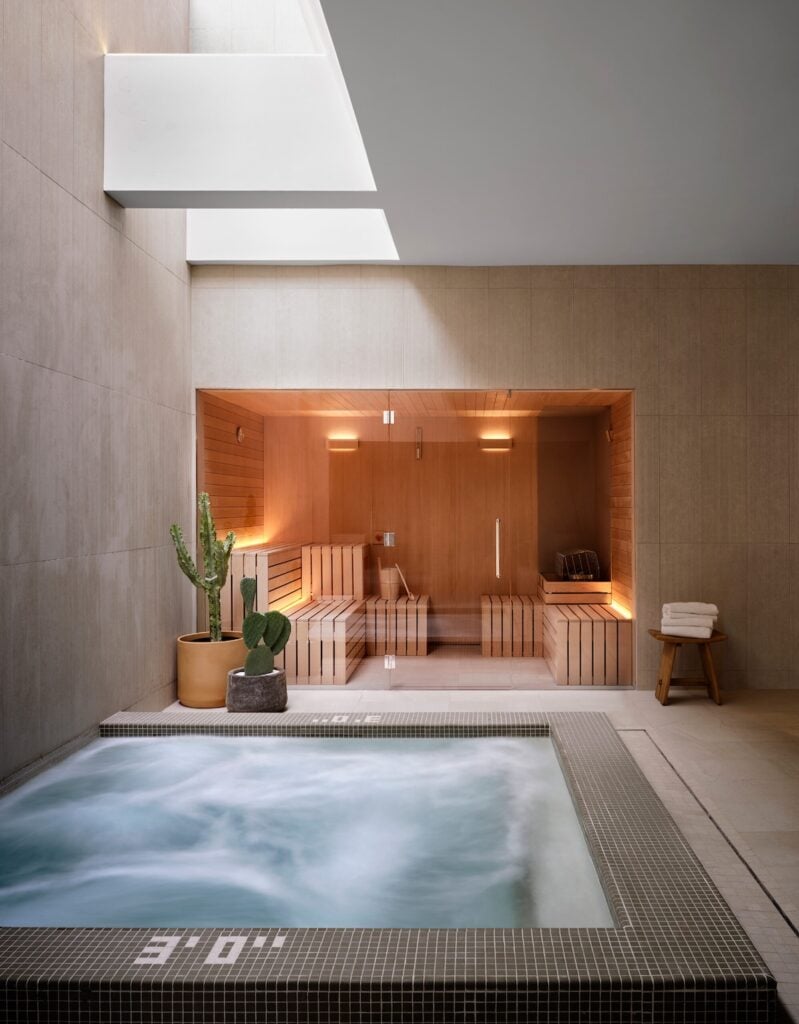
Hotter is not better, and the evidence says so plainly. The protective association between sauna use and dementia risk reverses above roughly 200°F (93°C), the mechanism is not well understood, and animal studies show extreme heat can permeabilize the blood-brain barrier. Almost no sauna guide quoting the headline stats mentions that ceiling.
The headline stats come from one place. The Kuopio Ischaemic Heart Disease Risk Factor cohort, led by Dr. Jari Laukkanen at the University of Eastern Finland and published in JAMA Internal Medicine, followed 2,315 middle-aged Finnish men aged 42 to 60 for a median 20.7 years. Sauna use 4 to 7 times per week was associated with 50% lower cardiovascular mortality and 63% lower sudden cardiac death versus once-weekly use. It is an observational cohort of men in one country, so it shows association, not causation.
The dose is the actionable part. The Finnish study parameters run at least 174°F (79°C) for at least 20 minutes. Sessions under 20 minutes, an 11-minute example among them, did not produce the same protective effects. Twice weekly is the minimum effective dose, and 4 to 7 times a week is where the strongest associations sit.
Mechanically, sauna heat raises heart rate to 100-150 bpm, comparable to moderate-to-vigorous aerobic exercise, and 30 minutes at 163°F (73°C) raises heat shock proteins about 50% over baseline, which is linked to antioxidant effects and slowed muscle atrophy. Sauna plus cardio beats either alone: sauna-and-exercise groups show better cardiorespiratory fitness than exercise-only groups at the same training volume.
The costs are real too. Frequent sweating can cause dry skin and mild mineral deficiencies, and full recovery from an intense session can take up to 24 hours. Skip the heat entirely with a fever or acute infection, kidney problems, heart disease, blood pressure concerns, or any history of dizziness, and check with a doctor first.
For a two-night stay, that translates cleanly: aim for roughly 20-minute sessions near 174°F, four or more times across the visit rather than one heroic session at maximum heat. Treat a spa weekend as the place to build the habit, not the place to chase a 20-year outcome.
Spa Day Logistics: Access Fees, Massage Timing, and What to Do With Your Glasses
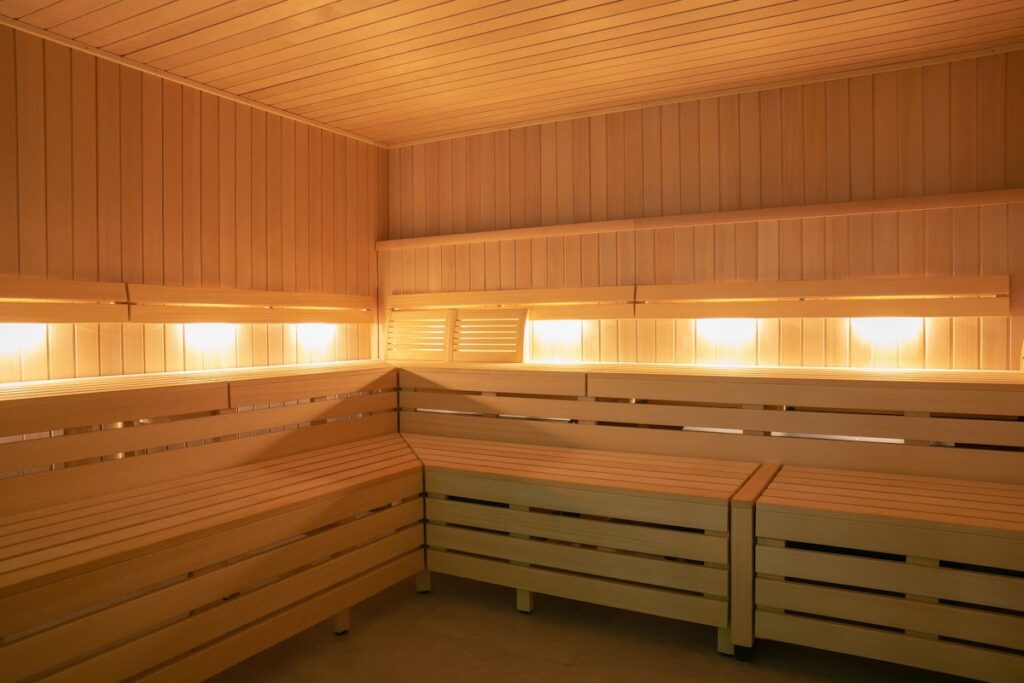
The thermal suite may not come with your room. At resorts that are not all-inclusive, sauna, steam room and plunge pool access typically requires a booked treatment or a paid day pass, and guests find out at the desk. Confirm at booking. All-inclusive destination properties invert this: at Mii amo in Sedona, facilities and treatments are built into the rate.
Several Desert Hot Springs properties waive the day-pass fee outright when you book a qualifying treatment, which makes the sauna effectively free. At The Spring a $100 treatment absorbs the $50 pass.
Money and timing. Resort spas fill up, so book early. Around 20% gratuity is the discretionary standard, reservation times are enforced, and no-shows pay in full.
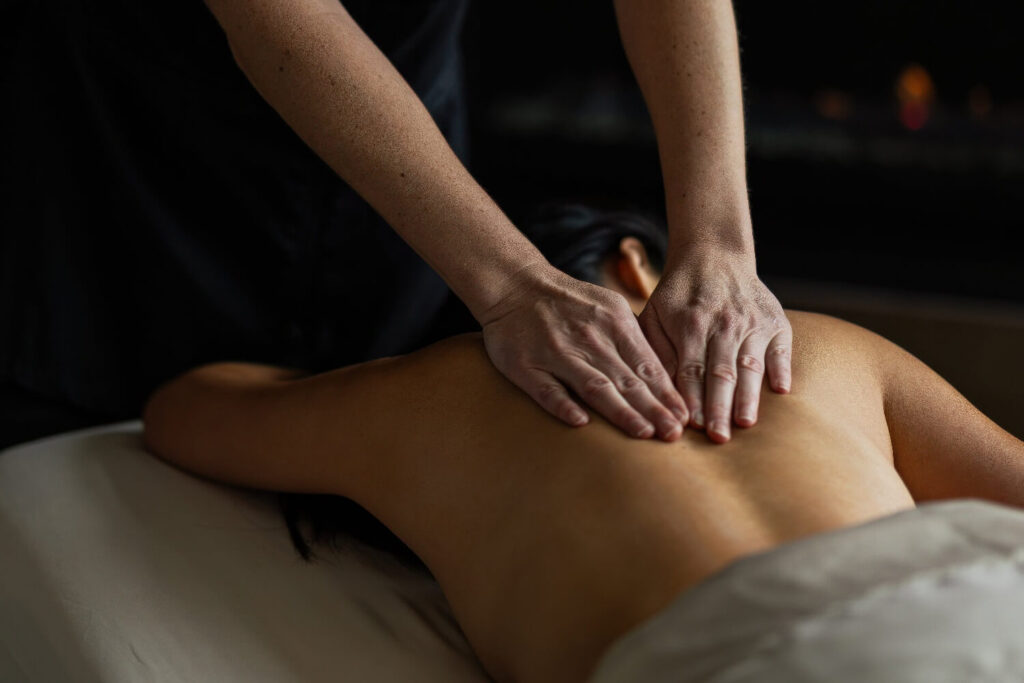
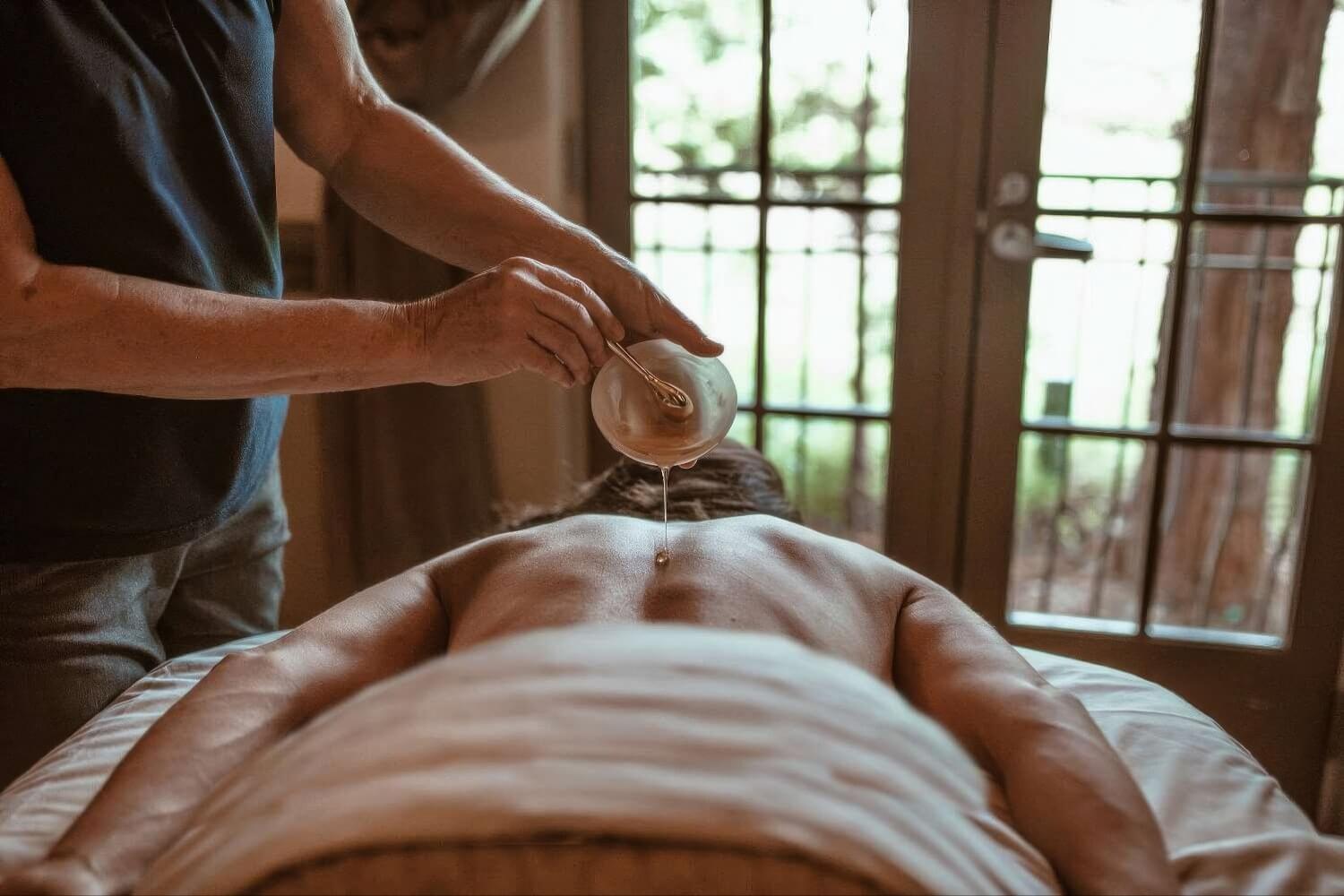
Sauna before or after most types of massage. Before, for most guests. Raised blood flow and looser muscles let the therapist work deeper. Sauna-after suits gentle, relaxation-focused sessions where the heat extends the effect instead.
Multi-treatment order. turquoise-infused body wraps, desert sage rituals, and geothermal stone treatments, so facial product is not wiped off before it absorbs. Booking a facial first is the sequencing mistake spa staff flag most often.
Contacts and glasses. The FDA advises against contact lenses in a sauna because of Acanthamoeba keratitis risk in heat and humidity. If lenses stay in, keep your eyes closed, use compatible drops before and after, and keep it short. Glasses are discouraged too: metal parts heat up against skin, and steam damages lenses and frames.
The small stuff. Toiletries are provided, so pack like a beach day: swimsuit, spare clothes, headband. Skip makeup. Leave the phone in the locker, mandatory in German saunas and Japanese bathing areas anyway.
Water and food. Bring a glass or stainless steel bottle, because heat increases microplastic and BPA leaching from plastic. Eat two to three hours before, not after: about 60% of blood flow shifts from core to skin during a session, which pauses digestion.
Gym sauna, spa sauna: same box, different job. One is a ten-minute post-workout recovery stop. The other is one room in a circuit built around ritual and rest, and guests who bring gym habits rush the part worth slowing down for. More property detail sits in our spa travel guides.
Where to try it
Scored Hotels with a Sauna
These are today's SpaRator scores for hotels that offer it, highest score first.
We may earn a commission when you book through these links. It never affects a SpaRator score, and no hotel hosted or paid for this analysis. How we earn
 SpaRator 8.6: Outstanding
 SpaRator 8.4: Outstanding
Carmel
Casa Palmero at Pebble Beach
Sauna
See the analysis: Casa Palmero at Pebble BeachBook direct with the hotel: Casa Palmero at Pebble Beach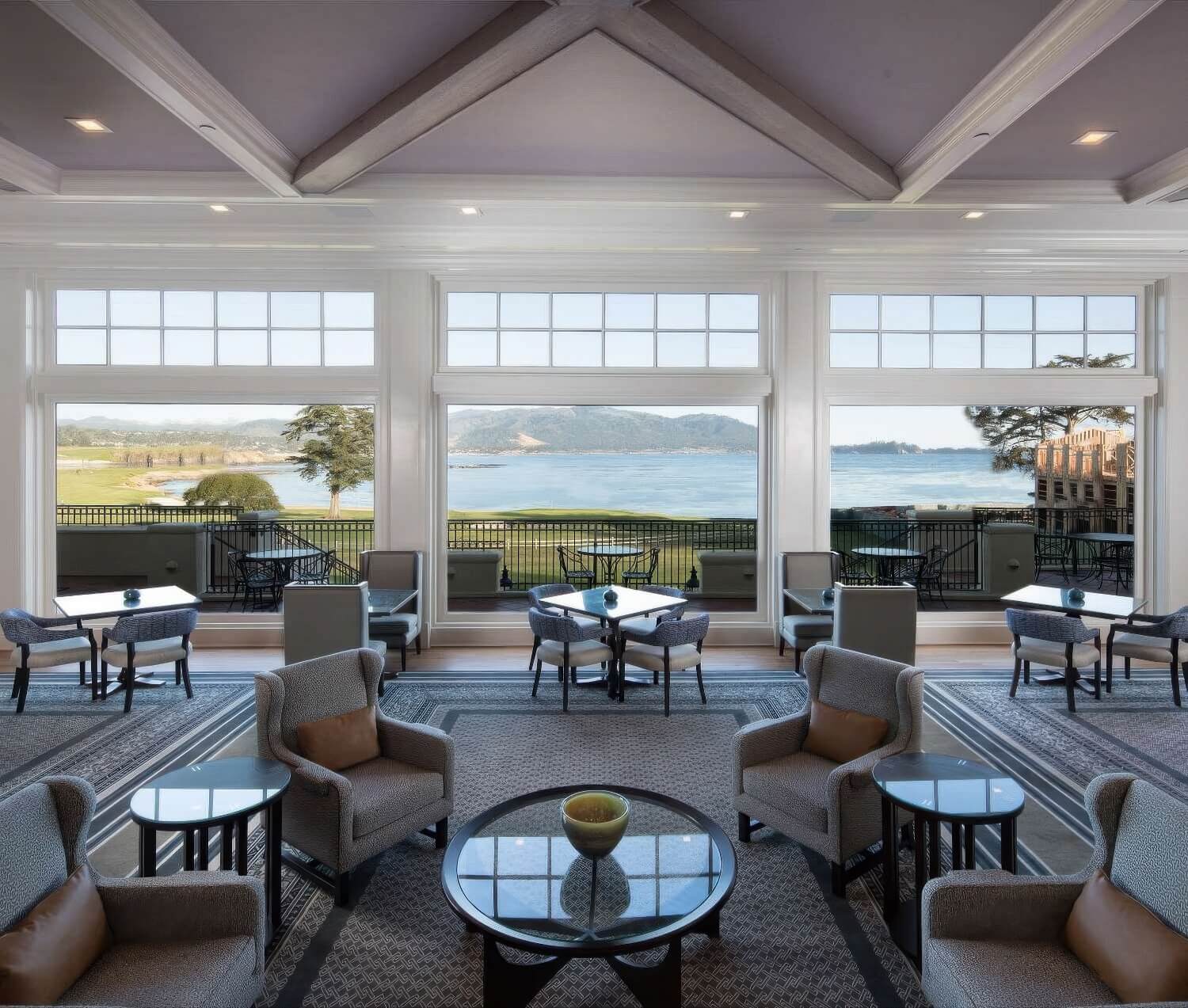 SpaRator 8.3: Outstanding
Carmel
The Lodge at Pebble Beach
Sauna
See the analysis: The Lodge at Pebble BeachBook direct with the hotel: The Lodge at Pebble Beach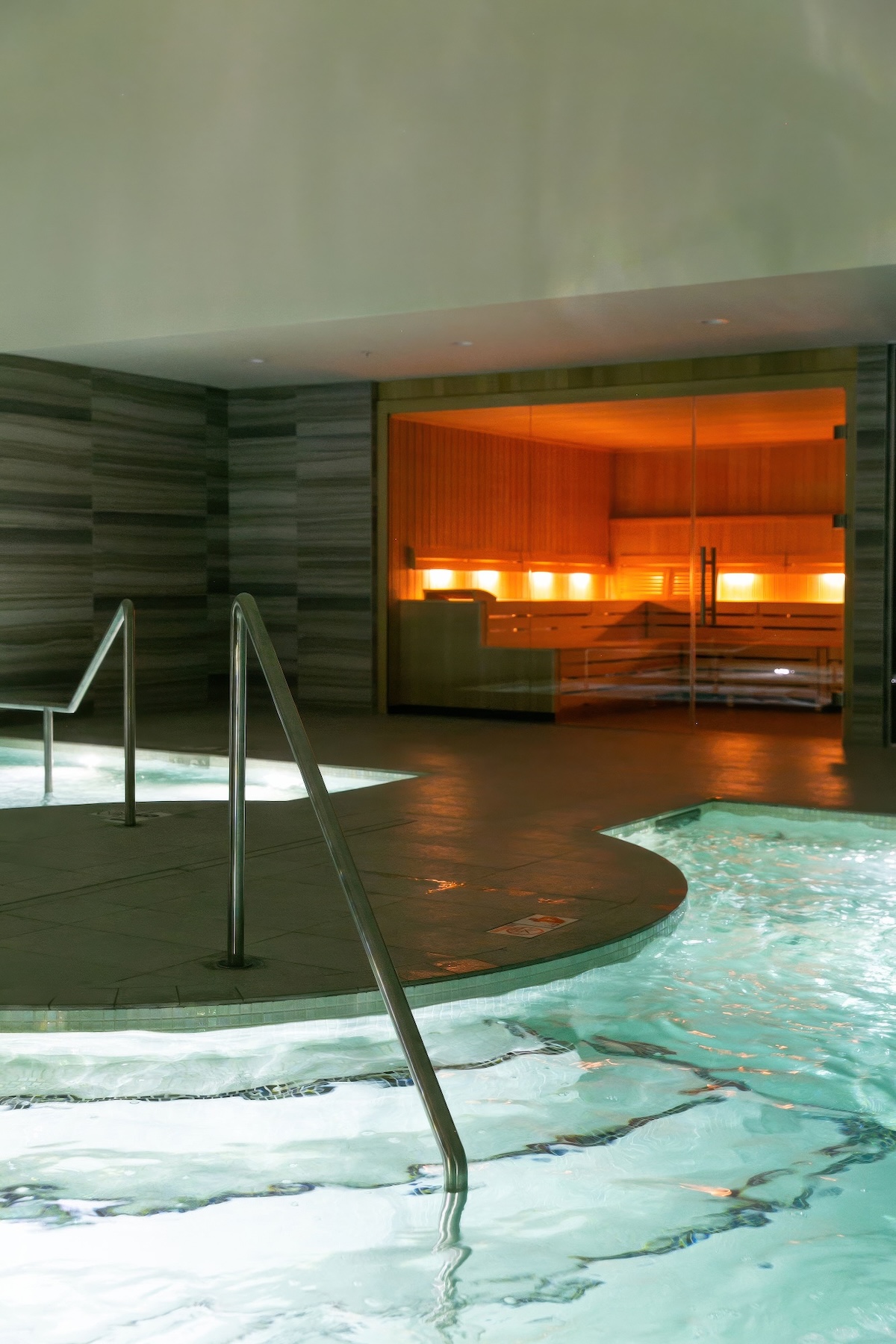 SpaRator 8.1: Outstanding
Scottsdale
CIVANA Wellness Resort and Spa
Sauna
See the analysis: CIVANA Wellness Resort and SpaSee Live Rates: CIVANA Wellness Resort and Spa SpaRator 8.1: Outstanding
Miami
The Standard Spa, Miami Beach
Sauna
See the analysis: The Standard Spa, Miami BeachSee Live Rates: The Standard Spa, Miami Beach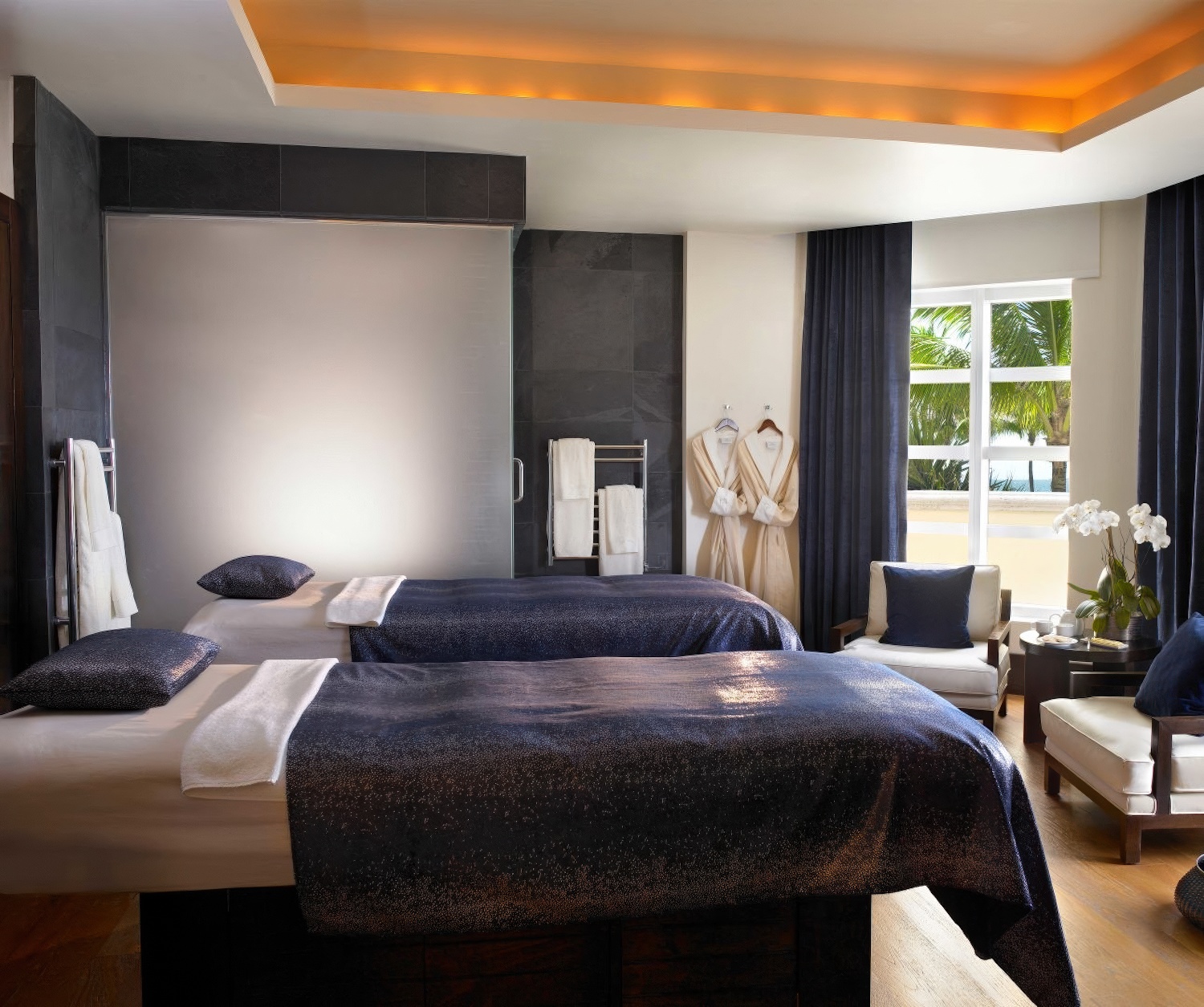 SpaRator 8.0: Outstanding
Miami
Acqualina Resort & Residences
Sauna
See the analysis: Acqualina Resort & ResidencesSee Live Rates: Acqualina Resort & Residences SpaRator 8.0: Outstanding
Carmel
Bernardus Lodge & Spa
Sauna
See the analysis: Bernardus Lodge & SpaSee Live Rates: Bernardus Lodge & Spa SpaRator 7.8: Strong
Miami
Faena Hotel Miami Beach
Sauna
See the analysis: Faena Hotel Miami BeachSee Live Rates: Faena Hotel Miami Beach SpaRator 7.8: Strong
Scottsdale
Omni Scottsdale Resort & Spa at Montelucia
Sauna
See the analysis: Omni Scottsdale Resort & Spa at MonteluciaSee Live Rates: Omni Scottsdale Resort & Spa at Montelucia SpaRator 7.8: Strong
Phoenix
The Global Ambassador
Sauna
See the analysis: The Global AmbassadorSee Live Rates: The Global Ambassador
Sauna Questions Spa Guests Ask Most
Do I have to be naked in a sauna at a spa hotel?
It depends on the country and the room. Germany expects textilfrei inside the sauna room, a swimsuit in pools, and a robe elsewhere. Finland expects nudity in single-gender and private saunas, a towel or swimsuit in mixed-gender public ones. US resorts are swimsuit-standard.
How long should a beginner stay in the sauna?
Around 5 to 10 minutes on a first sitting, building to 15 or 20 minutes over repeat visits. Never push past 20 to 30 minutes in one sitting. Leave immediately at dizziness, nausea, or a racing heart, and allow at least 20 minutes to cool down.
Should I do the sauna or the steam room first?
Sauna first. Dry heat raises body temperature and opens pores, then wet heat in the steam room hydrates skin and loosens congestion, then cold contrast, then rest.
Can I wear contacts or glasses in the sauna?
No to both. The FDA advises against contact lenses in saunas because of Acanthamoeba keratitis risk in heat and humidity. Glasses are discouraged separately: metal parts heat against your skin, and heat and steam damage frames and lenses.
Should I sauna before or after a massage?
Before, for most people. Heat raises blood flow and loosens muscle so the massage works deeper. Sauna afterward suits gentle, relaxation-focused sessions where the heat extends the effect rather than preparing the tissue.
Can I visit a Japanese onsen with a tattoo?
Often not at public baths, though about 30% of hotels and inns say they would permit it, and foreigners get more leeway than Japanese guests. Adhesive cover patches work for small tattoos, and a private kashikiri-buro removes the issue. Email ahead.
What is the difference between a gym sauna and a spa sauna?
A gym sauna is a short post-workout recovery stop. A spa sauna is one room inside a sequenced thermal circuit built around hot-cold contrast, rest, and rituals like Aufguss. Same equipment, different purpose and pacing.
Is it normal to feel anxious or dizzy the first time in a sauna?
Anxious, yes, and commonly so. Dizzy, no. Nervousness about nudity and unfamiliar rules fades with repeat visits. Dizziness is a warning sign: leave the heat immediately rather than push through it.
48 Scored Hotels, Ranked by Score
We may earn a commission when you book through these links. It never affects a SpaRator score, and no hotel hosted or paid for this analysis. How we earn
- SpaRator 8.6: Outstanding
Mii amo
Sedona · Sauna
- SpaRator 8.4: Outstanding
Casa Palmero at Pebble Beach
Carmel · Sauna
- SpaRator 8.3: Outstanding
The Lodge at Pebble Beach
Carmel · Sauna
- SpaRator 8.1: Outstanding
CIVANA Wellness Resort and Spa
Scottsdale · Sauna
- SpaRator 8.1: Outstanding
The Standard Spa, Miami Beach
Miami · Sauna
- SpaRator 8.0: Outstanding
Acqualina Resort & Residences
Miami · Sauna
Show all 48 hotelsShow fewer hotels
- SpaRator 8.0: Outstanding
Bernardus Lodge & Spa
Carmel · Sauna
- SpaRator 7.8: Strong
Faena Hotel Miami Beach
Miami · Sauna
- SpaRator 7.8: Strong
Omni Scottsdale Resort & Spa at Montelucia
Scottsdale · Sauna
- SpaRator 7.8: Strong
The Global Ambassador
Phoenix · Sauna
- SpaRator 7.7: Strong
Loews Ventana Canyon Resort
Tucson · Sauna
- SpaRator 7.7: Strong
Naples Beach Club, A Four Seasons Resort
Naples · Sauna
- SpaRator 7.6: Strong
The Ritz-Carlton Bacara, Santa Barbara
Santa Barbara · Sauna
- SpaRator 7.5: Strong
Canyon Ranch Tucson
Tucson · Sauna
- SpaRator 7.5: Strong
Enchantment Resort
Sedona · Sauna
- SpaRator 7.5: Strong
Four Seasons Hotel at The Surf Club
Miami · Sauna
- SpaRator 7.5: Strong
Grand Hyatt Scottsdale Resort
Scottsdale · Sauna
- SpaRator 7.5: Strong
The Canyon Suites at The Phoenician
Scottsdale · Sauna
- SpaRator 7.5: Strong
The Ritz-Carlton, Naples
Naples · Sauna
- SpaRator 7.4: Solid
Four Seasons Resort Scottsdale
Scottsdale · Sauna
- SpaRator 7.4: Solid
JW Marriott Tucson Starr Pass Resort & Spa
Tucson · Sauna
- SpaRator 7.4: Solid
Omni Tucson National Resort & Spa
Tucson · Sauna
- SpaRator 7.4: Solid
The Setai, Miami Beach
Miami · Sauna
- SpaRator 7.4: Solid
Ventana Canyon Club and Lodge
Tucson · Sauna
- SpaRator 7.3: Solid
Sheraton Grand at Wild Horse Pass
Phoenix · Sauna
- SpaRator 7.2: Solid
Hotel Valley Ho
Scottsdale · Sauna
- SpaRator 7.2: Solid
LaPlaya Beach & Golf Resort
Naples · Sauna
- SpaRator 7.2: Solid
The Inn at Spanish Bay
Carmel · Sauna
- SpaRator 7.2: Solid
The St. Regis Bal Harbour Resort
Miami · Sauna
- SpaRator 7.1: Solid
Inn on Fifth
Naples · Sauna
- SpaRator 7.1: Solid
JW Marriott Marco Island Beach Resort
Naples · Sauna
- SpaRator 7.1: Solid
Tanque Verde Ranch
Tucson · Sauna
- SpaRator 7.1: Solid
The Scottsdale Resort and Spa
Scottsdale · Sauna
- SpaRator 7.0: Solid
Boulders Resort & Spa Scottsdale, Curio Collection by Hilton
Scottsdale · Sauna
- SpaRator 7.0: Solid
Carillon Miami Wellness Resort
Miami · Sauna
- SpaRator 7.0: Solid
JW Marriott Phoenix Desert Ridge Resort & Spa
Phoenix · Sauna
- SpaRator 6.9: Modest
Ambiente, a Landscape Hotel
Sedona · Sauna
- SpaRator 6.9: Modest
Hyatt Regency Coconut Point Resort & Spa
Naples · Sauna
- SpaRator 6.8: Modest
JW Marriott Turnberry Resort & Spa
Miami · Sauna
- SpaRator 6.8: Modest
The Phoenician, a Luxury Collection Resort, Scottsdale
Scottsdale · Sauna
- SpaRator 6.7: Modest
Naples Bay Resort & Marina
Naples · Sauna
- SpaRator 6.5: Modest
Hawks Cay Resort
Florida Keys · Sauna
- SpaRator 6.5: Modest
Hilton Phoenix Resort at the Peak
Phoenix · Sauna
- SpaRator 6.5: Modest
Hilton Phoenix Tapatio Cliffs Resort
Phoenix · Sauna
- SpaRator 6.4: Modest
Kimpton Miralina Resort and Villas
Scottsdale · Sauna
- SpaRator 6.4: Modest
The Ritz-Carlton Naples, Tiburón
Naples · Sauna
- SpaRator 6.3: Modest
Marriott Phoenix Resort Tempe at The Buttes
Phoenix · Sauna
- SpaRator 6.3: Modest
Naples Grande Beach Resort
Naples · Sauna
Closed for renovation until January 2027
Every Hotel We Score
Every dot is one of the 102 hotels with a SpaRator score, left to right from low to high. Lit dots mark the hotels that offer this treatment. Select any dot to see the hotel's name and score.
Market
Showing 102 of 102
- Offers it
- Spa details on file, not listed
- No spa details on file yet
Hover or tap a dot to see the hotel.
No hotel here is lit yet.