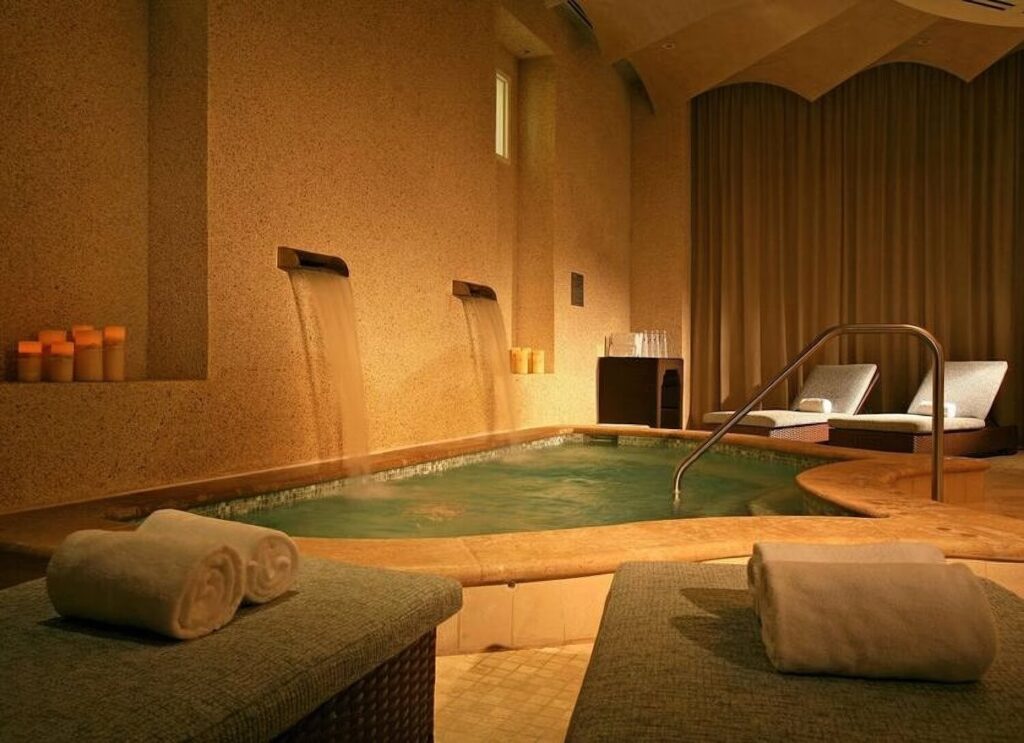
Golden Haven Hot Springs Spa & Resort, Calistoga
Mud Bath Spa Treatments Explained: What’s in the Mud, What It Does, What It Costs
A mud bath is a 15- to 20-minute soak in heated mineral mud you float on rather than sink into, at $40 to past $400. Book it for heat, float, and stillness, not the detox the menu promises; choose a massage when you want relief in one area.
In 30 Seconds
- A higher price doesn't buy better mud; ask what's in it before you book.
- Block at least 90 minutes; the soak is short, but the shower and extras stretch the visit.
- Suits a leisurely spa-day midpoint or a first-timer who asks for coaching; skip if pregnant, hypertensive, or wanting lasting skin change.
Mud baths and clay treatments sit on hotel spa menus at massage prices, sold in language that promises minerals and detox while telling you almost nothing about what happens in the room. A mud bath spa treatment is worth booking. Just not for the reason printed on the menu.
The numbers first. The soak itself runs about 15 to 20 minutes, but budget one to two hours for the full visit, including the shower and whatever the property stacks after it. Pricing spans roughly $40 to $50 at the budget end, $80 to $120 for a mid-range mud bath with spa access, and past $400 for luxury combination treatments. A 45 to 60 minute hotel spa massage runs $85 to $125 plus 18 to 20 percent gratuity, so mud competes for exactly that slot.
Now the honest part. Dr. Makala Anders, a dermatologist with Sonoma/Santa Rosa Dermatology, says the helpful minerals in mud cannot penetrate deeper than the stratum corneum, the skin’s outermost layer, which makes the effects cosmetic, minimal, and short-lived. Yalda Terenki, manager at Indian Springs Spa in Calistoga, describes the appeal differently: “it’s getting back to the basics a little bit, it’s very nurturing, it’s very centering.” Book it for how it feels, not for what it fixes.
What a Mud Bath Is, and How It Differs From a Mud Wrap or Clay Facial
Three different treatments share the words “mud” and “clay” on spa menus, and the price gap between them runs better than 2x. One is immersion, one is application plus wrapping, one is a face mask.
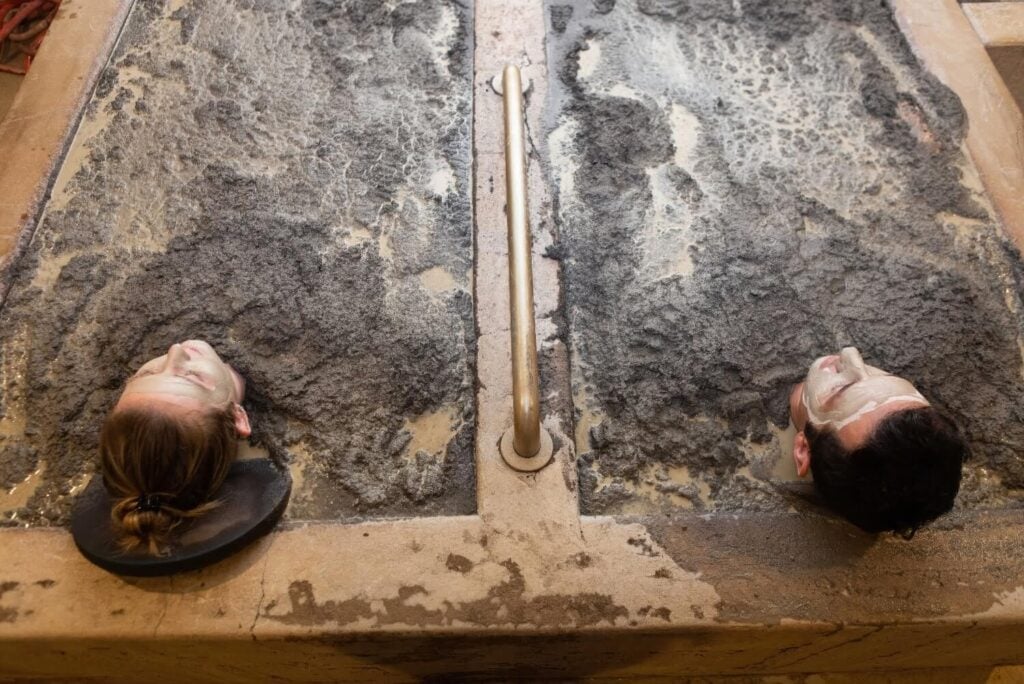
Mud bath (immersion). Full-body immersion in a tub of heated mineral mud, either a natural deposit or a manufactured blend. The counterintuitive part: you float on top of the mud rather than sinking into it, which is why attendants coach the entry. Tub temperature typically exceeds 100°F, and the soak runs about 15 to 20 minutes.
Mud wrap (applied plus wrapped). Warm mud or clay, sometimes blended with seaweed, applied directly to skin, then a therapist wraps you in a thermal blanket or plastic for 30 to 45 minutes. No tub, longer wrapped time, lower price. The reason is structural: a wrap needs a table and a blanket, while an immersion bath needs a plumbed, heated tub and an attendant standing by.
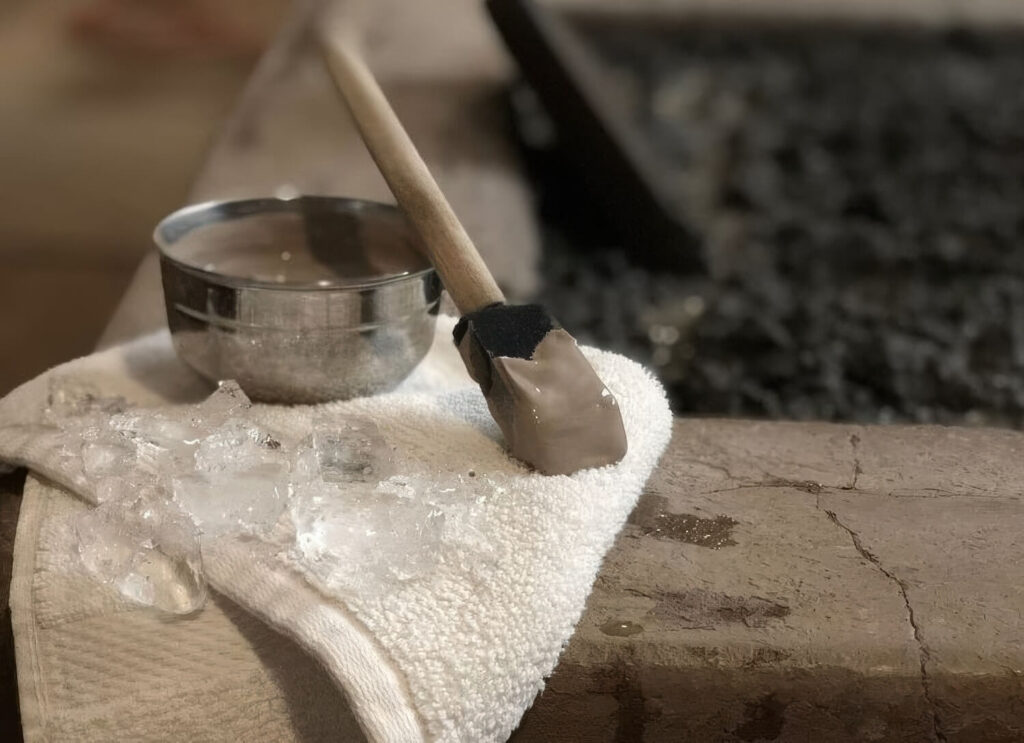
Clay mask or clay facial (applied plus rinsed). Face-only or targeted application, cleansed off rather than wrapped. A Moor mud facial leaves the mask on 3 to 10 minutes. Fresh-mixed loose clay stays on 5 to 10.
Esthetician Kathleen Daunhauer names the tell: clay should never dry and crack on skin, and removal takes several warm damp towels rather than a rinse. If your mask hardens and then someone hands you a washcloth, that is the wrong technique.
A mud pack is a fourth term worth knowing: mud applied to skin before a sauna or a wrap, not immersion at all. Geothermal mud bathing is old news, too. Hell’s Gate in Rotorua ties its mud to more than 800 years of Māori tradition.
| Format | What happens | Time in it | Typical price |
|---|---|---|---|
| Mud bath | Full-body immersion, floating | 15 to 20 min | $80 to $120 with spa access |
| Mud wrap | Applied, then blanket-wrapped | 30 to 45 min | Often $50 or less |
| Clay mask or facial | Applied to face, towel-removed | 3 to 10 min | Varies by property |
What Spa Mud and Clay Are Actually Made Of
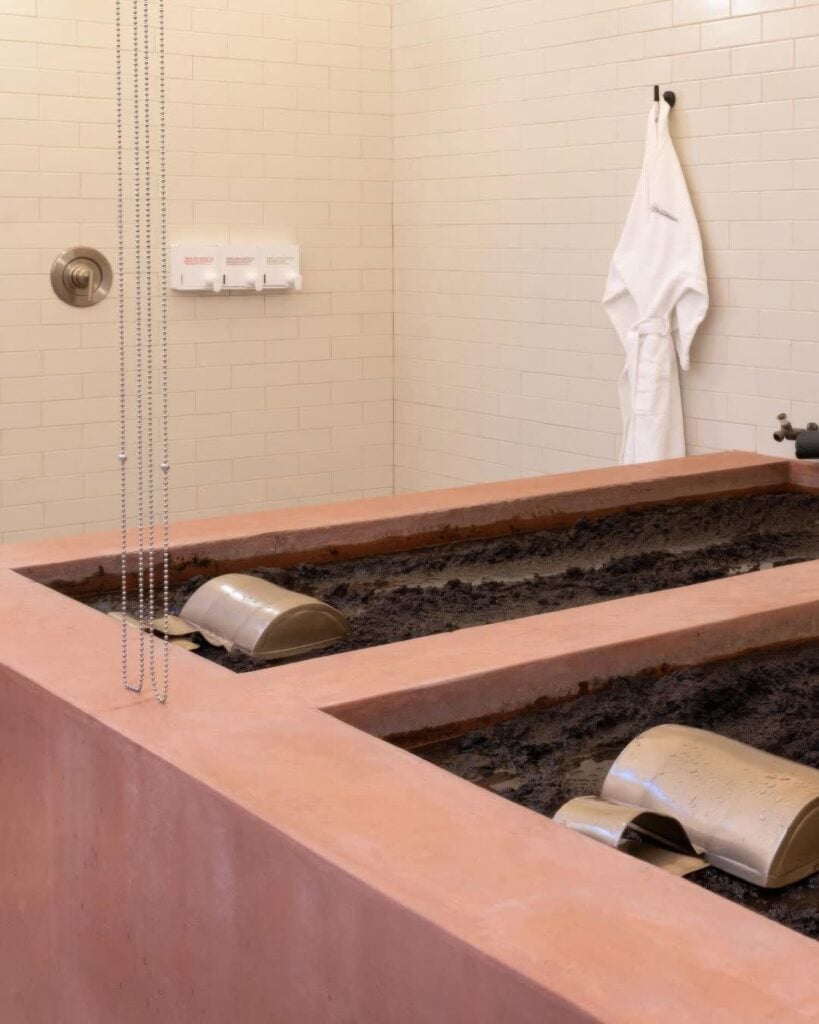
Therapeutic mud is a geological product, not a texture. It requires mineral content ordinary soil does not carry, magnesium, sodium, and sulfur, which keeps the recognized sources short: the Dead Sea, European moorlands, and a handful of hot springs.
A street vendor in Nha Trang, watching tourists pay to soak, put it plainly: “You play mud for free… in my home, in the field.” He is right about dirt and wrong about deposits. What lands on your skin is either a real deposit or a manufactured product, and the menu rarely says which.
| Type | What’s in it | Best suited to |
|---|---|---|
| Volcanic ash mud (Calistoga style) | Volcanic ash mixed with hot-spring mineral water | The classic US immersion soak |
| Dead Sea mud | High salinity plus clay content | Skin prone to breakouts; used with UVB for psoriasis |
| Moor mud | Peat, emulsified with wheat germ and jojoba | Oily and acne-prone facials |
| Bentonite (montmorillonite) | Volcanic-ash-derived, swells to 20x dry volume | Oily, congested, acne-prone skin |
| Kaolin | Fine-grained, mild absorption | Dry, normal, or sensitive skin |
| French green clay (illite) | Silica, magnesium, calcium, potassium | Combination skin; calming for eczema-prone skin |
| Mayan clay | Magnesium, phosphorus, zinc | Body application or oil-mixed cleansing |
Two need more than a table row. Bentonite pulls oil harder than anything else on that list, which makes it both the most effective and the most drying. One user named the downside precisely: it dries skin enough that “it will make [skin] look like an elephant elbow if you have super sensitive and dry skin,” and once a week is the ceiling.
Mayan clay’s marketing outruns its evidence. A spa co-founder describes it as sending “positive electrons” absorbed “like a magnet.” That is promotional language, not dermatology.
Sourcing shows up in the price, and not the way you would guess. Indian Springs Calistoga digs volcanic ash on its own property and mixes it with its own geyser water, no peat filler, in a 60-minute Mud Bath Ritual at $170. Dr. Wilkinson’s, in the same town, runs a peat blend at roughly $251. The purer sourcing is the cheaper ticket.
Rhassoul clay also turns up on hammam and Moroccan-style menus, almost always without a published mineral breakdown. Treat any composition claim for it as the spa’s own marketing.
Best for oily or acne-prone skin: bentonite or French green clay.
Skip if your skin is dry or reactive: kaolin or French green instead of bentonite, capped at about once a week. The same logic drives how to pick a facial by skin concern on the rest of the spa menu.
What Happens During a Mud Bath, Step by Step
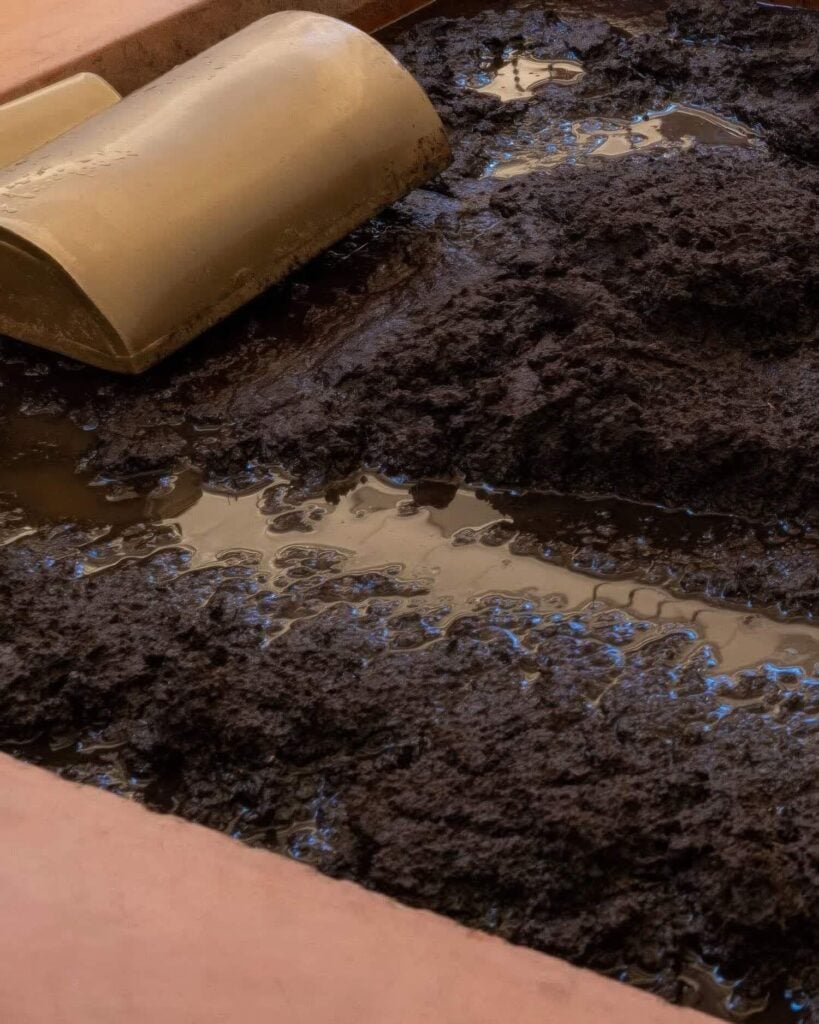
Two fears keep first-timers out of the tub, and both have answers. One is the etiquette: “I didn’t even know how to get in the tub, she was like you don’t get in like that, so I’m like, all naked… how do I get in there too.” The other is the heat: “I was scared to touch the bottom… the bottom was so hot.” Neither should stop you from booking.
Before you get in. You disrobe to your comfort level. Most guests go nude, a swimsuit is fine, and it should be old because mud stains fabric. Jewelry comes off. At Hell’s Gate in Rotorua, an attendant screens you verbally before you go anywhere near the mud, then attaches two instructions to the treatment: 20 minutes maximum on a mud mask, and keep the mud below your eye line so it does not run into your eyes.
Getting in, and the burn question. Golden Haven Hot Springs Resort Spa in Calistoga publishes the clearest protocol, and its logic answers the heat fear directly. Hot water runs through the concrete on all sides of the tub, radiating heat, which is why you never stand up in one. You sit on the edge, extend your arm to the grab bar on the far side, and slide in, at which point you float on top of the mud instead of sinking.
Then you pull mud over yourself from both sides, and this is the part that puts you in charge: the more mud on you, the hotter it feels. Tubs run over 100°F, and your heat load is your own decision.
Getting out, and the time budget. Scrape mud off your chest, use the handrails to reach the edge, swing both legs over, and sit there a few seconds to check you are not lightheaded before you stand. Shower off seated. The soak is only 15 to 20 minutes, but block one to two hours for the whole visit including the rinse and whatever follows: a mineral soak, a massage, a steam room, a whirlpool.
Spas warn about staining, and first-timers confirm it. Expect visible tint on skin and under nails. One guest walked out “stained now, I am glowing, I’m not sure if I look more tanned or if I’ve just got residue.” A full shower cycle clears it.
Direct recommendation: block 90 minutes minimum, wear a swimsuit you do not care about or nothing at all, and say the words “first time” at check-in. At Indian Springs, staff coach first-timers through the ritual; any decent property does the same if you tell them.
Real Benefits Versus Marketing Claims
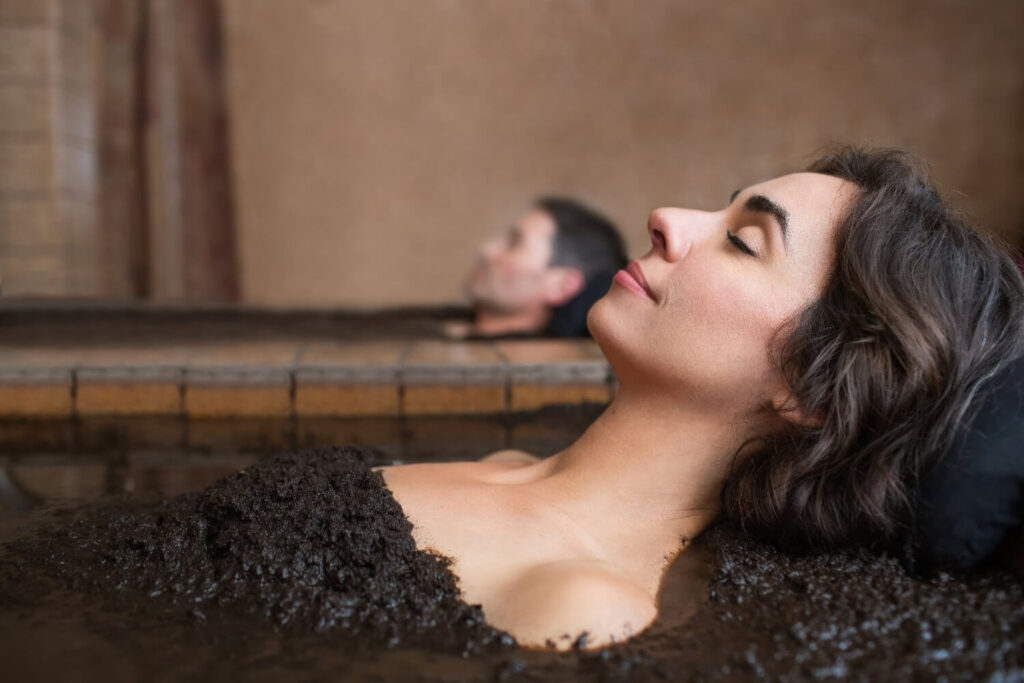
The menu says detox, draws out impurities, deep mineral nourishment. The dermatologist says otherwise. Dr. Makala Anders of Sonoma/Santa Rosa Dermatology puts the ceiling on all of it: the helpful minerals in mud “can’t penetrate any deeper than the very first layer of the skin, the stratum corneum.”
Minerals can plump, hydrate, and add glow at the surface, cosmetically and briefly. They are not getting into your bloodstream, and no spa protocol changes that. That does not make the treatment worthless. It makes it a different treatment than the one being advertised.
What holds up:
- Balneotherapy using thermal mineral water and mud produces a clear improvement in the signs and symptoms of psoriasis and eczematous disease, according to a systematic review of the clinical literature. The same review rates overall study quality in the field as low, and both halves of that belong in the sentence.
- Magnesium-rich Dead Sea salt bathing improves skin barrier function and hydration and reduces transepidermal water loss in dry skin.
- Warmth and buoyancy ease joint and muscle aches, including arthritis-related pain. This is the effect you can actually feel during the soak, and heat plus flotation is doing the work, not minerals crossing into tissue.
What does not hold up:
- Detox and “drawing out toxins.” The claim comes from a real mechanism described inaccurately. Bentonite works by adsorption, not absorption, as Dr. Eric Berg explains: the clay’s negative charge attracts positively charged particles at the surface. That is a genuine effect on oil and surface debris. It is not the same as pulling toxins out of your body, and the distinction is the whole argument.
- Lasting results. Effects are short-lived by the mechanism above. A mud bath is a relaxation treatment, not a durable skin change.
- Mayan clay’s “positive electrons.” Marketing language from a spa co-founder, unverified as dermatology.
So why do people rebook? Terenki’s answer at Indian Springs is the sensory one rather than the medical one: “it’s getting back to the basics a little bit, it’s very nurturing, it’s very centering.” A massage therapist at The Spa at Turf Valley sells wet mud and Vichy-shower treatments the same way, as relaxation first, and calls them consistent top sellers with repeat clients. Guests keep buying a treatment that does not do what the brochure says, which tells you the brochure is aiming at the wrong benefit.
The verdict: book a mud bath for the heat, the flotation, and 20 minutes of doing absolutely nothing. If you are booking it to detox, you are paying for something the treatment does not do.
Who Should Skip a Mud Bath
A mud tub runs over 100°F, which puts it in the same screening category as a hot tub or a sauna round. Plenty of guests do not learn that until an attendant is reading them a health questionnaire in a robe.
The list. A pelotherapy safety guide flags pregnancy, uncontrolled hypertension or heart disease, epilepsy, acute infection or fever, malignant tumors, open wounds or active rashes, and heat sensitivity as reasons to skip mud bath therapy. Real properties screen along the same lines. Indian Springs Calistoga treats mud and high-heat treatments as contraindicated for pregnancy, high blood pressure, heart conditions, and diabetes, and screens at booking rather than at the door.
Pregnancy, specifically. Massage Magazine’s reporting on Moor mud treatments rules out mud wraps at any stage of pregnancy, full stop. A mud bath requires medical clearance if it happens at all, at a safe temperature window as narrow as 100.4 to 102.2°F. Some practitioners treat supervised Moor mud work as a gentler option, but the wrap guidance does not soften. Ask your own clinician, not the spa’s booking line.
The skin nuance the general list misses. Used too often, bentonite over-dries and irritates sensitive or dry skin. Daunhauer adds that pre-mixed commercial clay masks sting and dry skin more than freshly mixed loose clay, which explains much of clay’s reputation for harshness. If your skin is reactive, ask what the spa is actually putting on you and whether they mix it themselves.
Good properties handle all of this before you pay. Hell’s Gate in Rotorua runs the health screen at check-in, before a guest is anywhere near the mud room.
Direct recommendation: flag any condition when you book, not when you are standing at the tub in a robe. A spa that will not answer a temperature or screening question before taking your money is telling you something useful.
What a Mud Bath Costs Compared to a Massage
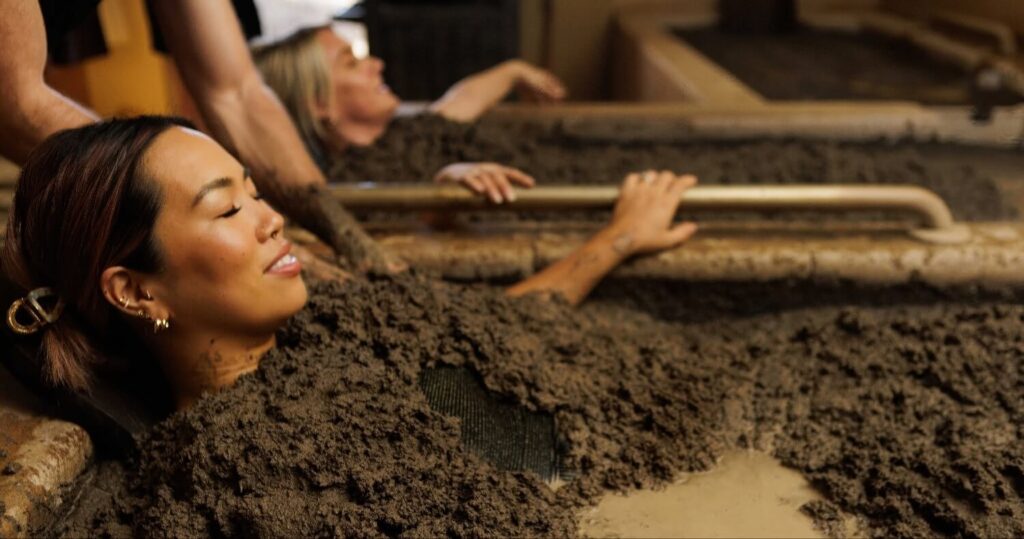
Budget mud treatments run $40 to $50. A mud wrap is often $50 or less. A mid-range mud bath with spa access lands around $80 to $120, with $80 to $90 the commonly quoted figure, and luxury resort combinations pass $400, with wrap-plus-salt-exfoliation-plus-hot-stone stacks running $200 to $475 and up.
Two real prices show why the number on the menu tells you less than you think. Indian Springs Calistoga charges $170 for a 60-minute Mud Bath Ritual, which buys roughly 12 to 14 minutes of immersion in 100 percent property-dug volcanic ash mixed with the resort’s own geyser water, then a mineral soak, a full-spectrum infrared sauna, and a flannel-blanket wrap. Dr. Wilkinson’s, a few blocks away, charges about $251 for its peat-blend equivalent.
Same town, roughly $81 apart, and the cheaper treatment has the purer mud. A higher mud price does not buy better mud. For context on the same Indian Springs menu, the Classic Mineral Bath is $125 and massages run $195 to $500.
Against a massage, the math is close. Expect $85 to $125 for a 45 to 60 minute massage at a hotel or resort spa, plus that automatic 18 to 20 percent gratuity, as covered in our guide to types of spa massage. So a mid-range mud bath costs roughly massage money, and a signature mud ritual usually costs more. What you are trading is hands-on bodywork for heat, flotation, and facility time.
Internationally, the gap is wide: Tháp Bà and I-Resort in Nha Trang, Vietnam run around $56 for two people including a water-jet massage step, worth knowing if you have seen those photos and wondered why a US hotel spa charges triple.
One caveat: do not assume a resort credit or an all-inclusive package covers a mud treatment. Practice varies too much to generalize, so confirm before you pay.
The verdict: if you get one treatment on a spa day and you want measurable relief in a specific area, book the massage. Book the mud when the point is the water, the heat, and the property’s own mineral sourcing, which is the one thing a massage cannot give you.
Where to try it
Highest Spa Treatments Scores
This guide's treatment isn't on our hotels' records yet, so these are the top-ranked of the 70 hotels scored under the current Guidelines, by Spa Treatments score, the nearest SpaRator measure.
We may earn a commission when you book through these links. It never affects a SpaRator score, and no hotel hosted or paid for this analysis. How we earn
 SpaRator 8.6: Outstanding
No. 1=
- SpaRator 7.5: Strong
No. 1=
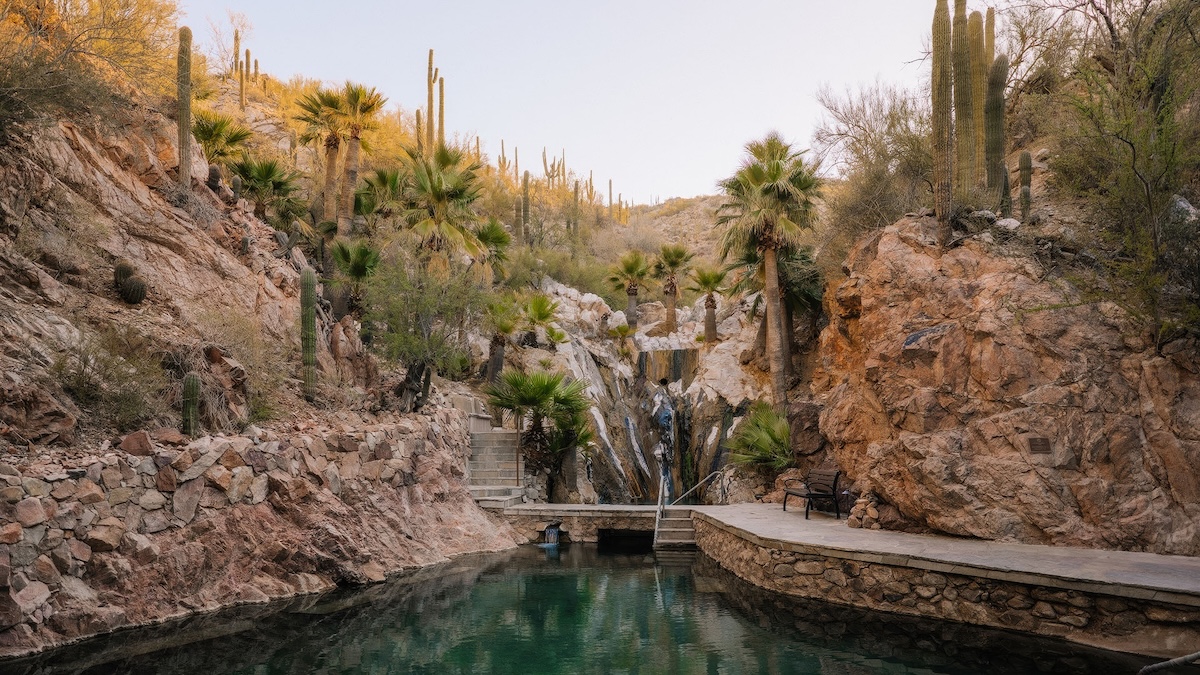 SpaRator 8.5: Outstanding
No. 3=
Phoenix
Castle Hot Springs
See the analysis: Castle Hot SpringsBook direct with the hotel: Castle Hot Springs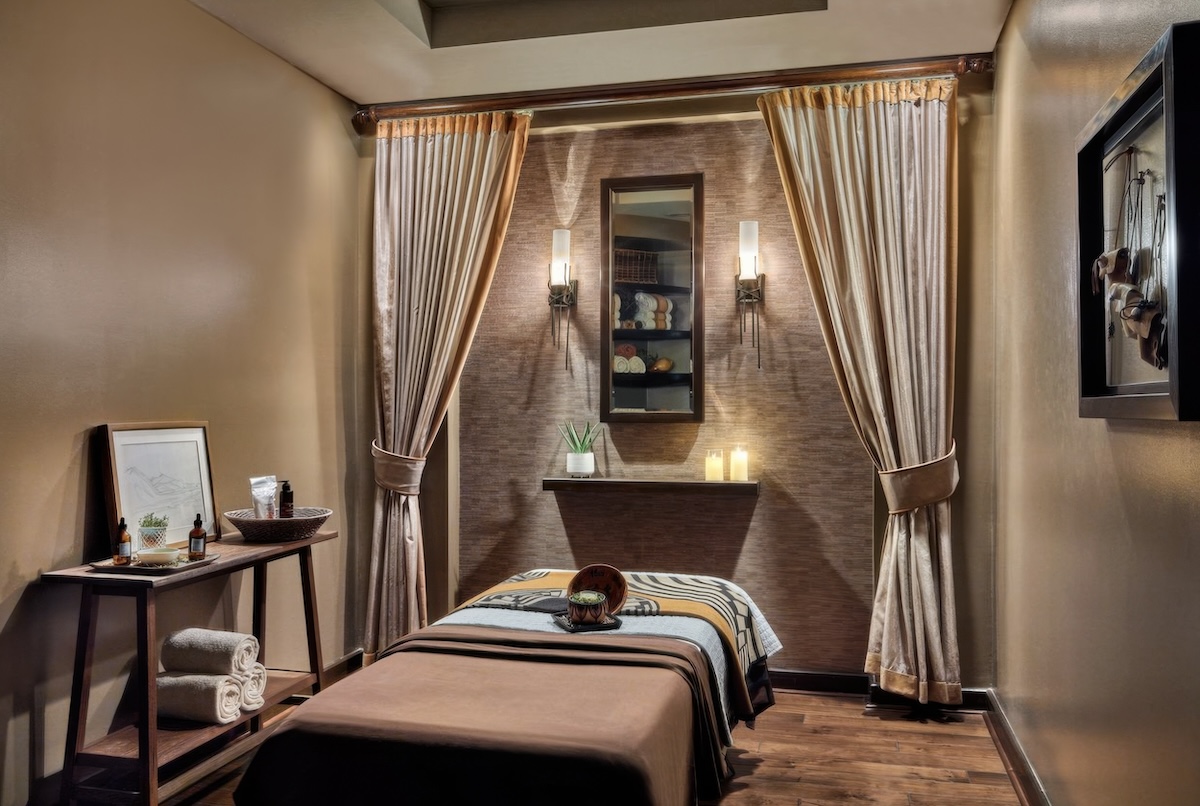 SpaRator 7.3: Solid
No. 3=
Phoenix
Sheraton Grand at Wild Horse Pass
See the analysis: Sheraton Grand at Wild Horse PassSee Live Rates: Sheraton Grand at Wild Horse Pass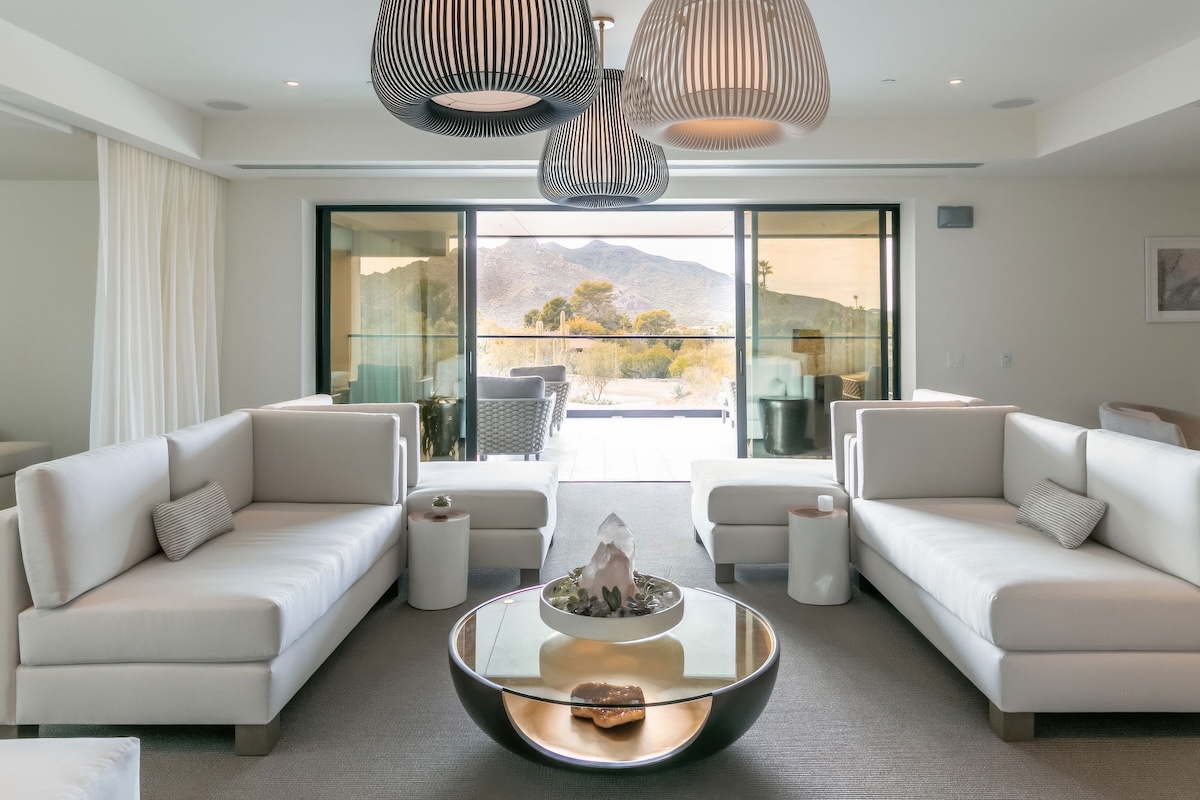 SpaRator 8.1: Outstanding
No. 5
Scottsdale
CIVANA Wellness Resort and Spa
See the analysis: CIVANA Wellness Resort and SpaSee Live Rates: CIVANA Wellness Resort and Spa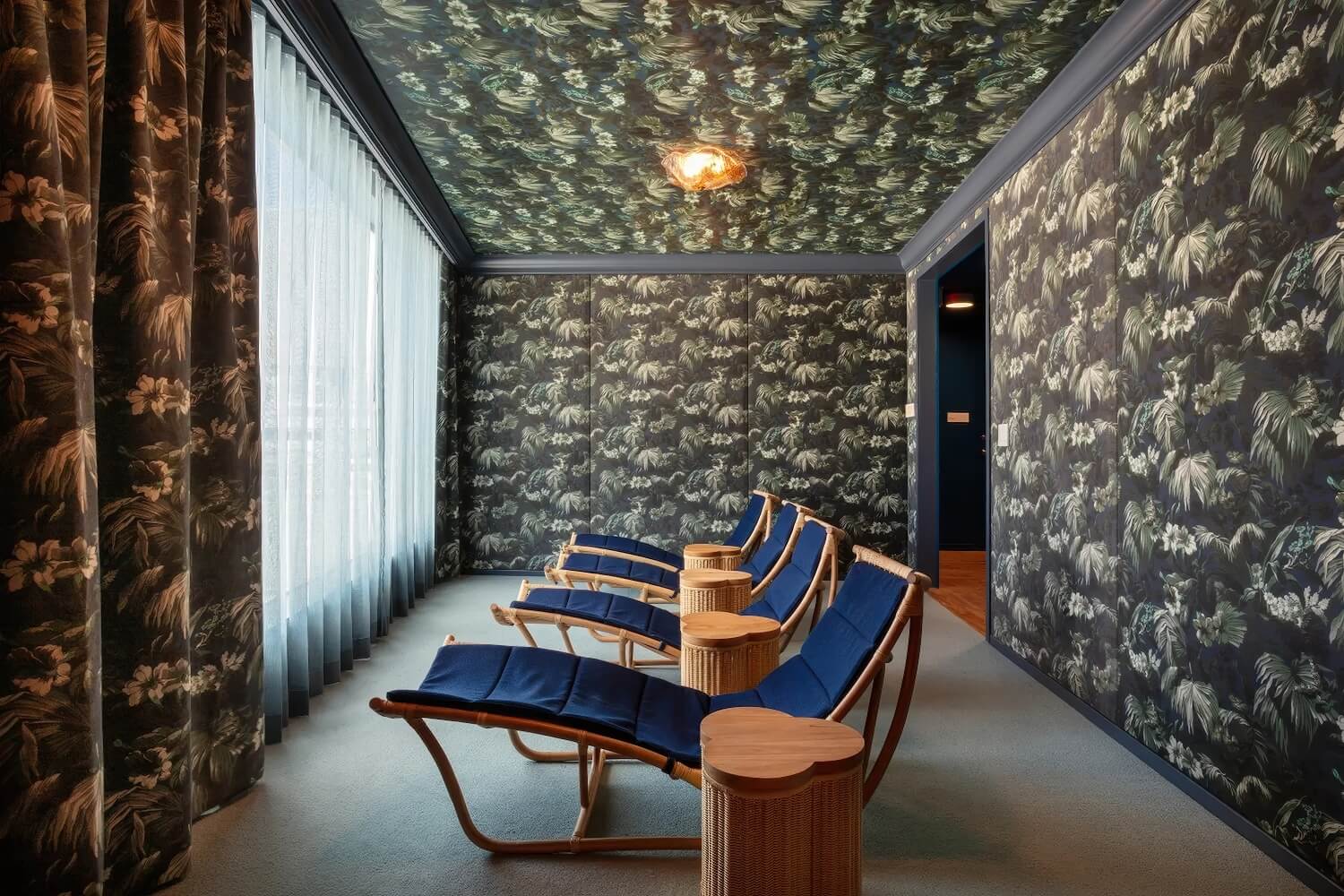 SpaRator 8.1: Outstanding
No. 6=
Miami
The Standard Spa, Miami Beach
See the analysis: The Standard Spa, Miami BeachSee Live Rates: The Standard Spa, Miami Beach SpaRator 7.8: Strong
No. 6=
Miami
Faena Hotel Miami Beach
See the analysis: Faena Hotel Miami BeachSee Live Rates: Faena Hotel Miami Beach SpaRator 7.8: Strong
No. 6=
Phoenix
The Global Ambassador
See the analysis: The Global AmbassadorSee Live Rates: The Global Ambassador SpaRator 7.4: Solid
No. 9=
Scottsdale
Four Seasons Resort Scottsdale
See the analysis: Four Seasons Resort ScottsdaleSee Live Rates: Four Seasons Resort Scottsdale SpaRator 7.0: Solid
No. 9=
Scottsdale
Boulders Resort & Spa Scottsdale, Curio Collection by Hilton
See the analysis: Boulders Resort & Spa Scottsdale, Curio Collection by HiltonSee Live Rates: Boulders Resort & Spa Scottsdale, Curio Collection by Hilton
How a Mud Bath Fits Into a Spa Day
Mud goes after the heat that opens you up and before the treatment you want to remember, and it is never the last thing you do on your way out the door.
The standard sequence is short: 15 to 20 minutes in the mud, shower, then whatever the property pairs with it, usually a mineral soak, a steam room, a whirlpool, or a massage. Indian Springs Calistoga bundles that whole shape in-house inside 60 minutes. Most hotel spas approximate it with separately booked parts.
Inside a full circuit, mud works as the midpoint rather than the headline. One observed sequence at an all-inclusive in Pomorie, Bulgaria ran sauna, ice bath, hammam, salt pool, then mud application, scrub-off, steam room, shower, and a 70-minute massage to close. Our hydrotherapy circuit guide and sauna guide cover how those stages are meant to run.
The genuinely useful caution is cumulative heat. Mud tubs run over 100°F, so stacking one on top of a sauna round and a hot mineral soak is a real load on your system. Golden Haven’s exit protocol exists because guests get lightheaded standing up out of the tub. Hydrate between stages, sit before you stand, and put your cold plunge or cool-down between heat stages rather than saving it for the end.
The same treatment lives in two different service models. At Thermia Palace and Irma Spa in Piešťany, Slovakia, thermal mud runs inside a medically directed physiotherapy program. Your hotel spa is selling the relaxation version.
Direct recommendation: sauna or steam first, mud in the middle, massage last, and keep the mud out of the last 30 minutes before you check out or drive.
Frequently Asked Questions
Do I have to get naked for a mud bath?
No. Most guests go nude and attendants see it all day, but a swimsuit is fine. Make it an old one, because mud stains fabric. An attendant walks you through entry and where to store your belongings first.
Will the mud stain my hair, nails, or swimsuit?
Yes to fabric, and temporarily to skin and nails. Spas warn that mud stains clothing, and first-timers report visible tint that a full rinse-and-shower cycle clears. Keep mud below your eye line, and rinse hair thoroughly.
Is the mud clean, and is it reused between guests?
Practice varies by property, so ask before you book. No industry-wide hygiene standard exists to cite. The closest thing to a mechanism in mud’s favor: Dead Sea mud’s salinity and clay content make for an environment less hospitable to some skin bacteria and yeast.
Is a mud bath included in a resort spa credit or an all-inclusive package?
Often not. At one all-inclusive resort in Pomorie, Bulgaria, the mud and salt treatment was a paid add-on outside the standard package. Practice differs too much between properties to generalize, so confirm inclusion and gratuity handling at booking.
Can I get the same result from a clay mask at home?
For your face, largely yes, and method matters more than product. Esthetician Kathleen Daunhauer mixes a teaspoon of loose dry clay with toner rather than water, protects the eye and lip area, leaves it 5 to 10 minutes, and removes it with warm damp towels before it dries. The heated immersion is what you cannot recreate.
How often can you do a mud bath or clay treatment?
Occasionally for immersion, and no more than about once a week for a bentonite mask if your skin is dry or sensitive. Because the effects are cosmetic and short-lived, frequency buys repeat relaxation, not accumulating results. Book it when you want the experience, not on a schedule.