
Bardessono Hotel & Spa, Yountville
17 Types of Spa Massage: How to Choose From a Hotel Spa Menu
The many massage names you will meet at a hotel spa are mostly a few standard techniques under invented branding, so the choice that matters is your goal: relaxation, a stubborn knot, mobility after a flight, or a celebration. Each entry below matches that goal to the booking that delivers.
In 30 Seconds
- A hotel or resort spa massage typically runs $85 to $125 for 45 to 60 minutes, before an 18 to 20% gratuity.
- For signature rituals, ask how much of the session is actual bodywork and how much goes to scrub, wrap, or ceremony.
- Suits travellers comparing hotel spa menus before a trip; skip it if you already know exactly the type you want.
Massage: what our scored hotels show
scored hotels offer it
Where they sit on the field
- Offers it
- Other scored hotels
What it costs at these spas
- Lowest
- $130
- Median
- $200
- Highest
- $375
Menu prices for 45 to 60 minute sessions at 64 spas, mixed lengths
Spa details are on file for 84 of 102 scored hotels, so the count is a floor.
See where to book itA resort spa menu can list something called a moon massage, and nobody outside that building knows what it means. Most of the types of spa massage you will meet on a hotel menu are a handful of real techniques wearing different names: there are more than 350 named modalities in circulation, and most therapists draw on about two dozen.
Which name is correct matters less than what you want out of the hour. It is what you want out of the hour. Catherine Nelson of Del Sole Massage and licensed therapist Rachel Richards give the same advice: choose by goal, not by modality name.
Each of the 17 types of spa massage below gets the same three answers: what it feels like, who should skip it, and what it costs at a hotel spa. Budget $85 to $125 for a 45 to 60 minute massage at a hotel or resort spa against a $60 to $150 general market range, before an automatic 18 to 20% gratuity.
1. Swedish Massage: The Safe Default When You Can’t Decide
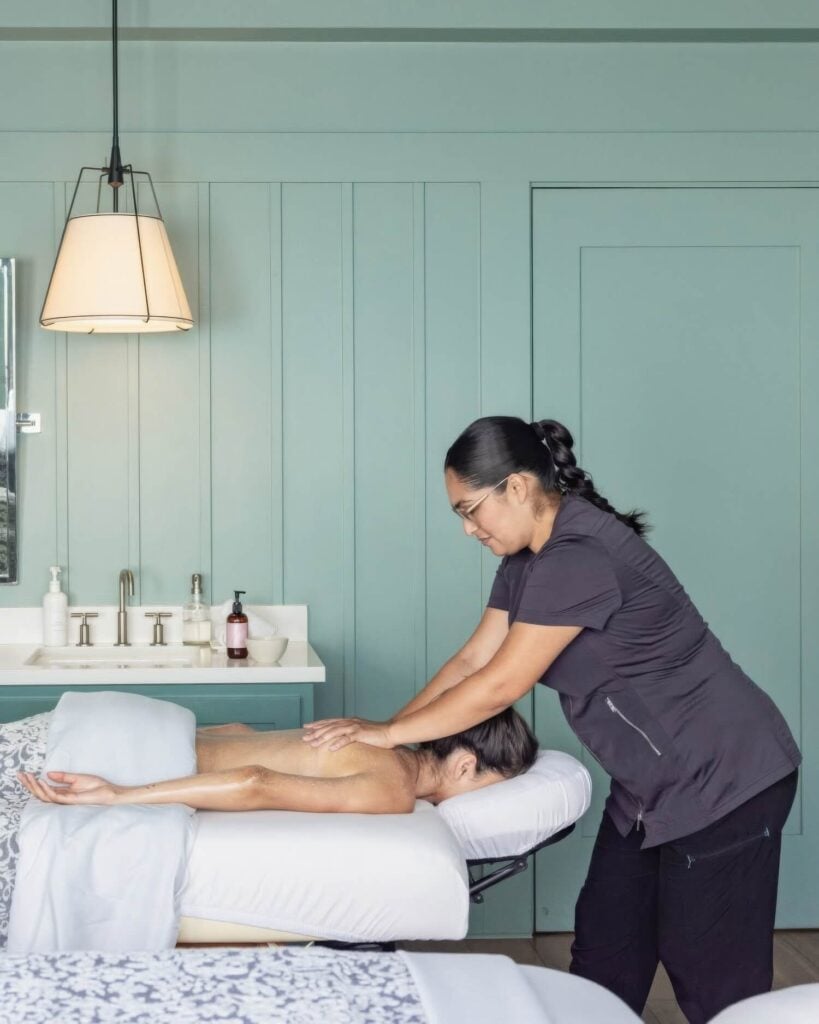
If you read nothing else on this page, book this one. Rachel Richards, a licensed massage therapist, calls “Swedish or deep tissue” the safe default request for anyone without a specific goal.
You undress to your comfort level, lie face-down under a sheet, and the therapist works the whole body with oil in long sweeping strokes at light to medium pressure. One NYC studio owner describes it as a full-body tonic, closer to an oil change than a repair.
A detail that shows how far branding drifts from technique: the vocabulary of Swedish massage (effleurage, petrissage) is French, not Swedish.
The limitation is real. Swedish is not targeted enough to fix a specific injury, and the relaxed feeling can fade within hours where deeper work compounds across sessions. What it reliably delivers is sleep, and sleep is why a lot of guests book a spa hotel at all.
On a hotel menu it often appears renamed: Relaxation Massage, Classic Massage, Wellness Massage. Luxury spas sell it in 60, 90 or 120-minute increments. Book the 90. Sixty minutes divided across a whole body gives every region about five minutes.
Best for: first-timers, relaxation bookings, post-flight stiffness. Skip if: you have one specific pain area you want worked. That is item 7’s job.
2. Deep Tissue Massage: What the Firmer Pressure Actually Buys
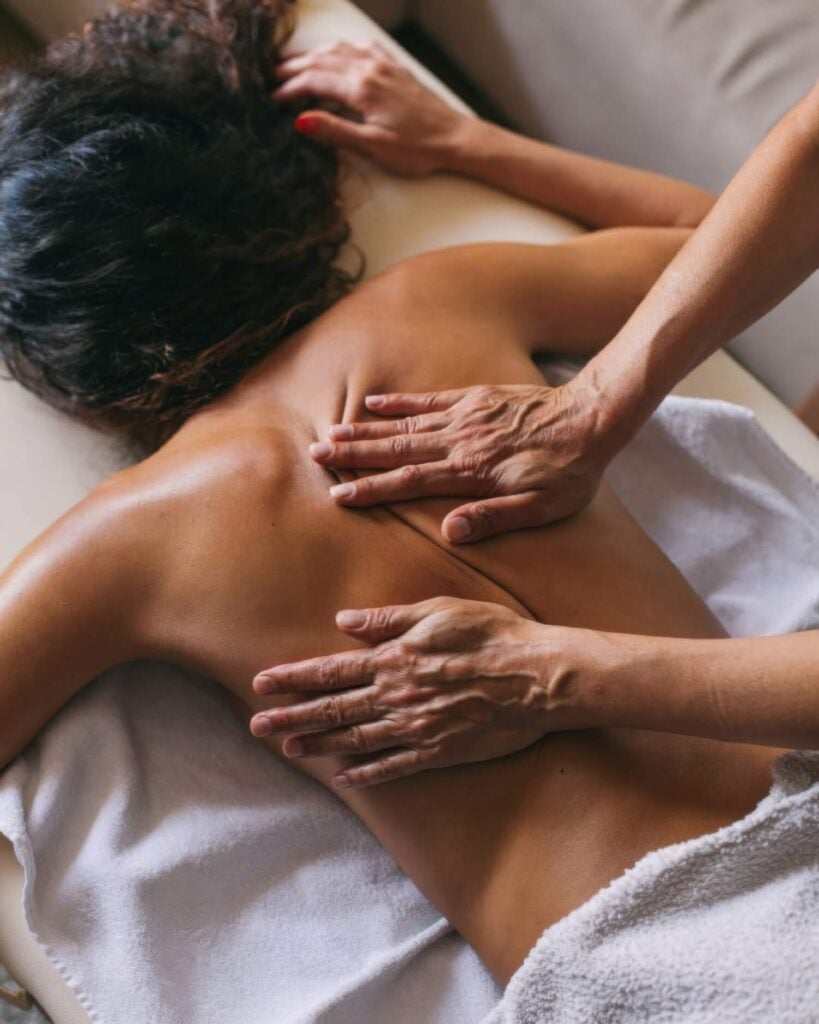
Deep tissue is not one technique. It is a bucket, and what comes out depends entirely on who is holding your shoulder.
The same NYC studio owner calls it a broad umbrella covering deep Swedish, trigger point work or myofascial release, depending on the practitioner’s training. The same menu item can feel like two different treatments at two properties.
The label should mean sustained pressure into deeper muscle and connective tissue. Licensed physical therapist James Ingram works it across hip flexors, low back, neck, shoulders and rotator cuff to increase blood flow and restore muscle function.
Since the menu name guarantees nothing, book the problem instead of the modality. Call the spa, describe the shoulder that has been locked for three weeks, and ask which therapist is strongest at it.
Then the honest cost. Firmer pressure can leave you sore afterward, just like a hard gym session. That is normal rather than a sign that the therapist got it wrong, and it matters whether day two of the trip is a hike, a golf round, or a wedding.
At most resort spas, deep tissue is priced at or slightly above Swedish; it appears as its own line on the menu, so the difference is visible before you book.
In my experience, heat before bodywork loosens muscle and deepens the work; our sauna guide for spa hotel guests covers whether to sauna before or after your massage.
The verdict: the more honest pick when you have a known tension area and two slack days in the itinerary. The wrong pick the night before anything physical, including a long-haul flight home.
3. Signature and Ritual Treatments: How to Decode a Spa’s House Massage
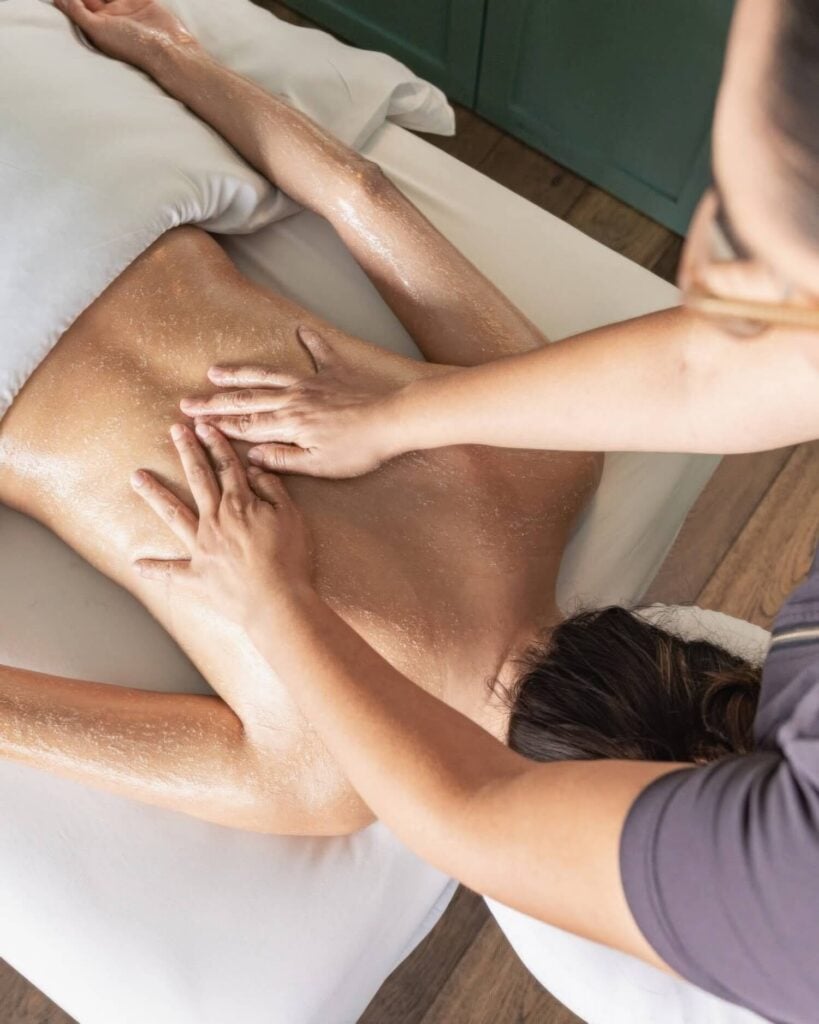
The most expensive item on the menu is the one no other guide explains, because it exists only at that property.
A signature massage, journey, or ritual is nearly always a core massage wrapped in local ingredients and a ceremonial opening or closing. Four Seasons Vail’s Sacred Journey Ritual opens with a bamboo fiber and mango seed body polish before an 80-minute signature massage. Fairmont Kea Lani on Maui finishes an island-inspired journey with a lemongrass foot scrub. Hilton Cancun Mar Caribe builds a Mayan-inspired ritual from smudging, warm local herb poultices and herbs placed over the heart.
Mana Ola Spa at Honua Kai fuses hot stone and Lomi Lomi into one signature ritual instead of selling either separately. Desert properties do the same with local botanicals, which is why so many Scottsdale resort spa menus read like plant lists.
Ask two questions when you call: which massage technique sits underneath the ritual, and how many booked minutes are hands-on massage rather than scrub, wrap, and blessing. The answer tells you whether you are buying an hour of bodywork or a 30-minute massage inside a 90-minute production.
Nobody will be offended. Even therapists roll their eyes at invented names; one admits he has no idea what a “moon massage” means.
Direct recommendation: book the ritual on a celebration day, when the experience is the point. Book the plain 90-minute massage when you want the most hands-on minutes per dollar.
What a Minute Costs
The lowest listed price for a 45 to 60 minute session, divided by the minutes.
SpaRator 8.6: OutstandingMii amo
$4.42 a minute$265 for 60 min
SpaRator 8.5: OutstandingCastle Hot Springs
$4.25 a minute$255 for 60 min
SpaRator 8.1: OutstandingCIVANA Wellness Resort and Spa
$3.58 a minute$215 for 60 min
SpaRator 8.1: OutstandingThe Standard Spa, Miami Beach
$4.08 a minute$245 for 60 min
SpaRator 8.0: OutstandingAcqualina Resort & Residences
$4.33 a minute$260 for 60 min
SpaRator 7.8: StrongFaena Hotel Miami Beach
$4.83 a minute$290 for 60 min
Show 58 moreShow fewer
SpaRator 7.8: StrongOmni Scottsdale Resort & Spa at Montelucia
$4.38 a minute$219 for 50 min
SpaRator 7.8: StrongThe Global Ambassador
$4.33 a minute$260 for 60 min
SpaRator 7.7: StrongNaples Beach Club, A Four Seasons Resort
$5.00 a minute$250 for 50 min
SpaRator 7.6: Strong1 Hotel South Beach
$4.30 a minute$215 for 50 min
SpaRator 7.6: StrongArizona Biltmore, LXR Hotels & Resorts
$4.10 a minute$205 for 50 min
SpaRator 7.5: StrongCanyon Ranch Tucson
$4.00 a minute$200 for 50 min
SpaRator 7.5: StrongEnchantment Resort
$4.42 a minute$265 for 60 min
SpaRator 7.5: StrongFour Seasons Hotel at The Surf Club
$4.17 a minute$250 for 60 min
SpaRator 7.5: StrongGrand Hyatt Scottsdale Resort
$3.50 a minute$210 for 60 min
SpaRator 7.5: StrongThe Canyon Suites at The Phoenician
$4.50 a minute$225 for 50 min
SpaRator 7.4: SolidFour Seasons Resort Scottsdale
$3.75 a minute$225 for 60 min
SpaRator 7.4: SolidThe Setai, Miami Beach
$4.08 a minute$245 for 60 min
SpaRator 7.4: SolidVentana Canyon Club and Lodge
$2.60 a minute$130 for 50 min
SpaRator 7.3: SolidSanctuary Camelback Mountain Resort and Spa
$3.83 a minute$230 for 60 min
SpaRator 7.3: SolidSheraton Grand at Wild Horse Pass
$4.10 a minute$205 for 50 min
SpaRator 7.2: SolidAndaz Scottsdale Resort & Bungalows
$3.50 a minute$210 for 60 min
SpaRator 7.2: SolidHotel Valley Ho
$3.22 a minute$145 for 45 min
SpaRator 7.2: SolidLaPlaya Beach & Golf Resort
$3.70 a minute$185 for 50 min
SpaRator 7.2: SolidThe St. Regis Bal Harbour Resort
$3.92 a minute$235 for 60 min
SpaRator 7.2: SolidThe Wilde Resort & Spa
$3.50 a minute$210 for 60 min
SpaRator 7.1: SolidArizona Grand Resort & Spa
$4.10 a minute$205 for 50 min
SpaRator 7.1: SolidInn on Fifth
$3.70 a minute$185 for 50 min
SpaRator 7.1: SolidJW Marriott Marco Island Beach Resort
$4.00 a minute$200 for 50 min
SpaRator 7.1: SolidThe Palms Hotel & Spa
$3.40 a minute$170 for 50 min
SpaRator 7.0: SolidADERO Scottsdale Resort, Autograph Collection
$3.38 a minute$169 for 50 min
SpaRator 7.0: SolidBoulders Resort & Spa Scottsdale, Curio Collection by Hilton
$4.10 a minute$205 for 50 min
SpaRator 7.0: SolidCarillon Miami Wellness Resort
$4.78 a minute$239 for 50 min
SpaRator 7.0: SolidJW Marriott Phoenix Desert Ridge Resort & Spa
$4.18 a minute$209 for 50 min
SpaRator 7.0: SolidPlaya Largo Resort & Spa, Autograph Collection
$3.50 a minute$175 for 50 min
SpaRator 7.0: SolidRoyal Palms Resort and Spa
$4.40 a minute$220 for 50 min
SpaRator 6.9: ModestAmbiente, a Landscape Hotel
$3.50 a minute$210 for 60 min
SpaRator 6.9: ModestHyatt Regency Coconut Point Resort & Spa
$3.90 a minute$195 for 50 min
SpaRator 6.9: ModestIsla Bella Beach Resort & Spa
$3.90 a minute$195 for 50 min
SpaRator 6.8: ModestJW Marriott Turnberry Resort & Spa
$3.70 a minute$185 for 50 min
SpaRator 6.8: ModestSunset Key Cottages
$3.80 a minute$190 for 50 min
SpaRator 6.8: ModestThe Phoenician, a Luxury Collection Resort, Scottsdale
$4.50 a minute$225 for 50 min
SpaRator 6.7: ModestNaples Bay Resort & Marina
$3.10 a minute$155 for 50 min
SpaRator 6.7: ModestThe Scott Resort & Spa, Scottsdale
$3.50 a minute$175 for 50 min
SpaRator 6.6: ModestCheeca Lodge & Spa
$3.50 a minute$175 for 50 min
SpaRator 6.6: ModestLittle Palm Island
$4.80 a minute$240 for 50 min
SpaRator 6.5: ModestHawks Cay Resort
$3.30 a minute$165 for 50 min
SpaRator 6.5: ModestHilton Phoenix Resort at the Peak
$3.90 a minute$195 for 50 min
SpaRator 6.5: ModestHilton Phoenix Tapatio Cliffs Resort
$3.00 a minute$150 for 50 min
SpaRator 6.5: ModestHyatt Centric Key West Resort & Spa
$3.00 a minute$150 for 50 min
SpaRator 6.5: ModestOcean Key Resort & Spa
$3.10 a minute$155 for 50 min
SpaRator 6.5: ModestPier House Resort & Spa
$3.30 a minute$165 for 50 min
SpaRator 6.4: ModestBungalows Key Largo
$3.90 a minute$195 for 50 min
SpaRator 6.4: ModestKimpton Miralina Resort and Villas
$3.98 a minute$199 for 50 min
SpaRator 6.4: ModestScottsdale Camelback Resort
$3.00 a minute$150 for 50 min
SpaRator 6.4: ModestW Scottsdale
$3.60 a minute$180 for 50 min
SpaRator 6.3: ModestNaples Grande Beach Resort
$3.20 a minute$160 for 50 min
SpaRator 6.2: ModestL'Auberge de Sedona
$3.33 a minute$200 for 60 min
SpaRator 6.0: ModestBaker's Cay Resort Key Largo
$3.00 a minute$150 for 50 min
SpaRator 6.0: ModestSouthernmost Beach Resort
$3.30 a minute$165 for 50 min
SpaRator 6.0: ModestTranquility Bay Beachfront Resort
$3.20 a minute$160 for 50 min
SpaRator 5.6: LimitedCasa Marina Key West
$4.00 a minute$200 for 50 min
SpaRator 5.6: LimitedMountain House Lodge at Sereno Canyon
$2.75 a minute$165 for 60 min
SpaRator 5.3: LimitedThe Reach Key West, Curio Collection by Hilton
$4.00 a minute$200 for 50 min
Median $3.87 a minute
| Hotel | Menu type | Session | Price | Per minute |
|---|---|---|---|---|
| Mii amo | Massage | 60 min | $265 | $4.42 |
| Castle Hot Springs | Massage | 60 min | $255 | $4.25 |
| CIVANA Wellness Resort and Spa | Massage | 60 min | $215 | $3.58 |
| The Standard Spa, Miami Beach | Massage | 60 min | $245 | $4.08 |
| Acqualina Resort & Residences | Massage | 60 min | $260 | $4.33 |
| Faena Hotel Miami Beach | Massage | 60 min | $290 | $4.83 |
| Omni Scottsdale Resort & Spa at Montelucia | Massage | 50 min | $219 | $4.38 |
| The Global Ambassador | Massage | 60 min | $260 | $4.33 |
| Naples Beach Club, A Four Seasons Resort | Massage | 50 min | $250 | $5.00 |
| 1 Hotel South Beach | Massage | 50 min | $215 | $4.30 |
| Arizona Biltmore, LXR Hotels & Resorts | Massage | 50 min | $205 | $4.10 |
| Canyon Ranch Tucson | Massage | 50 min | $200 | $4.00 |
| Enchantment Resort | Massage | 60 min | $265 | $4.42 |
| Four Seasons Hotel at The Surf Club | Massage | 60 min | $250 | $4.17 |
| Grand Hyatt Scottsdale Resort | Massage | 60 min | $210 | $3.50 |
| The Canyon Suites at The Phoenician | Massage | 50 min | $225 | $4.50 |
| Four Seasons Resort Scottsdale | Massage | 60 min | $225 | $3.75 |
| The Setai, Miami Beach | Massage | 60 min | $245 | $4.08 |
| Ventana Canyon Club and Lodge | Massage | 50 min | $130 | $2.60 |
| Sanctuary Camelback Mountain Resort and Spa | Massage | 60 min | $230 | $3.83 |
| Sheraton Grand at Wild Horse Pass | Massage | 50 min | $205 | $4.10 |
| Andaz Scottsdale Resort & Bungalows | Massage | 60 min | $210 | $3.50 |
| Hotel Valley Ho | Massage | 45 min | $145 | $3.22 |
| LaPlaya Beach & Golf Resort | Massage | 50 min | $185 | $3.70 |
| The St. Regis Bal Harbour Resort | Massage | 60 min | $235 | $3.92 |
| The Wilde Resort & Spa | Massage | 60 min | $210 | $3.50 |
| Arizona Grand Resort & Spa | Massage | 50 min | $205 | $4.10 |
| Inn on Fifth | Massage | 50 min | $185 | $3.70 |
| JW Marriott Marco Island Beach Resort | Massage | 50 min | $200 | $4.00 |
| The Palms Hotel & Spa | Massage | 50 min | $170 | $3.40 |
| ADERO Scottsdale Resort, Autograph Collection | Massage | 50 min | $169 | $3.38 |
| Boulders Resort & Spa Scottsdale, Curio Collection by Hilton | Massage | 50 min | $205 | $4.10 |
| Carillon Miami Wellness Resort | Massage | 50 min | $239 | $4.78 |
| JW Marriott Phoenix Desert Ridge Resort & Spa | Massage | 50 min | $209 | $4.18 |
| Playa Largo Resort & Spa, Autograph Collection | Massage | 50 min | $175 | $3.50 |
| Royal Palms Resort and Spa | Massage | 50 min | $220 | $4.40 |
| Ambiente, a Landscape Hotel | Massage | 60 min | $210 | $3.50 |
| Hyatt Regency Coconut Point Resort & Spa | Massage | 50 min | $195 | $3.90 |
| Isla Bella Beach Resort & Spa | Massage | 50 min | $195 | $3.90 |
| JW Marriott Turnberry Resort & Spa | Massage | 50 min | $185 | $3.70 |
| Sunset Key Cottages | Massage | 50 min | $190 | $3.80 |
| The Phoenician, a Luxury Collection Resort, Scottsdale | Massage | 50 min | $225 | $4.50 |
| Naples Bay Resort & Marina | Massage | 50 min | $155 | $3.10 |
| The Scott Resort & Spa, Scottsdale | Massage | 50 min | $175 | $3.50 |
| Cheeca Lodge & Spa | Massage | 50 min | $175 | $3.50 |
| Little Palm Island | Massage Journeys | 50 min | $240 | $4.80 |
| Hawks Cay Resort | Massage | 50 min | $165 | $3.30 |
| Hilton Phoenix Resort at the Peak | Massage | 50 min | $195 | $3.90 |
| Hilton Phoenix Tapatio Cliffs Resort | Massage | 50 min | $150 | $3.00 |
| Hyatt Centric Key West Resort & Spa | Massage | 50 min | $150 | $3.00 |
| Ocean Key Resort & Spa | Massage | 50 min | $155 | $3.10 |
| Pier House Resort & Spa | Massage | 50 min | $165 | $3.30 |
| Bungalows Key Largo | Massage | 50 min | $195 | $3.90 |
| Kimpton Miralina Resort and Villas | Massage | 50 min | $199 | $3.98 |
| Scottsdale Camelback Resort | Massage | 50 min | $150 | $3.00 |
| W Scottsdale | Massage | 50 min | $180 | $3.60 |
| Naples Grande Beach Resort | Massage | 50 min | $160 | $3.20 |
| L'Auberge de Sedona | Massage | 60 min | $200 | $3.33 |
| Baker's Cay Resort Key Largo | Massage | 50 min | $150 | $3.00 |
| Southernmost Beach Resort | Massage | 50 min | $165 | $3.30 |
| Tranquility Bay Beachfront Resort | Massage | 50 min | $160 | $3.20 |
| Casa Marina Key West | Massage | 50 min | $200 | $4.00 |
| Mountain House Lodge at Sereno Canyon | Massage | 60 min | $165 | $2.75 |
| The Reach Key West, Curio Collection by Hilton | Massage | 50 min | $200 | $4.00 |
4. Hot Stone Massage: Worth the Upcharge, or Paying for Ambiance?
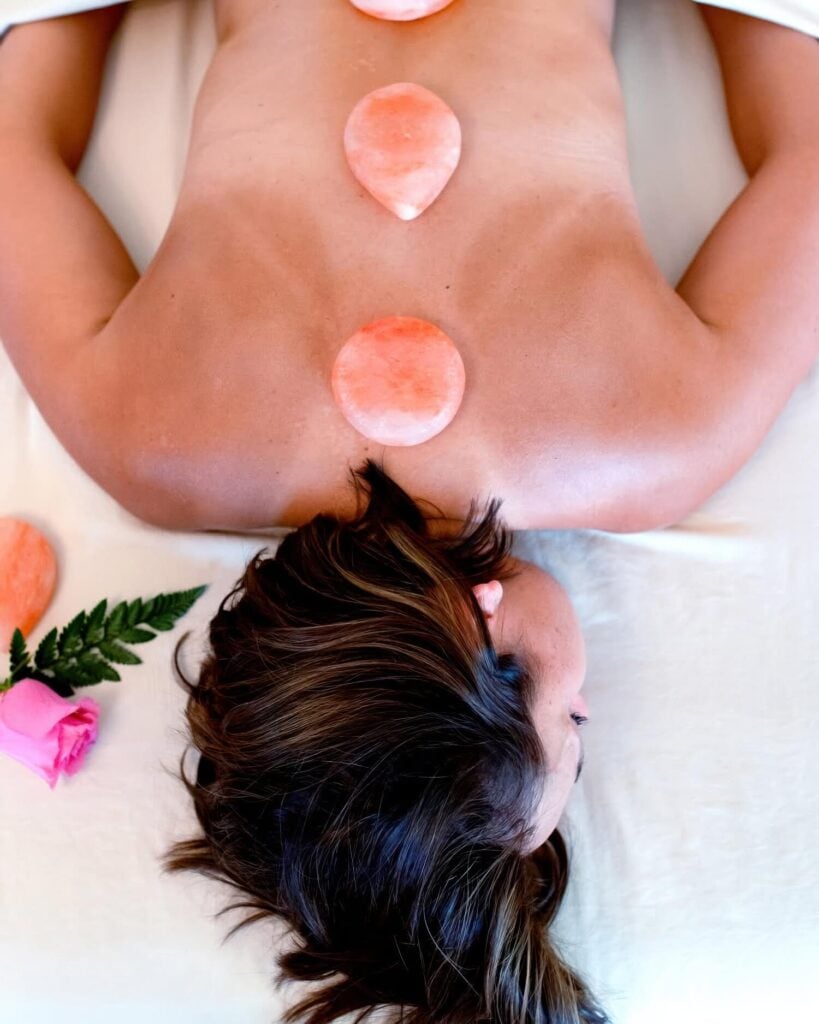
An experienced NYC massage therapist charging $200 an hour calls hot stone “super gimmicky.” The heat is replicable at home with a heating pad, he says, and he would rather sell something you cannot do yourself.
The therapist heats smooth basalt stones, places them along your back and between your toes, then holds one as an extension of the stroke. Heat softens muscle, so the therapist reaches deeper with less pressure. That part is useful.
Balance that against a real use. If you dislike firm pressure but still want muscle to release, heat is a legitimate route in. It is also the one treatment here that reliably fixes being cold.
Booking is the other wrinkle. Hotel spas often restrict hot stone to specific trained providers, so it sells out first. Have a backup service ready before you call.
On price, the only published number is the add-on band: stone upgrades such as Himalayan salt stones run $10 to $25 or more, like most spa upsells. A full hot stone service is a separate line item above a standard massage, so ask for a priced menu.
Best for: cold-weather trips, and guests who want warmth over pressure. Skip if: you want the deepest possible hands-on work per dollar.
5. Aromatherapy Massage: When the Oil Upgrade Is Worth $20
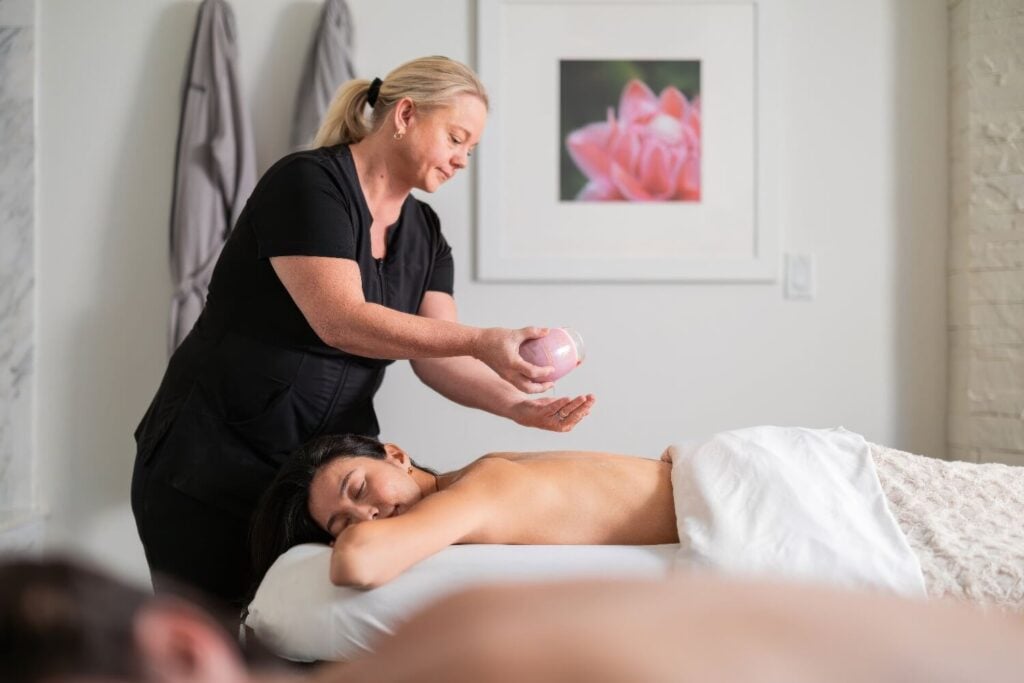
Three small bottles appear at the spa desk. You sniff each one and pick a favorite. Nobody mentions a price.
Aromatherapy massage is a Swedish-style treatment using essential oils chosen for effect: lavender and chamomile for sleep, eucalyptus and peppermint for congestion and post-flight heaviness, citrus for energy. The hands-on technique is usually unchanged. The oil and the inhalation are the variable.
The number nobody prints on the menu: aromatherapy sits in the same $10 to $25 add-on band as foot scrubs, cupping and face masks.
Two caveats. Ask for an unscented base if you are sensitive to fragrance. The scent also stays in your skin and hair for hours, which matters if you go straight from the treatment room to dinner.
Many resort menus fold an aromatherapy blend into the base price of the house signature. Ask whether you are choosing an included blend or authorizing a charge; nobody volunteers the answer.
The verdict: a cheap and genuinely pleasant upgrade for an evening booking aimed at sleep. Skippable if you booked for pain relief, where the oil changes nothing.
6. Sports Massage: Not What Most Guests Think They’re Booking
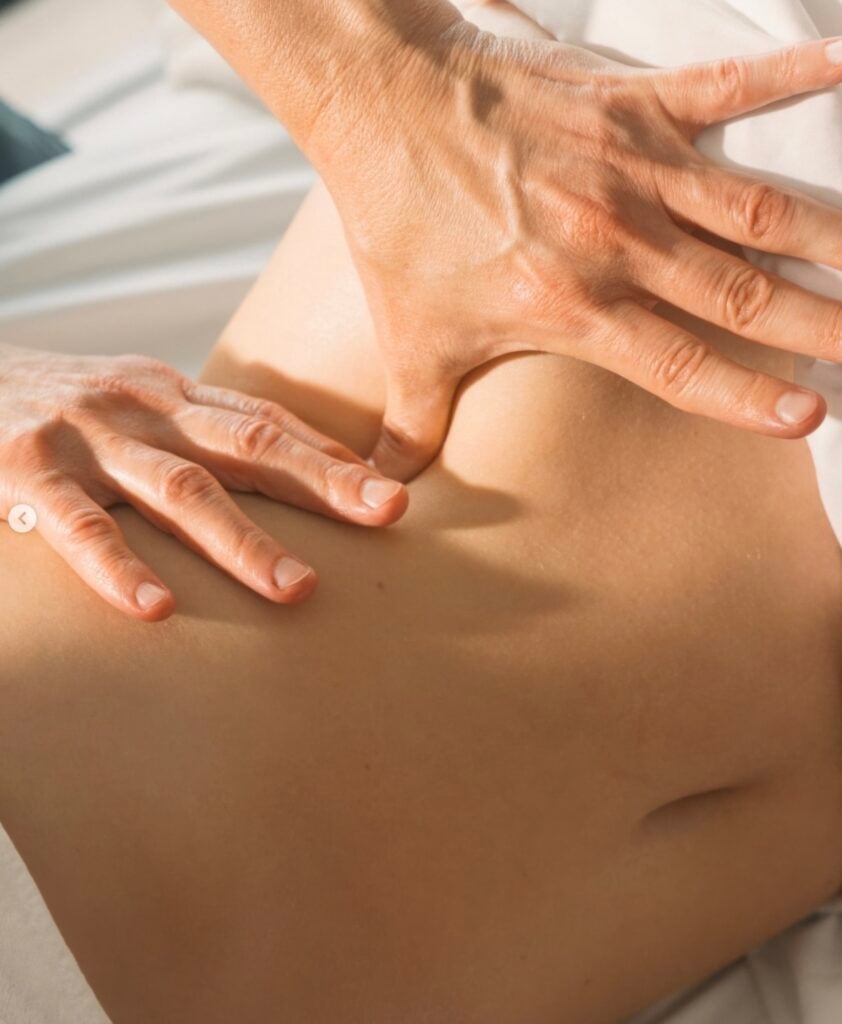
Almost everyone who books sports massage means “deep tissue for athletes.” The clinical version is closer to the opposite: deliberately light and fast, timed around an event.
Two versions, two jobs. Pre-event work warms tissue without fatiguing it. Post-event work speeds recovery and moves fluid out of swollen areas. Physical therapist James Ingram adds a reframe that makes the category more useful than its name suggests: the goal is returning anyone to the activity they want to do, not serving competitive athletes.
The fix is a sentence, not a decision. When you book at a hotel spa, describe the activity rather than the modality: “firm work on my legs after three days of hiking” gets you the treatment you pictured. The name on the menu may not.
Where it earns its place is obvious from the itinerary. Ski week. Golf trip. Long hiking days. The first heavy gym session after a time-zone change.
Direct recommendation: book it on an activity-heavy trip and describe the activity when you call. If you simply want firm pressure, book deep tissue instead and skip the confusion entirely.
Where to try it
Scored Hotels with Massage
These are today's SpaRator scores for hotels that offer it, highest score first.
We may earn a commission when you book through these links. It never affects a SpaRator score, and no hotel hosted or paid for this analysis. How we earn
 SpaRator 8.6: Outstanding
Sedona
Mii amo
- 60 min$265 to $280
- 80 min$340 to $355
 SpaRator 8.5: Outstanding
Phoenix
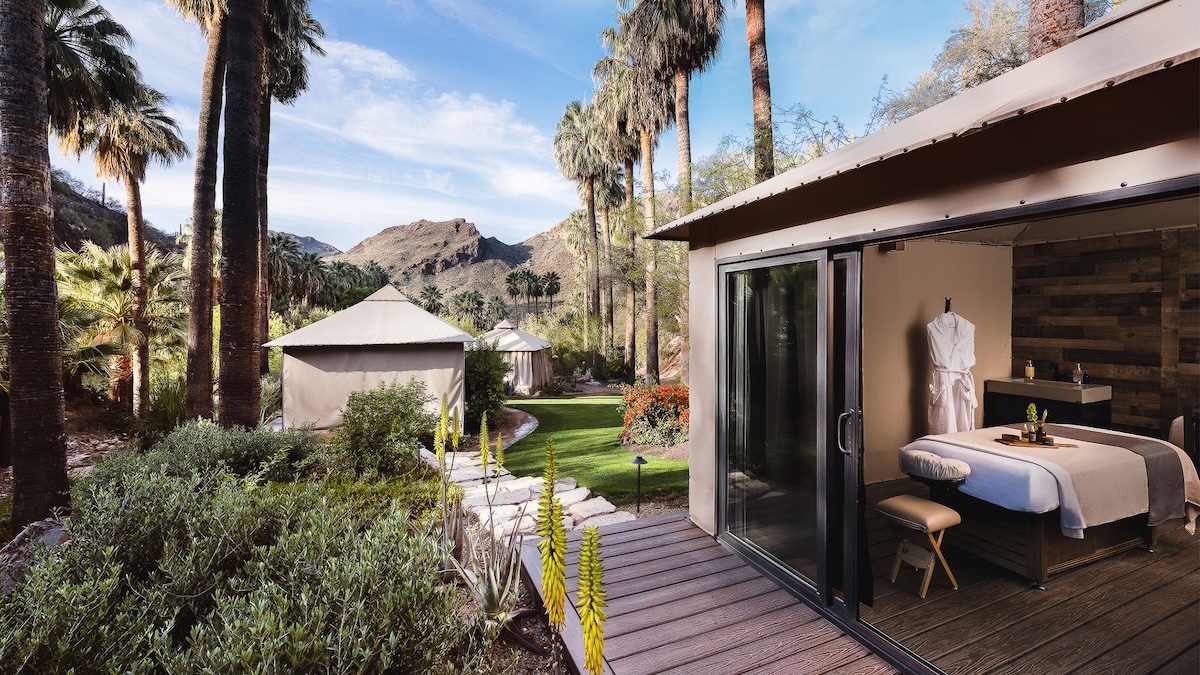
Castle Hot Springs
- 60 min$255
- 60 min$330
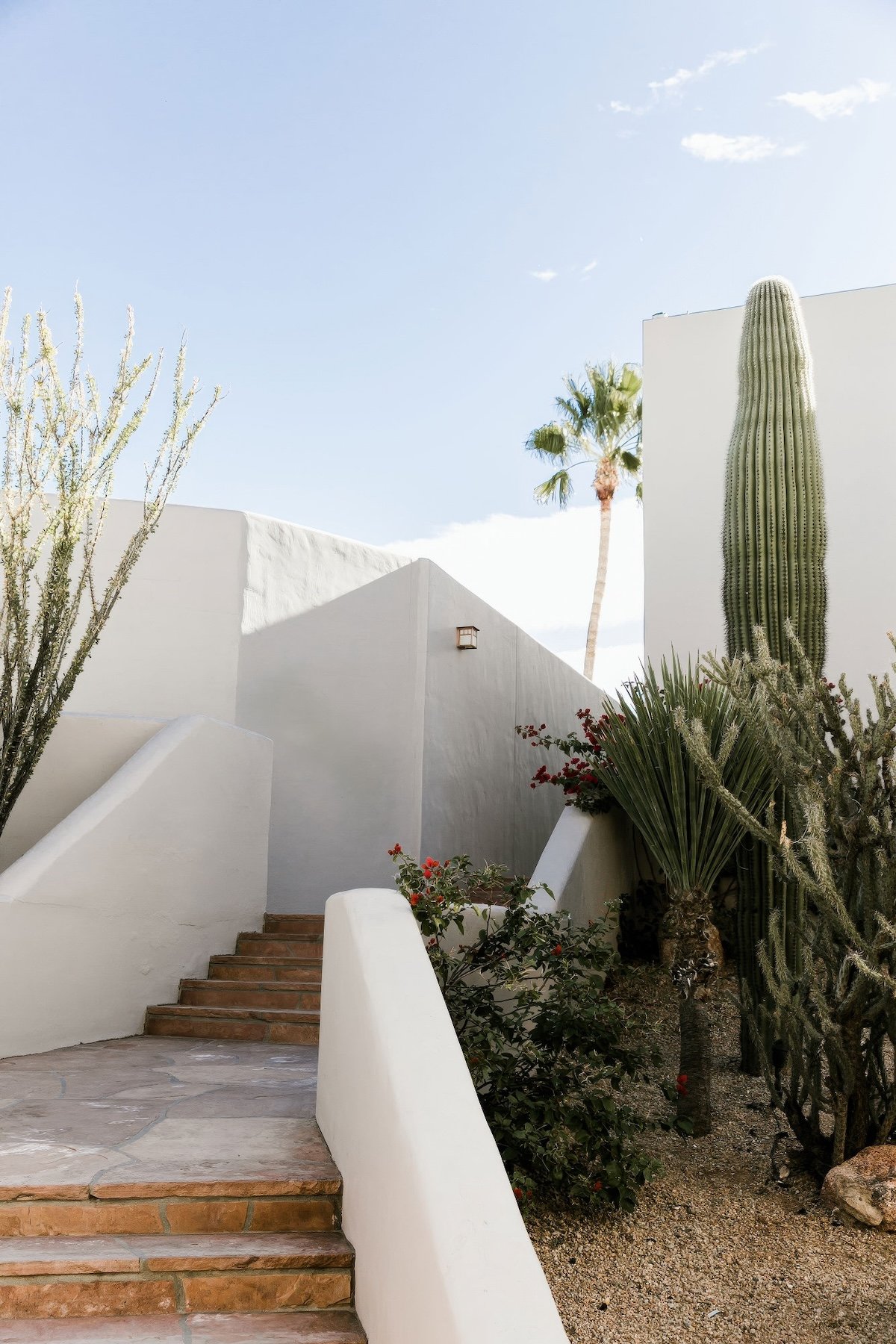 SpaRator 8.1: Outstanding
Scottsdale
CIVANA Wellness Resort and Spa
- 60 min$215 to $285
- 75 min$275
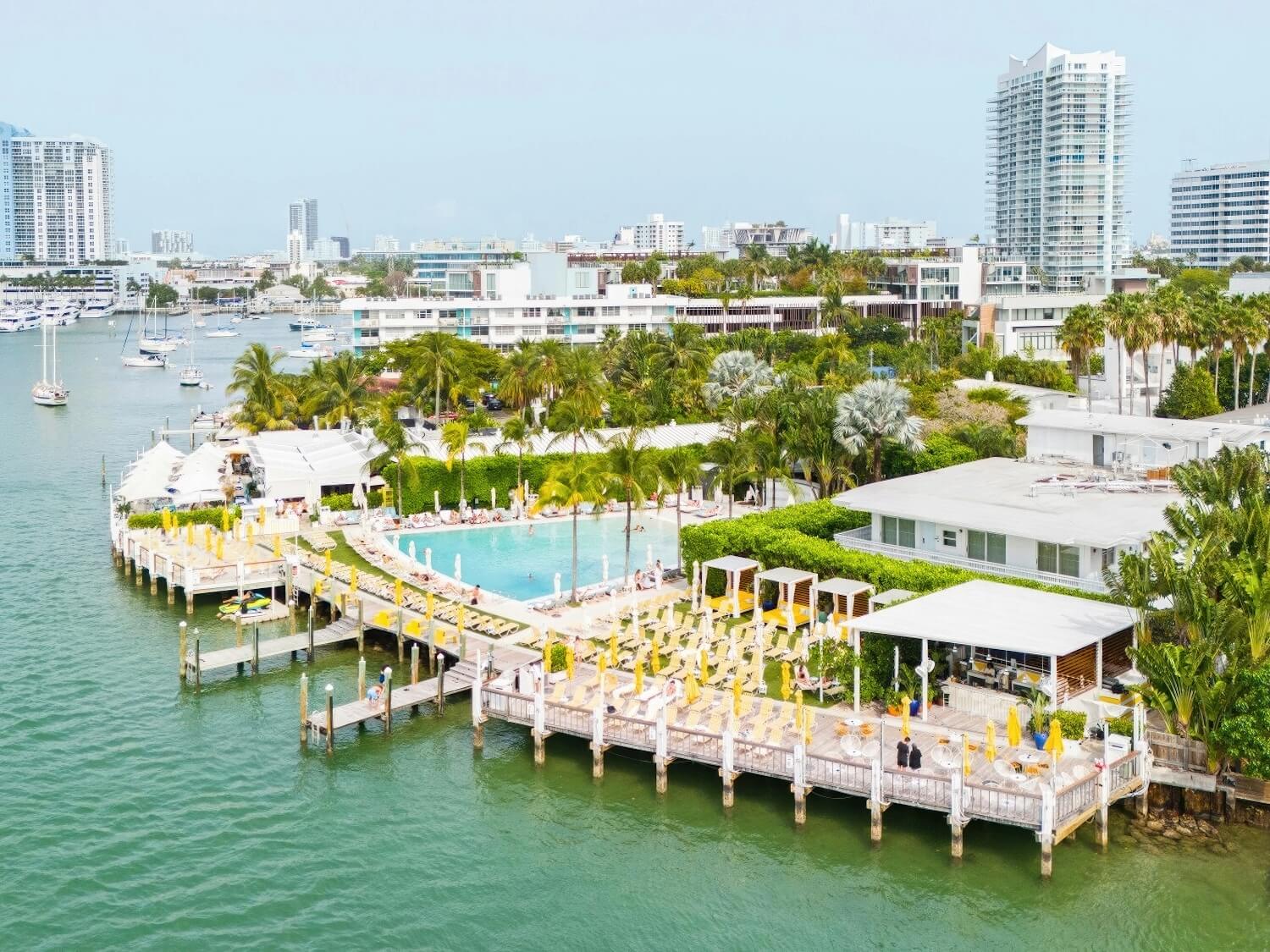 SpaRator 8.1: Outstanding
Miami
The Standard Spa, Miami Beach
- 60 min$245
- 75 min$285
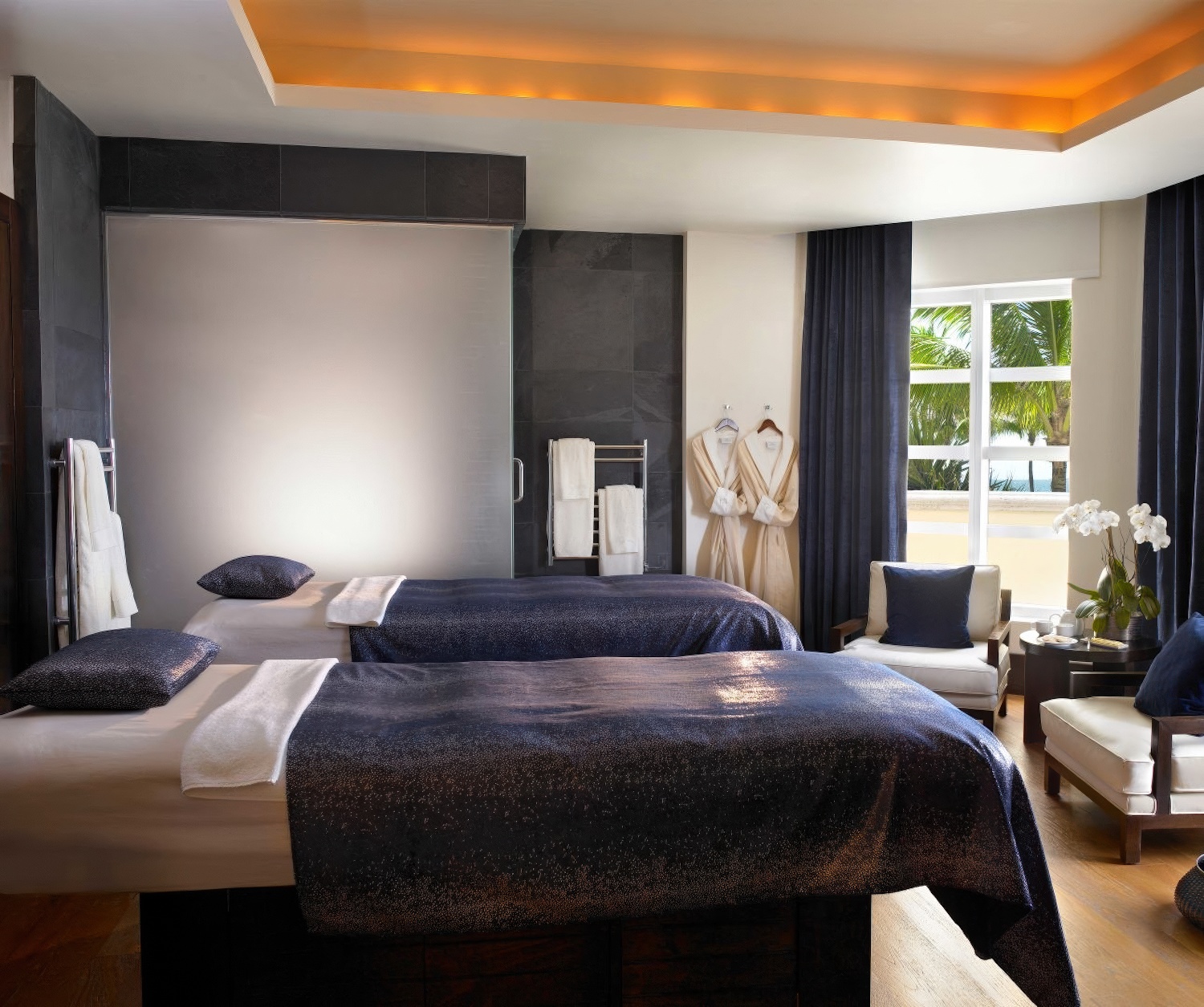 SpaRator 8.0: Outstanding
Miami
Acqualina Resort & Residences
- 60 min$260 to $305
- 90 min$390 to $435
 SpaRator 7.8: Strong
Miami
Faena Hotel Miami Beach
- 30 min$220
- 60 min$290
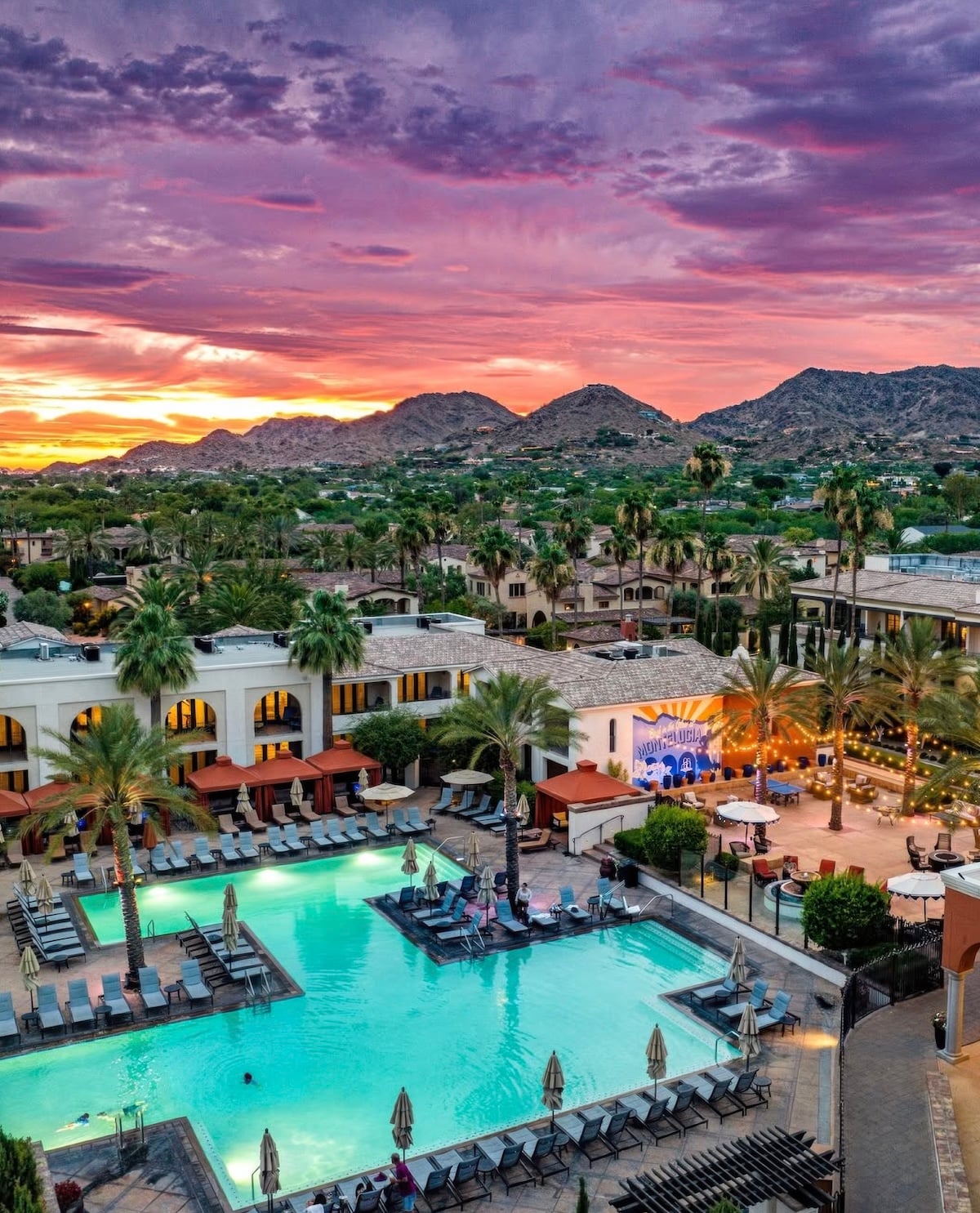 SpaRator 7.8: Strong
Scottsdale
Omni Scottsdale Resort & Spa at Montelucia
- 50 min$219 to $285
- 75 min$345 to $370
 SpaRator 7.8: Strong
Phoenix
The Global Ambassador
- 60 min$260 to $300
- 90 min$390 to $450
 SpaRator 7.7: Strong
Tucson
Loews Ventana Canyon Resort
- 50-80 min$190 to $370
 SpaRator 7.7: Strong
Naples
Naples Beach Club, A Four Seasons Resort
- 50 min$250 to $270
- 100 min$500 to $540
7. Trigger Point Massage: Targeted Relief for One Stubborn Knot
You know the knot. The one you have been rolling a tennis ball into against the hotel room wall at 11pm.
Trigger point therapy came from Janet Travell, a cardiologist rather than a massage therapist. She traced chest pain that mimicked cardiac events to knots in the pectoral muscle, which released under 30 to 90 seconds of sustained pressure.
The session feels unlike anything else here: static, sustained pressure held on specific points instead of flowing strokes. Expect sensation in an area away from the point itself. That referral is the mechanism, not a mistake.
The honest limits: relief can be short-lived without follow-up movement or stretching, and trigger point maps vary person to person, so practitioner skill drives the result. It works faster than Swedish for one specific complaint. It is not a permanent fix from one hotel booking.
Resort menus rarely name it. Ask for it inside a deep tissue booking by naming the area.
Best for: carpal tunnel, rotator cuff pain, low back pain, radiating neck pain. Skip if: you want to switch off for an hour.
8. Myofascial Release: The Longest-Lasting Results on the Menu
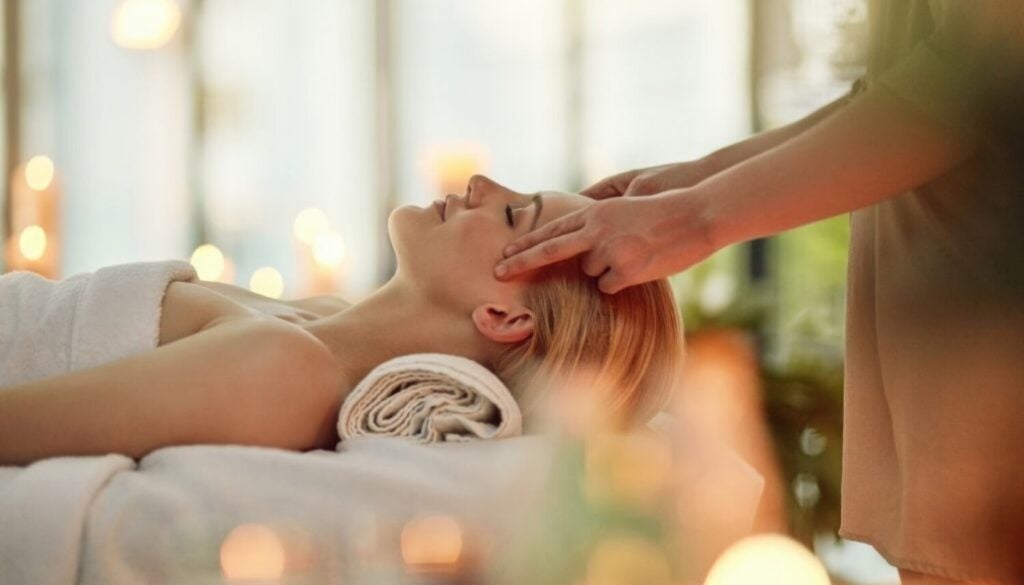
The technique that feels worst on the table lasts longest afterward.
Myofascial release targets fascia, the connective tissue wrapping every muscle, which broad relaxation strokes glide straight over. The pressure is slow, sustained and deeper than Swedish. Structural integration and Rolfing belong to the same family.
One practitioner reports effects lasting days to months from single sessions, compounding across a series of five to eight visits into months or years of relief. That is the strongest durability claim on this list.
The catch is that it needs a series. It is less comfortable than Swedish while it happens. And it rarely appears by name on a resort spa menu, because it lives at dedicated bodywork studios rather than hotels.
Use it as a screening signal instead. A hotel therapist whose bio lists myofascial or structural integration training is a genuine quality marker for a deep tissue booking, even if you never book the modality by name.
The verdict: the best value on this list for chronic tension, and the worst possible fit for a one-night stay.
9. Thai Massage: Assisted Stretching With Your Clothes On
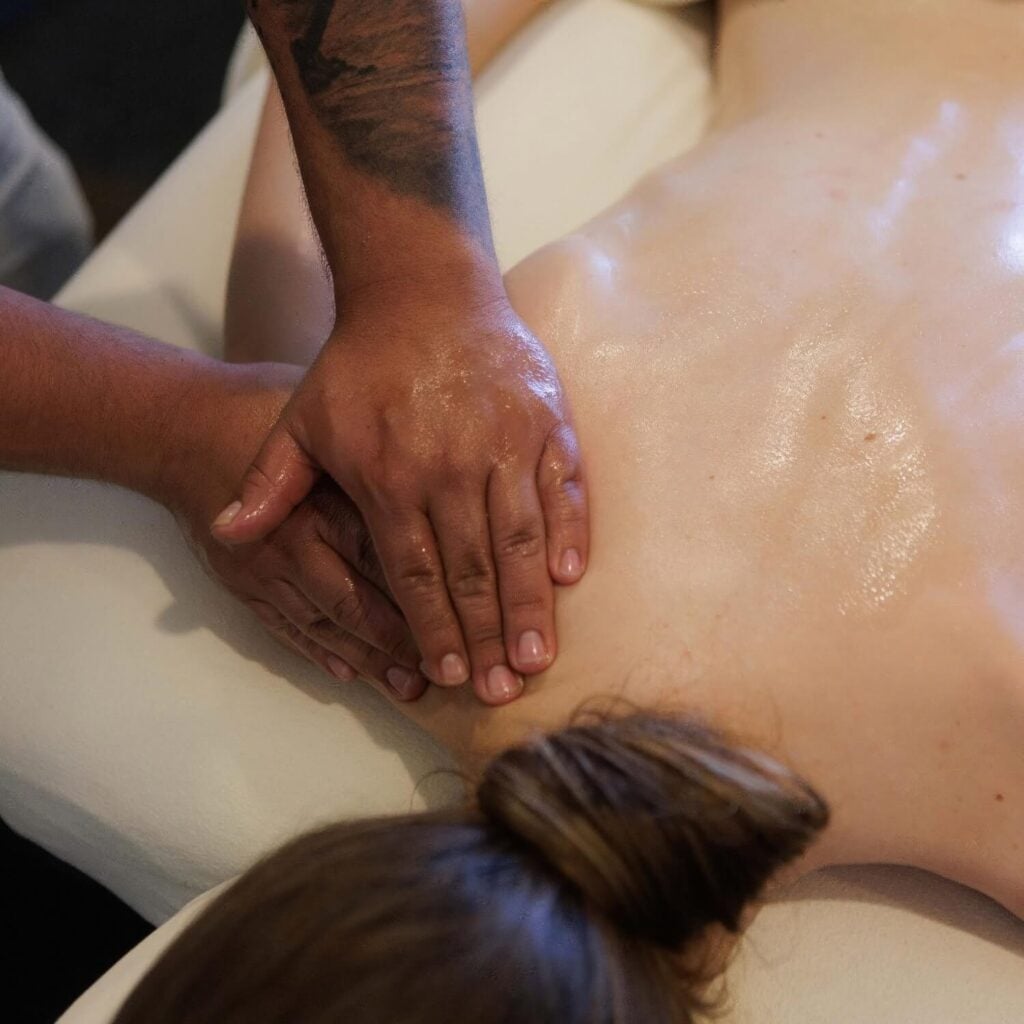
No oil. No undressing. No lying still. You will be moved, folded and stretched, and you will do some of the work yourself.
A Thai session combines pressure along energy lines with assisted yoga-style stretching, usually on a floor mat, in loose cotton clothing the spa provides. Sessions run longer than Western massage, with 90 minutes the standard rather than the upgrade.
It suits a specific traveler: the one who wants something active rather than passive, and who has spent nine hours in a seat with their hip flexors folded shut. For hip and hamstring tightness after a long flight, nothing else here competes.
One credential detail worth checking: some practitioners are certified in Thai massage only and not licensed for general massage therapy in a given state. Confirm it at a property you don’t know.
Thai is increasingly common on resort menus, especially Asian-branded spa concepts. Ask whether it is table-based or mat-based before you book; the two feel considerably different.
Best for: stiff travelers who want mobility back. Skip if: you want to fall asleep on the table.
10. Shiatsu Massage: Pressure Points Without the Oil
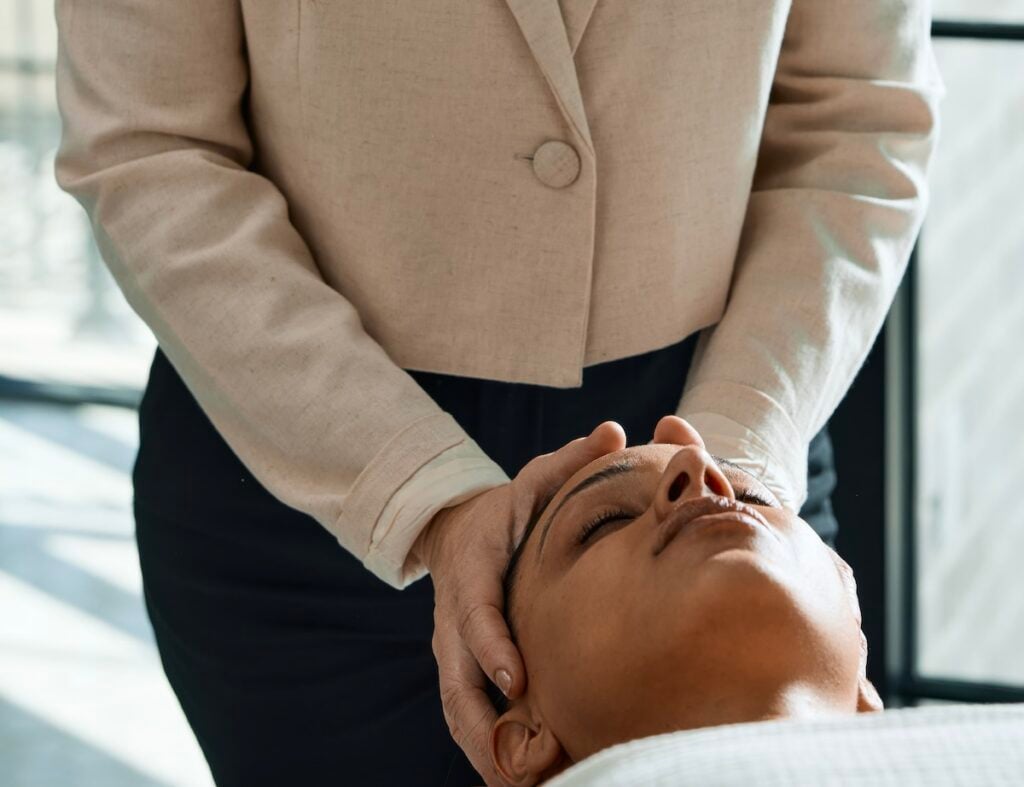
Shiatsu and trigger point therapy look nearly identical from the doorway. They come from completely different maps of the body.
Shiatsu is Japanese, applied through thumb, palm, heel of hand, forearm and elbow, working along energy channels to restore the flow of qi rather than treating muscle anatomy. It is one of the few types of spa massage where you stay clothed, often on a mat.
It does well at reducing stress and anxiety, supporting general wellness, and delivering a sensory experience genuinely distinct from Western stroke-based work. The varied contact points are a large part of that.
The honest caveat comes from the same practitioners who recommend it: if you want a purely physical, muscle-anatomy rationale for what is happening to you, the energy-flow framing may not land. Hotel spas built around tables also don’t always offer the traditional mat version.
Quick comparison:
- Shiatsu: clothed, pressure points, energy-line theory.
- Thai: clothed, pressure points plus assisted stretching.
- Trigger point: draped, pressure points, Western muscle anatomy.
11. Reflexology: The Short Booking That Fits Any Spa Day
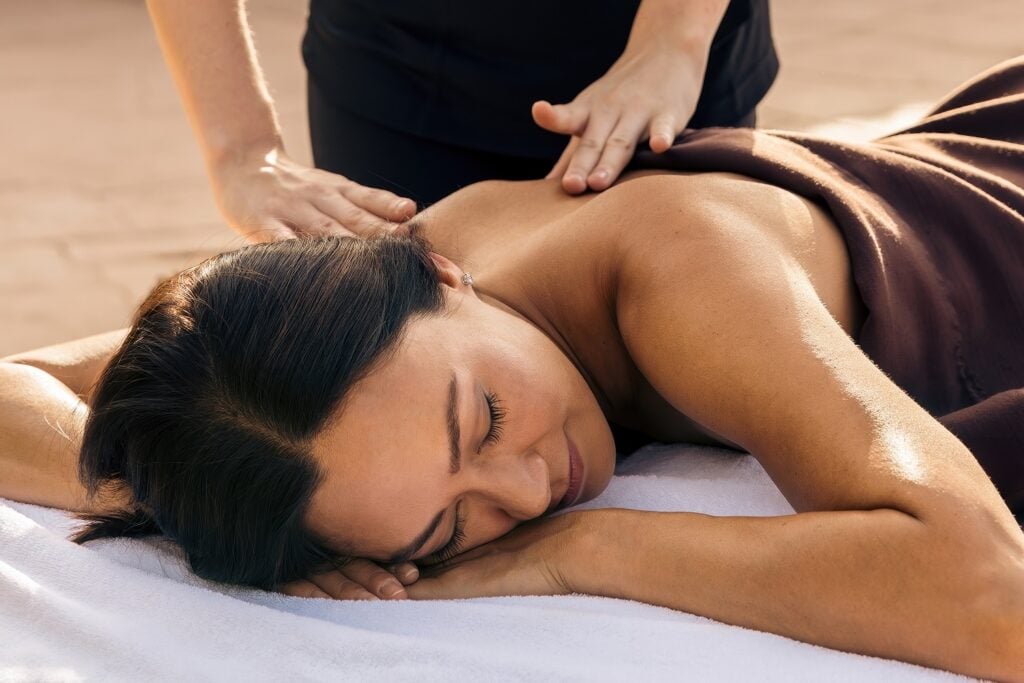
The easiest treatment to add to a spa day, because you keep your clothes on and it fits a 30 to 50 minute gap.
Reflexology applies pressure to specific points on the feet, sometimes the hands and ears, mapped to zones of the body. The zone theory is traditional rather than clinically established. The effect on tired traveling feet is immediate regardless.
Which is the argument for booking it. Airport terminals, resort walking and heels do the trip’s real damage below the ankle, and this is the only treatment aimed there. It has the shortest recovery time on the menu: you walk straight from the table to lunch.
Many hotel menus call it foot massage, or fold it in as a 25-minute add-on in the same $10 to $25 band as other upsells. Same booking either way.
Direct recommendation: book it as the second, shorter service on a two-treatment spa day, or as the whole booking when you only have an hour to spend.
12. Lomi Lomi and Four Hands Massage: The Resort Ritual Splurge
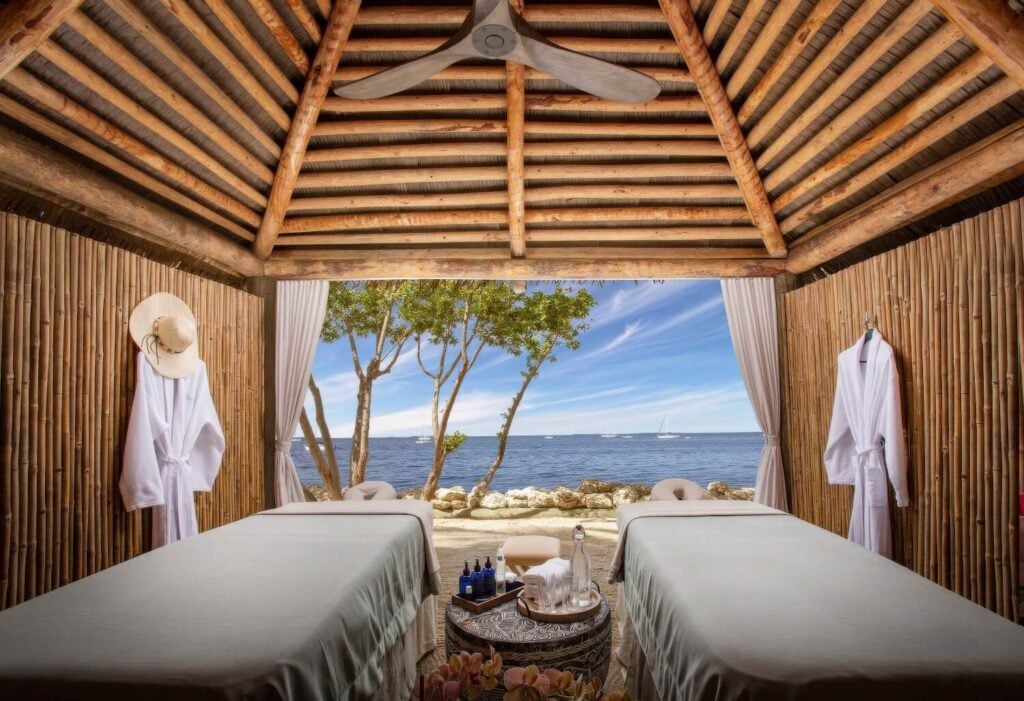
Two therapists, four hands, moving in sync. You cannot track what either of them is doing, which is precisely the appeal.
Lomi Lomi on its own is Hawaiian: long continuous flowing strokes that use the forearms as much as the hands, rhythmic rather than segmented. It feels different from Swedish because it treats the body as one piece instead of working region by region.
The four-hands version is where resorts get ambitious. Ho’omana Spa Maui runs a Four-Hand Lomi Lomi and packages a premium version, “Pono,” that wraps a ho’oponopono forgiveness practice, a coconut-honey bath and a kukui body wrap around the core massage. Bella Dia Hawaii sells a comparable couples version. That is what ritual pricing actually buys.
Cost honesty: this is premium specialty pricing, and packaged versions run 60 to 90+ minutes once the wrap and blessing are counted. You are paying two therapists for the same clock time, so budget accordingly: close to double a single-therapist booking.
The verdict: worth it once, on a milestone trip, in a place where the tradition is local. Poor value as a routine booking, and a strange choice if you want targeted work on one area.
13. Warm Bamboo Massage: Deep Tissue Pressure With Heated Sticks
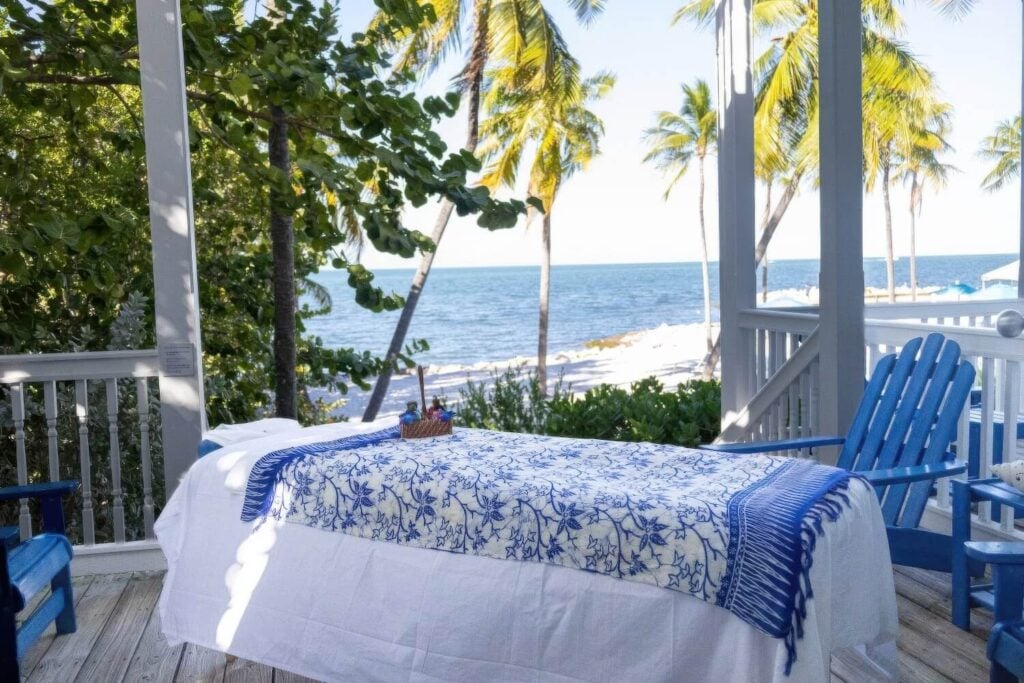
The treatment where the therapist swaps their forearms for heated bamboo.
Heated bamboo sticks in varying lengths and diameters are rolled and pressed to deliver deep-tissue-style pressure. It works mechanically rather than mystically: a rigid tool lets a therapist sustain deep pressure across a broad surface without fatiguing their hands, so pressure stays consistent longer than a thumb can manage.
On the menu it sits as a specialty item, typically priced alongside the spa’s other heat treatments, and like hot stone it is provider-restricted. Same booking advice as item 4 applies: have a backup service ready.
Frame it correctly, and the decision is easy: this is a delivery mechanism rather than a separate school of massage. If you want firm pressure and heat together, it is a better version of what hot stone promises.
Quick comparison: hot stone applies heat passively, with stones resting on you while the therapist works. Warm bamboo drives heat actively into muscle at deep-tissue pressure.
14. Lymphatic Drainage Massage: The Trend Treatment, Assessed Honestly
The treatment appearing on 2026 spa menus as a body-sculpting service comes from clinical care: its established use is relieving lymphedema after breast cancer surgery. One experienced therapist argues a healthy adult gets no more from it than a normal massage or a brisk walk.
Start with the real clinical use. Lymphatic drainage supports post-surgical recovery, post-liposuction contouring, lymphedema and oncology patients, and very fragile or elderly skin. The pressure is extremely light, one of the few options for guests who cannot tolerate deeper work.
Lymphatic drainage and sculpting treatments are trending into 2026 as “functional wellness” services promising less puffiness and refined contours, with a “Brazilian technique” variant blending drainage with deeper contouring. The Wall Street Journal has covered it as a celebrity-favored treatment, naming Hailey Bieber, Ariana Grande and Nicola Peltz Beckham. That is how it reached hotel menus, one thread in the wider spa and wellness travel trends we track.
Treat that dissent as one practitioner’s position, not settled science. Guests who book it expecting deep-tissue-style results are consistently startled by how feather-light it is.
Best for: post-surgical recovery, lymphedema, or anyone for whom firm pressure is off the table. Skip if: you booked it for visible sculpting on a healthy body and want your $200 doing measurable work.
15. Prenatal Massage: Safe in Every Trimester With the Right Therapist
The “no massage in the first trimester” rule is spa policy, not medical consensus. The American Pregnancy Association says massage can begin at any point in pregnancy with a certified prenatal therapist, though many spas decline first-trimester bookings as a precaution. That policy gap stops a lot of pregnant guests booking anything.
What changes is position and emphasis. You lie on your side, propped with bolsters rather than face-down, with adjusted pressure and attention on the low back, hips, and swollen feet and ankles.
The booking mechanic matters more than the technique. Not every therapist on staff holds prenatal training, which is why spas flag it as requiring advance notice. Disclose the pregnancy when you reserve, not at check-in, and confirm a trained provider is scheduled. Otherwise it gets declined on arrival, after you have changed into the robe.
This is one of the few items where a resort’s smaller roster genuinely limits you, so book before you travel.
Direct recommendation: reserve in advance with the pregnancy noted in writing, and default to 60 minutes rather than 90, which is more comfortable side-lying.
16. Couples Massage: What $350 to $600 Actually Buys at a Resort
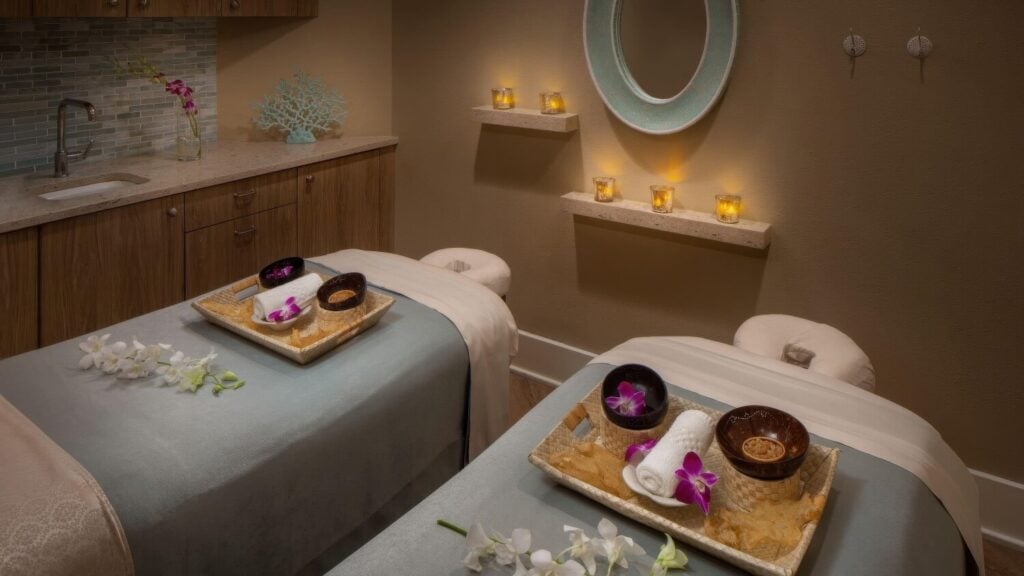
Start with the number, because it is the number that surprises people. A couples massage at a resort or luxury hotel typically runs $350 to $600 depending on location and amenities, against $60 to $150 per person for a standalone 60-minute massage in the general market.
What that premium buys is a shared suite, two therapists on the same clock, and usually a package wrapper: sparkling wine, a private soaking tub, extended room time. The massage itself is generally a standard Swedish or the house signature. The technique is not the upgrade. The room is.
It is not a setting for therapeutic work. Two people in one room, talking, on a fixed schedule, is a relaxation booking. It will not fix your back.
The fix, if one of you actually wants deep tissue: book two separate treatments back-to-back at standard pricing and spend the couples-suite difference on a longer session or a second service each.
The verdict: worth the premium as an occasion, for an anniversary, a honeymoon or the last night of a trip. Poor value as the default way two people book massages.
17. Chair and Poolside Massage: The Low-Commitment Option
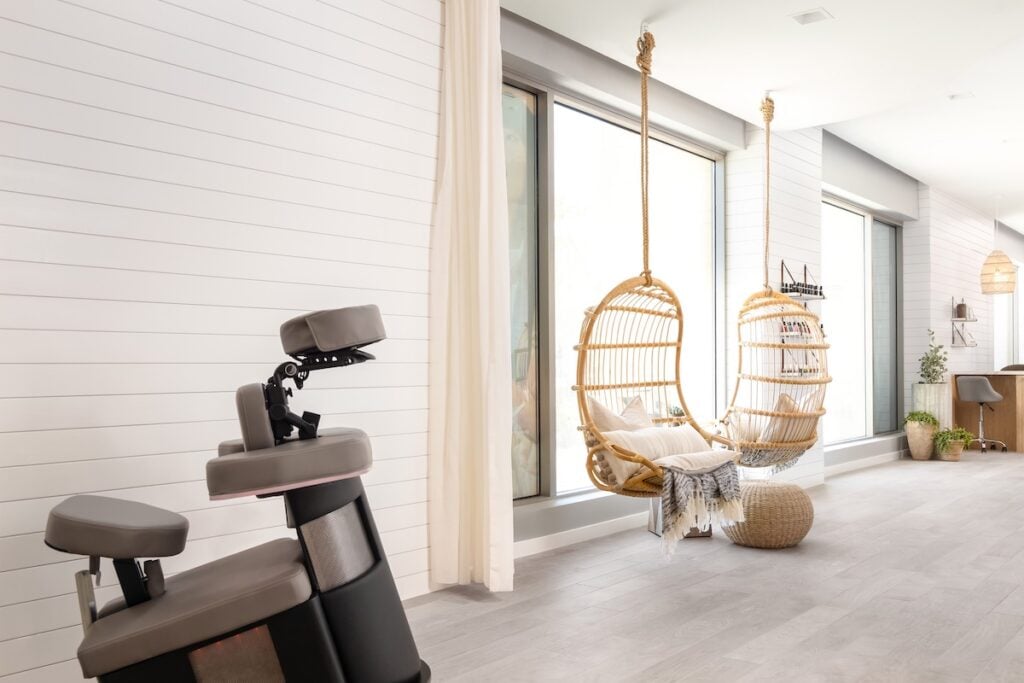
Fifteen to 25 minutes, fully clothed, with no need to build an afternoon around it.
You sit forward in a padded chair while the therapist works neck, shoulders, upper back and arms. No oil, no undressing. At resorts the same short format usually appears as poolside or cabana massage on a lounger, the version most guests actually encounter.
Where it earns its place is scheduling. Arrival day, when you don’t want to lose the afternoon. A conference stay. The hour between the pool and dinner. It is also the cheapest way to test a therapist’s pressure before committing to a 90-minute booking at an unfamiliar property.
The limitation is built in. It is short and superficial by design, addressing desk and travel tension in the upper body and nothing else.
Best for: arrival day and tight schedules. Skip if: the whole point of the trip is switching off for 90 minutes.
FAQs
Do I have to get fully undressed for a massage?
No. Undress to your own comfort level, and keeping underwear on is normal and expected. Proper draping means only the area being worked on is ever exposed, including when you turn over halfway through. If the therapist has a problem with it, find a different therapist.
How much should I tip at a hotel spa?
15 to 20% of the full, pre-discount service price is standard, and the pre-discount part matters if you booked a package or a resort-credit rate. Resort and hotel spas commonly run 18 to 20% and add it automatically at checkout. All-inclusive resort spas sometimes build it in or waive it entirely, so read the bill before adding a second tip on top.
What if the pressure is too hard or too soft?
Say so during the session. Massage should not be painful, and therapists expect real-time feedback rather than treating it as an interruption. Quantify it: “about 30% deeper” is far more useful than “a bit more,” and the same goes for room temperature and music. Do not wait to be asked.
Which massage should I book if it's my first time?
Swedish is the safest type of spa massage on a hotel menu for a first booking. Better still, skip the modality question and state your goal (“I have neck pain,” “I can’t sleep”) and let the spa assign the technique. A therapist who can’t explain their choice is a warning sign.
How many treatments should I book in one spa day?
Two. One feels like a teaser and three feels rushed. The sweet spot is a 90-minute massage plus a 75-minute facial with 75 to 90 minutes between them for lunch. Spas schedule the massage first and the facial last so facial product isn’t rubbed off face-down on the table. Book the pair together and the spa will space them correctly.
How much does a massage cost at a hotel spa versus a day spa?
Roughly $85 to $125 for 45 to 60 minutes at a hotel or resort spa against $60 to $150 generally, before an automatic 18 to 20% gratuity and $10 to $25 per add-on. The premium buys convenience and facility access, not better hands. If the menu you’re handed omits prices, ask for a priced one.
66 Scored Hotels, Ranked by Score
We may earn a commission when you book through these links. It never affects a SpaRator score, and no hotel hosted or paid for this analysis. How we earn
- SpaRator 8.6: Outstanding
Mii amo
Sedona
- $265 to $280 60 min
- $340 to $355 80 min
- SpaRator 8.5: Outstanding
Castle Hot Springs
Phoenix
- $255 60 min
- $330 60 min
- SpaRator 8.1: Outstanding
CIVANA Wellness Resort and Spa
Scottsdale
- $215 to $285 60 min
- $275 75 min
- SpaRator 8.1: Outstanding
- $245 60 min
- $285 75 min
- SpaRator 8.0: Outstanding
- $260 to $305 60 min
- $390 to $435 90 min
- SpaRator 7.8: Strong
- $220 30 min
- $290 60 min
Show all 66 hotelsShow fewer hotels
- SpaRator 7.8: Strong
- $219 to $285 50 min
- $345 to $370 75 min
- SpaRator 7.8: Strong
The Global Ambassador
Phoenix
- $260 to $300 60 min
- $390 to $450 90 min
- SpaRator 7.7: Strong
- $190 to $370 50-80 min
- SpaRator 7.7: Strong
- $250 to $270 50 min
- $500 to $540 100 min
- SpaRator 7.6: Strong
1 Hotel South Beach
Miami
- $215 to $255 50 min
- $285 to $355 80 min
- SpaRator 7.6: Strong
- $205 to $290 50 min
- $360 80 min
- SpaRator 7.5: Strong
Canyon Ranch Tucson
Tucson
- $200 to $250 50 min
- $320 to $350 80 min
- SpaRator 7.5: Strong
Enchantment Resort
Sedona
- $265 to $280 60 min
- $340 to $355 80 min
- SpaRator 7.5: Strong
- $250 to $375 60 min
- $395 to $420 90 min
- SpaRator 7.5: Strong
Grand Hyatt Scottsdale Resort
Scottsdale
- $150 to $155 30 min
- $210 to $235 60 min
- SpaRator 7.5: Strong
The Canyon Suites at The Phoenician
Scottsdale
- $225 to $285 50 min
- $325 to $385 80 min
- SpaRator 7.4: Solid
Four Seasons Resort Scottsdale
Scottsdale
- $225 to $260 60 min
- $300 to $345 90 min
- SpaRator 7.4: Solid
- $245 to $295 60 min
- $325 to $375 90 min
- SpaRator 7.4: Solid
- $130 to $150 50 min
- $140 to $160 50 min
- SpaRator 7.3: Solid
- $230 to $265 60 min
- $460 to $475 120 min
- SpaRator 7.3: Solid
- $205 to $320 50 min
- $305 to $420 80 min
- SpaRator 7.2: Solid
Andaz Scottsdale Resort & Bungalows
Scottsdale
- $125 30 min
- $210 to $225 60 min
- SpaRator 7.2: Solid
Hotel Valley Ho
Scottsdale
- $110 30 min
- $145 45 min
- SpaRator 7.2: Solid
- $95 25 min
- $85 30 min
- SpaRator 7.2: Solid
- $235 to $265 60 min
- $350 to $390 90 min
- SpaRator 7.2: Solid
The Wilde Resort & Spa
Sedona
- $210 to $275 60 min
- $320 to $375 90 min
- SpaRator 7.1: Solid
Arizona Grand Resort & Spa
Phoenix
- $95 25 min
- $205 to $225 50 min
- SpaRator 7.1: Solid
Inn on Fifth
Naples
- $185 to $200 50 min
- $255 to $270 80 min
- SpaRator 7.1: Solid
- $200 to $215 50 min
- $400 to $430 100 min
- SpaRator 7.1: Solid
- $170 to $210 50 min
- $220 to $260 80 min
- SpaRator 7.1: Solid
The Scottsdale Resort and Spa
Scottsdale
- $139 to $309 25 to 80 min
- SpaRator 7.0: Solid
- $169 to $229 50 min
- $259 to $319 80 min
- SpaRator 7.0: Solid
- $205 to $225 50 min
- $225 50 min
- SpaRator 7.0: Solid
- $179 to $189 20 min
- $239 to $279 50 min
- SpaRator 7.0: Solid
- $209 to $249 50 min
- $299 to $329 80 min
- SpaRator 7.0: Solid
Playa Largo Resort & Spa, Autograph Collection
Florida Keys
- $175 to $195 50 min
- $255 to $275 80 min
- SpaRator 7.0: Solid
Royal Palms Resort and Spa
Phoenix
- $220 to $260 50 min
- $440 to $520 100 min
- SpaRator 6.9: Modest
- $210 to $250 60 min
- $270 to $290 60 min
- SpaRator 6.9: Modest
- $95 15 min
- $110 to $125 30 min
- SpaRator 6.9: Modest
Isla Bella Beach Resort & Spa
Florida Keys
- $195 50 min
- $290 to $320 80 min
- SpaRator 6.8: Modest
- $185 to $255 50 min
- $245 to $285 80 min
- SpaRator 6.8: Modest
Sunset Key Cottages
Florida Keys
- $190 50 min
- $240 80 min
- SpaRator 6.8: Modest
- $225 to $285 50 min
- $325 to $385 80 min
- SpaRator 6.7: Modest
- $155 to $175 50 min
- $195 to $215 80 min
- SpaRator 6.7: Modest
The Scott Resort & Spa, Scottsdale
Scottsdale
- $175 50 min
- $240 75 min
- SpaRator 6.6: Modest
Cheeca Lodge & Spa
Florida Keys
- $175 to $195 50 min
- $280 to $310 80 min
- SpaRator 6.6: Modest
Little Palm Island
Florida Keys
- $150 25 min
- $240 to $260 50 min
- SpaRator 6.5: Modest
Hawks Cay Resort
Florida Keys
- $165 to $200 50 min
- $270 to $320 80 min
- SpaRator 6.5: Modest
- $195 to $240 50 min
- $260 to $340 80 min
- SpaRator 6.5: Modest
- $150 to $170 50 min
- $190 to $220 80 min
- SpaRator 6.5: Modest
Hyatt Centric Key West Resort & Spa
Florida Keys
- $150 to $175 50 min
- $300 to $350 50 min
- SpaRator 6.5: Modest
Ocean Key Resort & Spa
Florida Keys
- $100 20 min
- $155 to $190 50 min
- SpaRator 6.5: Modest
Pier House Resort & Spa
Florida Keys
- $110 20 min
- $165 to $195 50 min
- SpaRator 6.4: Modest
Bungalows Key Largo
Florida Keys
- $195 to $250 50 min
- $285 to $330 80 min
- SpaRator 6.4: Modest
Kimpton Miralina Resort and Villas
Scottsdale
- $199 to $249 50 min
- $299 to $349 80 min
- SpaRator 6.4: Modest
Scottsdale Camelback Resort
Scottsdale
- $150 to $165 50 min
- $175 75 min
- SpaRator 6.4: Modest
W Scottsdale
Scottsdale
- $180 to $200 50 min
- $240 to $270 80 min
- SpaRator 6.3: Modest
- $160 to $180 50 min
- $235 to $255 80 min
Closed for renovation until January 2027 - SpaRator 6.2: Modest
L'Auberge de Sedona
Sedona
- $200 to $220 60 min
- $300 to $375 90 min
- SpaRator 6.0: Modest
Baker's Cay Resort Key Largo
Florida Keys
- $150 to $170 50 min
- $215 to $240 80 min
- SpaRator 6.0: Modest
Southernmost Beach Resort
Florida Keys
- $95 25 min
- $165 to $200 50 min
- SpaRator 6.0: Modest
Tranquility Bay Beachfront Resort
Florida Keys
- $160 to $250 50 min
- SpaRator 5.6: Limited
Casa Marina Key West
Florida Keys
- $110 25 min
- $200 50 min
- SpaRator 5.6: Limited
Mountain House Lodge at Sereno Canyon
Scottsdale
- $165 60 min
- $225 90 min
- SpaRator 5.3: Limited
The Reach Key West, Curio Collection by Hilton
Florida Keys
- $110 25 min
- $200 50 min
Prices are each spa's own published menu range for the treatment, with the session length shown.
Every Hotel We Score
Every dot is one of the 102 hotels with a SpaRator score, left to right from low to high. Lit dots mark the hotels that offer this treatment. Select any dot to see the hotel's name and score.
Market
Showing 102 of 102
- Offers it
- Spa details on file, not listed
- No spa details on file yet
Hover or tap a dot to see the hotel.
No hotel here is lit yet.